Quick answer
A fuel surge tank setup uses a small reservoir that stays full so the high-pressure pump never sucks air during cornering, braking, or low-fuel driving. Plan the layout first, mount the tank low and close to the main pump, feed it from a lift pump, then run the high-pressure pump to the engine and return excess fuel to the surge tank.
If your engine stumbles in long corners, hesitates under hard braking, or leans out below a quarter tank, the fuel pickup is likely uncovering. A fuel surge tank setup fixes that by keeping a small reservoir of fuel around the high-pressure pump pickup at all times.
This guide explains what a surge tank fuel system does, where it helps, and how to install one step by step. It also covers plumbing order, pump sizing, and the mistakes that cause noise, heat, or a lean condition after installation.
What a fuel surge tank actually does
A surge tank is a small canister, usually one to three liters, that stays full of fuel while the main tank sloshes. A low-pressure lift pump fills it from the main tank, and a high-pressure pump draws from the surge tank and feeds the engine. Because the high-pressure pump always has liquid fuel around its inlet, it does not gulp air when the main tank pickup is briefly uncovered.
That matters most on track cars, drift cars, and any vehicle that sees sustained cornering or acceleration. It also helps on EFI conversions where the factory tank has no baffling, and on cars running a low fuel level at the end of a session.
- A surge tank is not a replacement for a properly sized main tank; it only buffers short pickup exposures.
- On a return-style system, engine return fuel can be routed back to the surge tank to help keep it full.
Fuel surge tank benefits and honest tradeoffs
The main benefit is consistent fuel pressure under load. When the high-pressure pump stops seeing air, the engine stops leaning out, which protects pistons and keeps power predictable. A secondary benefit is that you can run a smaller, more responsive high-pressure pump because it no longer has to pull fuel from a distant tank.
The tradeoff is complexity. A surge tank adds a second pump, more hose, more fittings, and more failure points. It also adds heat and noise if the lift pump runs continuously, and it takes up trunk or undercar space. If your car is a street-driven daily that never sees hard cornering, a baffled tank or a better in-tank pump may be the simpler answer.
- Mount the surge tank away from exhaust heat; fuel temperature rises quickly in a small reservoir.
- Use a lift pump rated slightly higher than the high-pressure pump's demand so the surge tank stays full.
Planning the surge tank fuel system layout
Before you buy parts, decide the plumbing order. The common layout is: main tank, lift pump, surge tank, high-pressure pump, filter, engine, and return. On a return-style regulator, the return line goes back to the surge tank, not the main tank, so the surge tank stays full. On a returnless system, you will need a regulator or a return line added.
Decide where the surge tank lives. Trunk mounting is easy to service but requires a sealed, vented enclosure and a bulkhead for fuel lines. Undercar mounting keeps the cabin quiet but exposes the tank to road debris and heat. Whichever you choose, keep the surge tank below the main tank outlet if possible so gravity helps the lift pump.
- Sketch the layout on paper before cutting hose; label feed, return, and vent lines.
- Leave service access to the surge tank filter and pump; you will need it.
Choosing pumps, hose, and fittings
The lift pump only needs to move fuel from the main tank to the surge tank, so a low-pressure carbureted-style pump or a small EFI pump works. The high-pressure pump must match your engine's fuel demand at full load. If you are unsure of the flow rating, size up rather than down, but avoid a pump so large that it overheats the fuel at idle.
For plumbing, use hose and fittings rated for the pressure and the fuel you run. A stainless steel double-braided CPE hose is a common choice for the high-pressure side because it resists heat and abrasion. Match the hose size to your pump outlet and regulator inlet; stepping down too early adds restriction.
- Use fuel-injection-rated hose clamps or AN fittings; never use hardware-store clamps on the pressure side.
- Keep the high-pressure hose run as short as practical to reduce pressure drop and heat pickup.
Wiring, venting, and safety
Wire the lift pump and high-pressure pump through relays and fuses, and trigger them from a circuit that only runs when the engine is running or cranking. A fuel pump running with the engine off is a fire risk. Use a rollover or inertia switch if your chassis does not already have one.
Vent the surge tank to atmosphere through a filter or to the main tank, never into the cabin. A sealed surge tank with no vent will pressurize and can cause erratic fuel delivery. Check for leaks at every fitting before the first drive, and recheck after the first heat cycle.
- Prime the system and check for leaks with the engine off before starting.
- Keep wiring away from exhaust and sharp edges; add grommets at every pass-through.
Surge tank installation steps
- 1. Mount the surge tank: Choose a location low in the chassis or trunk, away from exhaust heat, and secure the tank with vibration-isolating mounts. Keep the tank below the main tank outlet where possible so the lift pump does not have to fight gravity. Checkpoint: the tank should not move when you push it by hand, and there should be at least an inch of clearance from heat sources.
- 2. Install the lift pump feed: Run hose from the main tank outlet to the lift pump inlet, then from the lift pump outlet to the surge tank inlet. Use fuel-injection-rated hose and clamps or AN fittings, and keep this run short. Common mistake: using a pump that is too small for the surge tank volume, which lets the tank run dry under sustained load.
- 3. Plumb the high-pressure side: Run hose from the surge tank outlet to the high-pressure pump inlet, then from the pump outlet through a filter to the engine. Route the return line from the regulator back to the surge tank, not the main tank. Checkpoint: confirm flow direction on every fitting before tightening; a reversed check valve will deadhead the pump.
- 4. Wire the pumps safely: Power both pumps through relays and fuses, triggered only when the engine is running or cranking. Add an inertia or rollover switch if the chassis does not have one, and grommet every pass-through. Common mistake: wiring the lift pump to a constant live circuit, which can flood the surge tank and overflow it.
- 5. Vent and leak-check: Vent the surge tank to atmosphere through a filter or back to the main tank, never into the cabin. Fill the system, prime the pumps, and check every fitting for seepage before starting the engine. Checkpoint: recheck all fittings after the first heat cycle, since hose and fittings settle as they warm.
- 6. Test under load: Start with a low-fuel-level drive and watch fuel pressure under cornering and braking. If pressure drops, check lift pump flow, surge tank venting, and return line routing before assuming the high-pressure pump is at fault. Next step: log fuel pressure on a track or autocross run to confirm the surge tank is doing its job.
Parts that fit this type of build
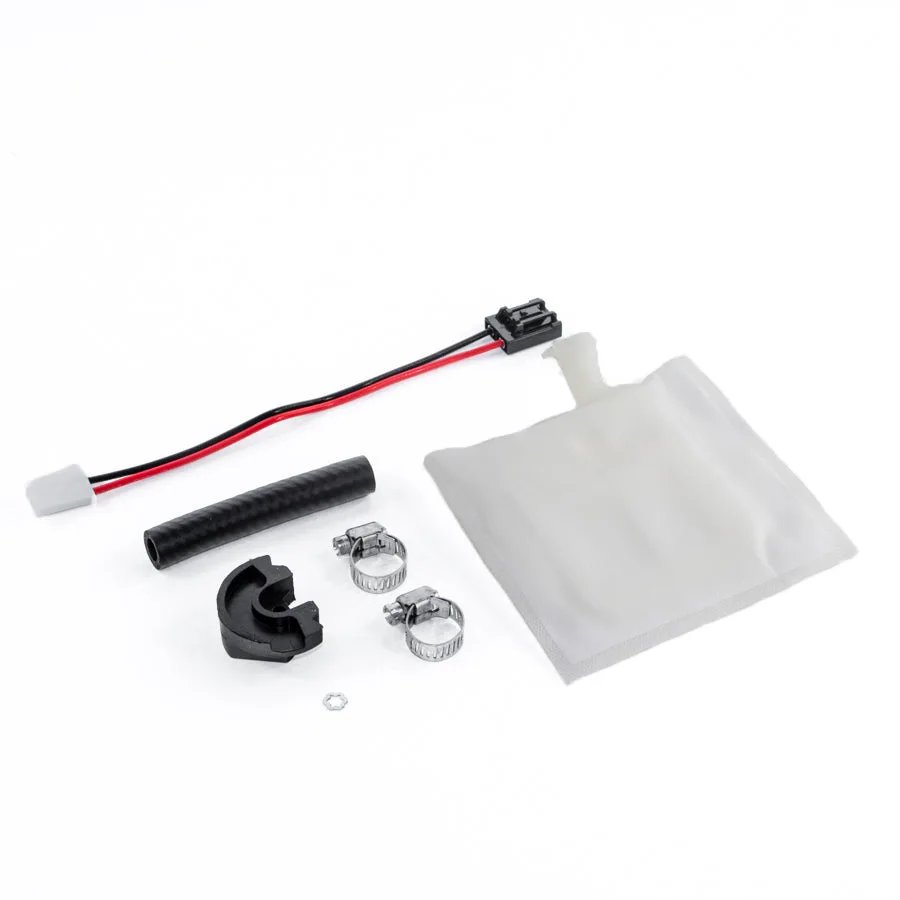
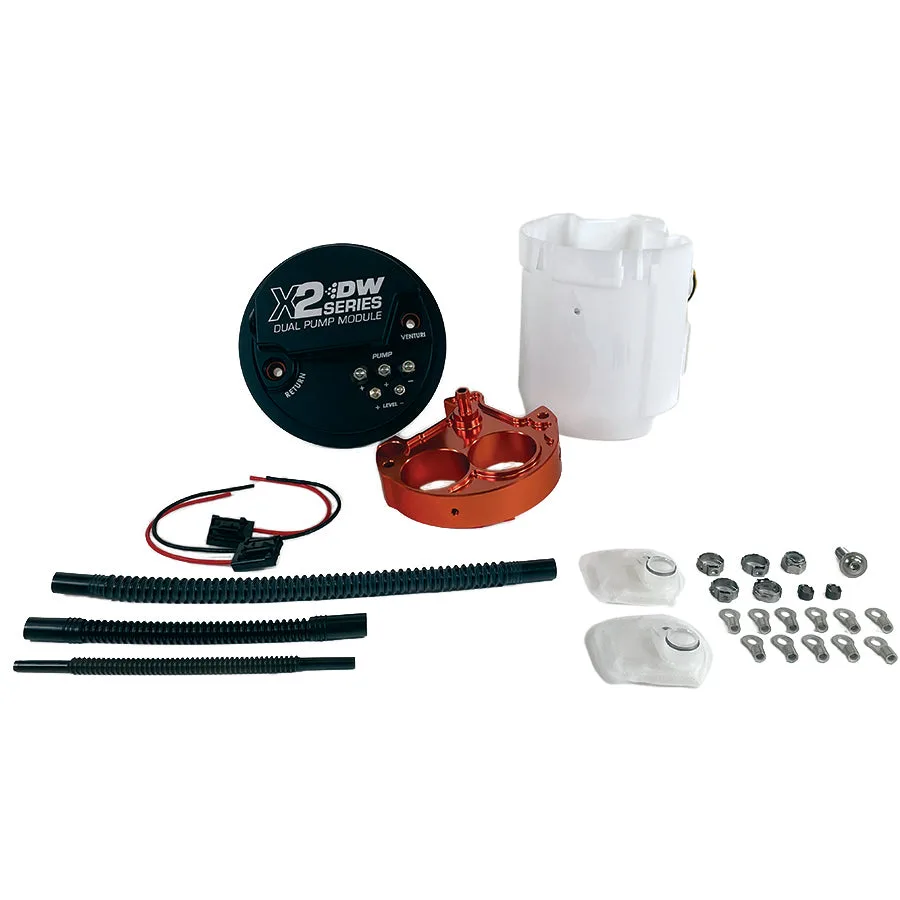
- DW200/300 Install kit for Early Subaru: Install Kit for DW300 and DW200. Forester 97-07, Impreza (Includes WRX and STI) 93-07, and Legacy 90-07. If you are upgrading the in-tank pump on an early Subaru as part of a surge tank feed, this kit includes the install hardware for those specific models.
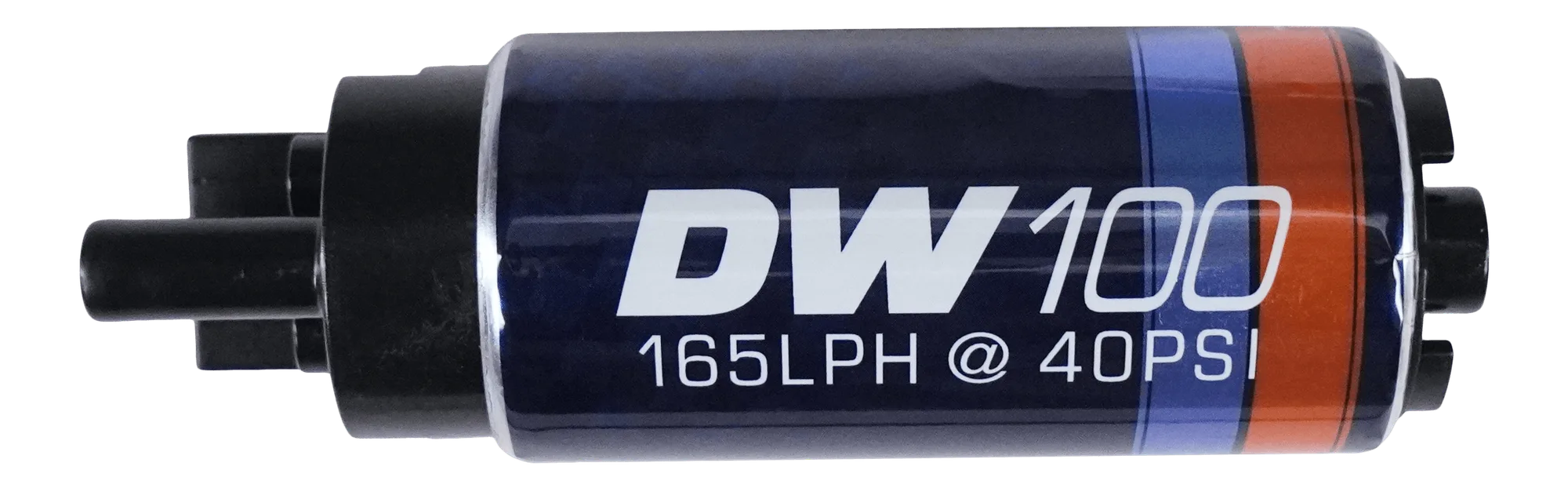
- https://deatschwerksevz.com/products/9-101-0791-8a9a90c2ea47e24493af2950-2678645DW100 Fuel Pump for Early Subaru: DW100 series, 165lph in-tank fuel pump w/ install kit for Subaru Impreza (exc WRX and STI) 93-07 and Legacy 90-99 and 05-07 OE REPLACEMENT. A 165lph in-tank pump can serve as a lift pump on a mild build, or as a direct OE replacement if you are not adding a surge tank.
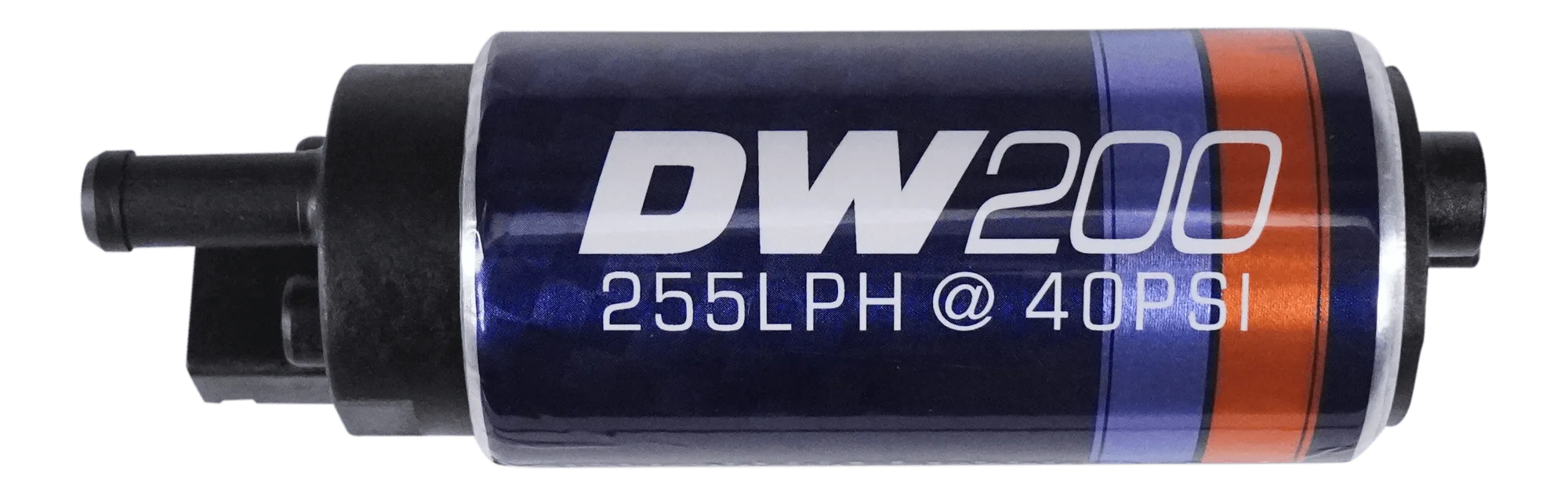
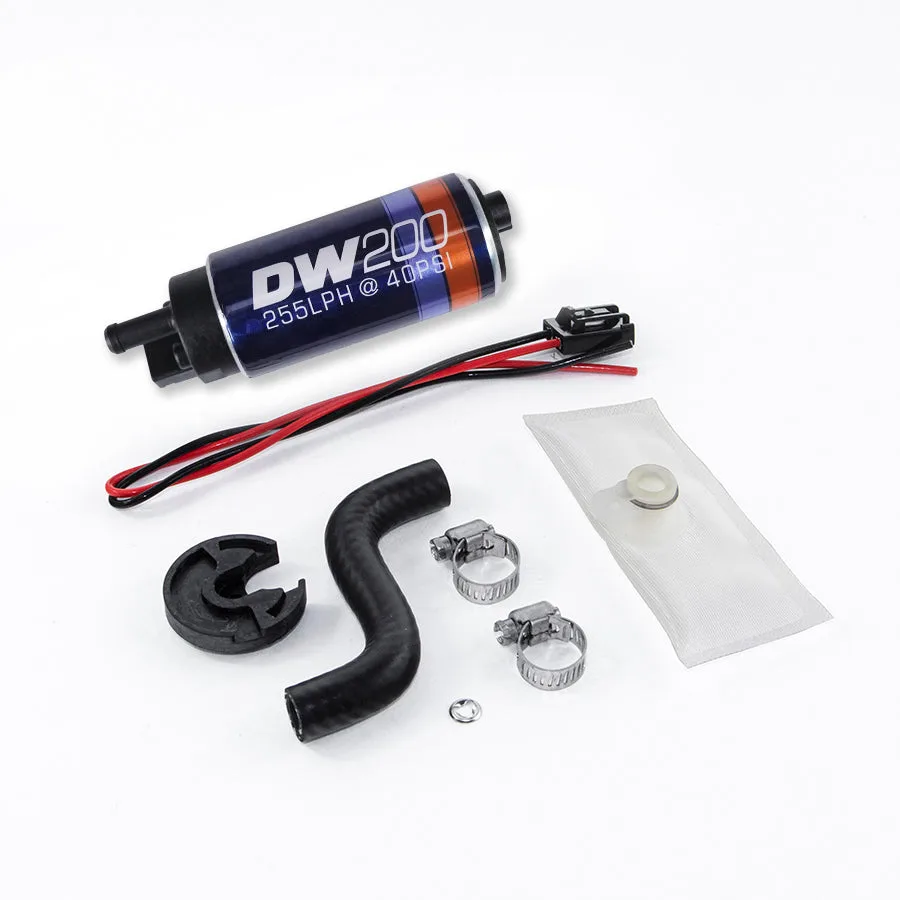
- https://deatschwerksevz.com/products/9-201-1014-c68d035915fba2d606b120bc-2678517DW200 Fuel pump for Fox Body Mustang: DW200 series, 255lph in-tank fuel pump w/ install kit for 85-97 Ford Mustang. For a Fox Body build, this 255lph pump is a common high-pressure pump choice when paired with a surge tank on a modified fuel system.
- 50 ft, 8AN SS Double Braided CPE Hose: 8AN Stainless Steel Double Braided CPE Hose, 50 Feet. A 50-foot roll gives you enough 8AN hose for feed and return lines on most surge tank layouts, with abrasion resistance for undercar routing.
A fuel surge tank setup is the right fix when fuel starvation is caused by pickup exposure, not by an undersized pump or a clogged filter. Plan the plumbing order, size the lift pump to keep the tank full, and test under the same conditions that caused the original stumble. If you are not sure a surge tank is needed, start by logging fuel pressure under load; the data will tell you whether the problem is slosh or supply.