Two Medium Format Rangefinders, Two Different Priorities
Both the Fujifilm GS645S and the Fujica GW690 III are medium format rangefinders that deliver the detail and depth that 35mm can't match. But they approach portability and negative size from opposite directions. The GS645S is built to be carried every day; the GW690 III is built to produce enormous frames. Which one suits your work depends on how much weight you're willing to carry for how much image area.
What the Catalog Confirms About Each Camera
-
Fujifilm GS645S | Medium Format Film Camera: The Fujifilm GS645S is compact, lightweight, and includes a built-in light meter. It captures 6x4.5 frames with a sharp 60mm lens. The 6x4.5 format is roughly three times the area of 35mm, giving you noticeably more detail without the bulk of larger medium format bodies. The built-in meter simplifies exposure, which helps when shooting quickly on the go.

Fujifilm GS645S | Medium Format Film Camera
-
Fujica GW690 III | Medium Format Film Camera: The Fujica GW690 III uses giant 6x9cm negatives—five times the size of a 35mm frame—with a fixed 90mm f/3.5 Fujinon lens. It is fully mechanical with no electronics. The 6x9 negative offers exceptional resolution and tonal range, ideal for large prints or scanning. The mechanical operation means no battery dependence, but the camera is physically larger and heavier, earning its 'Texas Leica' nickname.
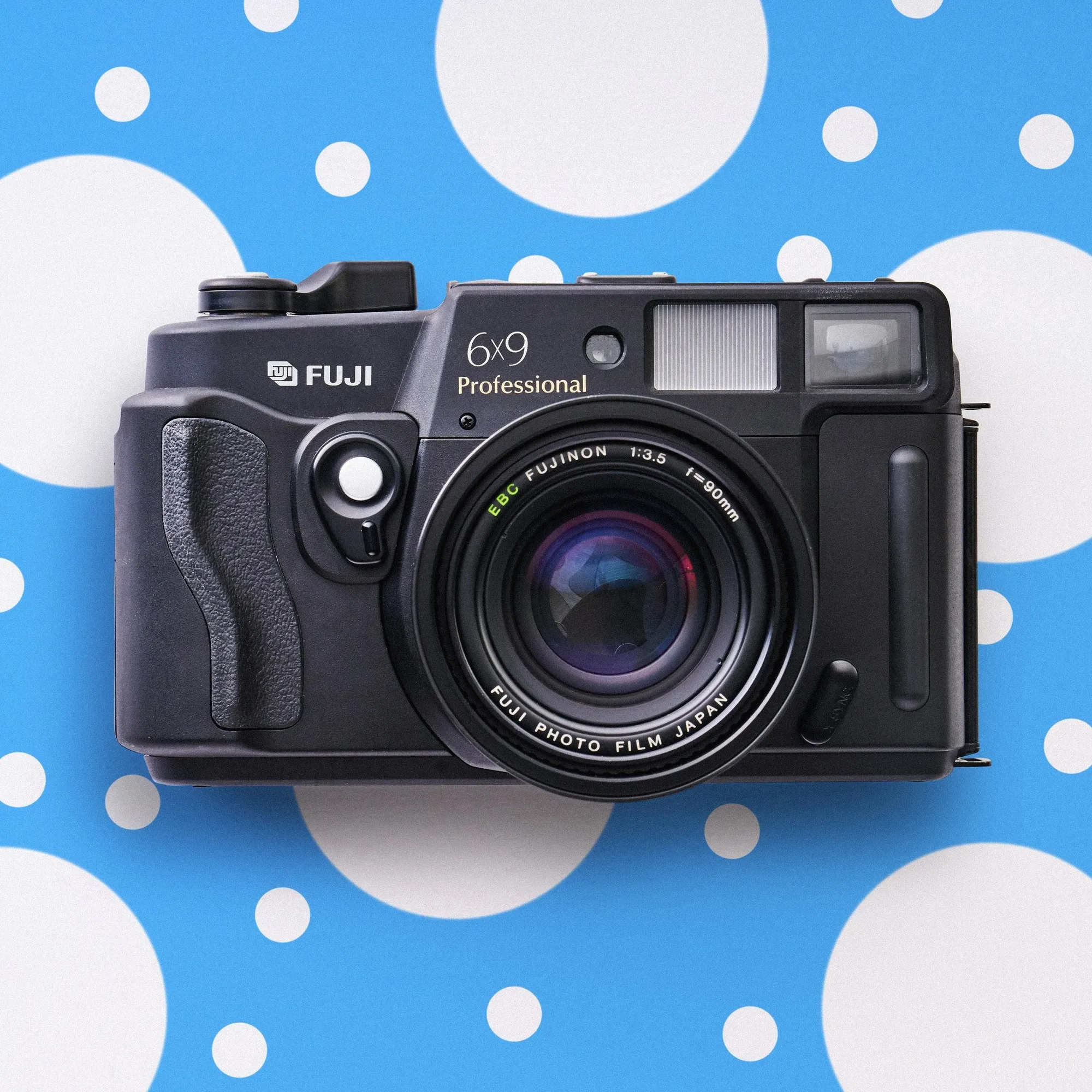
Fujica GW690 III | Medium Format Film Camera
Portability vs Negative Size: The Core Trade-Off
- Fujifilm GS645S – Everyday Carry: Described as compact and lightweight, the GS645S is built for travel, street photography, and spontaneous shoots. The 6x4.5 format still gives you a significant quality leap over 35mm, but in a body you can slip into a bag without a second thought.
- Fujica GW690 III – Maximum Frame, Manageable Bulk: The GW690 III is called 'portable for its size' and 'well-balanced,' but it's undeniably larger. The reward is a negative that's 5x the area of 35mm, giving you incredible detail, shallow depth of field potential, and room to crop. The trade-off is a camera that demands more space and a deliberate shooting pace.
Lens Character and Shooting Experience
The GS645S's 60mm lens is described as sharp and versatile, covering landscapes to portraits. It's a practical focal length that works for general shooting. The GW690 III's 90mm f/3.5 Fujinon lens is noted for 'legendary sharpness' and 'smooth, creamy bokeh,' making it particularly strong for portraiture and isolating subjects. The GS645S is easier to handhold for longer sessions, while the GW690 III encourages a more methodical approach—each frame costs more, so you compose more carefully.
Metering and Electronics
The GS645S includes a built-in light meter, which the catalog says 'simplifies your shooting process.' That's a real advantage if you want to move quickly or are new to medium format. The GW690 III is completely mechanical—no electronics, no battery. That means you need a separate meter or must estimate exposure, but it also means the camera will keep working as long as the shutter fires. If you prefer a pure analog experience or shoot in extreme conditions, the GW690 III's simplicity is a feature, not a limitation.
Which One Should You Choose?
- Choose the Fujifilm GS645S if…: You want a medium format camera you can take everywhere. The compact size, built-in meter, and versatile 60mm lens make it ideal for travel, street, and everyday shooting. The 6x4.5 format still delivers a clear quality jump over 35mm without the bulk of larger systems.
- Choose the Fujica GW690 III if…: You prioritize negative size and image quality above all else, and you're willing to carry a larger camera to get it. The 6x9 frame is unmatched for detail, bokeh, and scanning potential. The fully mechanical operation appeals to purists and those who shoot in environments where batteries fail.