What the compass adds to your binoculars
The FUJINON 7×50 MTRC-SX includes a built-in illuminated compass that shows bearing degrees in the view. This is a practical tool for marine navigation, orienteering, or any outdoor situation where you need to note a direction without taking your eyes off the scene. The compass is integrated into the right eyepiece, so the bearing appears in the same field of view as the magnified image.
Reading the compass in the field
The compass display shows degrees from 0 to 360. The number visible in the eyepiece is your current bearing. For example, if you see 90, you are looking due east. The compass is illuminated, making it readable in low light. The illumination is powered by a small battery; check the battery condition before extended trips.
- 1. Focus the binoculars first: Adjust the diopter on the right eyepiece and the center focus wheel until the target is sharp. A clear view makes the compass digits easier to read.
- 2. Note the bearing: Look through the right eyepiece. The compass digits appear at the bottom of the field. Read the three-digit number. If you are moving, the digits may change slowly; wait for a steady reading.
- 3. Use the bearing for navigation: Record the bearing and compare it with a chart or map. The compass gives you a magnetic bearing, which you can correct for magnetic declination if your navigation method requires true north.
Key facts about the FUJINON 7×50 MTRC-SX
-
FUJINON 7X50 MTRC-SX Binoculars with compass: All lenses and prisms boast high-quality EBC multi-coating, increasing light permeability for bright, natural colour reproduction. In low light or at dawn/dusk, the EBC coating helps you see the compass digits and the target clearly, reducing eyestrain.
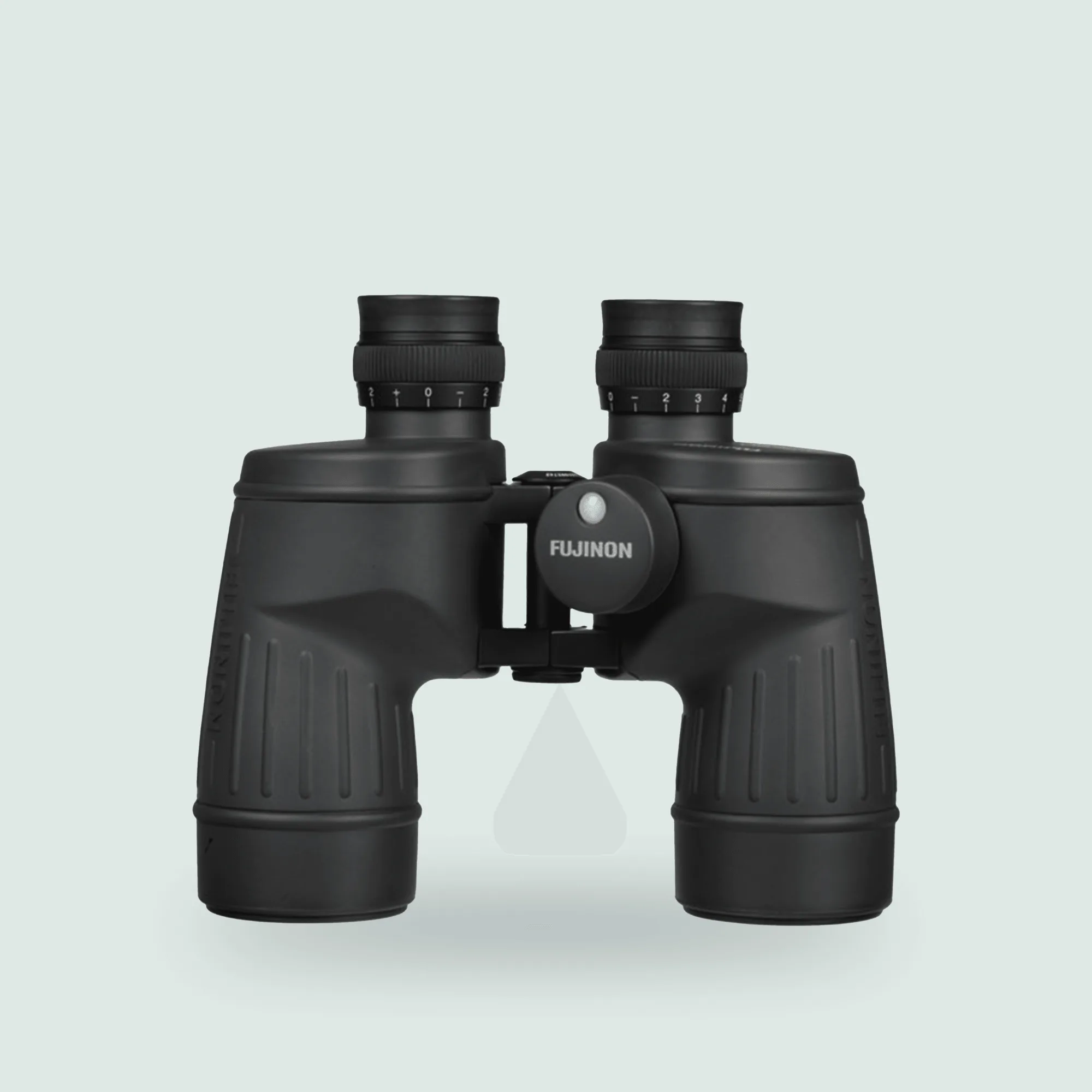
FUJINON 7X50 MTRC-SX Binoculars with compass
-
FUJINON 7X50 MTRC-SX Binoculars with compass: Highly waterproof and extremely durable body, enabling use in harsh conditions from -20℃ to +50℃. The rugged build means the compass and optics remain functional in marine spray, rain, and temperature extremes you might encounter on a boat or in the mountains.
Compass accuracy and limitations
The built-in compass is a magnetic compass. It is affected by nearby metal objects, electrical wiring, and large iron or steel structures. On a boat, keep the binoculars away from the helm console, engine, or metal railings when taking a bearing. On land, avoid power lines and metal fences. The compass is not a replacement for a dedicated marine compass for primary navigation, but it is a reliable backup and a convenient reference for logging bearings of landmarks, buoys, or wildlife.
Maintenance tips for the compass
The compass illumination runs on a battery. The supplied information does not specify the battery type or replacement interval. Before a trip, check that the illumination works. If the digits are dim or absent, replace the battery. Keep the eyepiece lens clean and dry; moisture on the lens can make the digits hard to read. The waterproof body protects the compass from rain and splashes, but do not submerge the binoculars intentionally.