The deck facts behind every answer
-
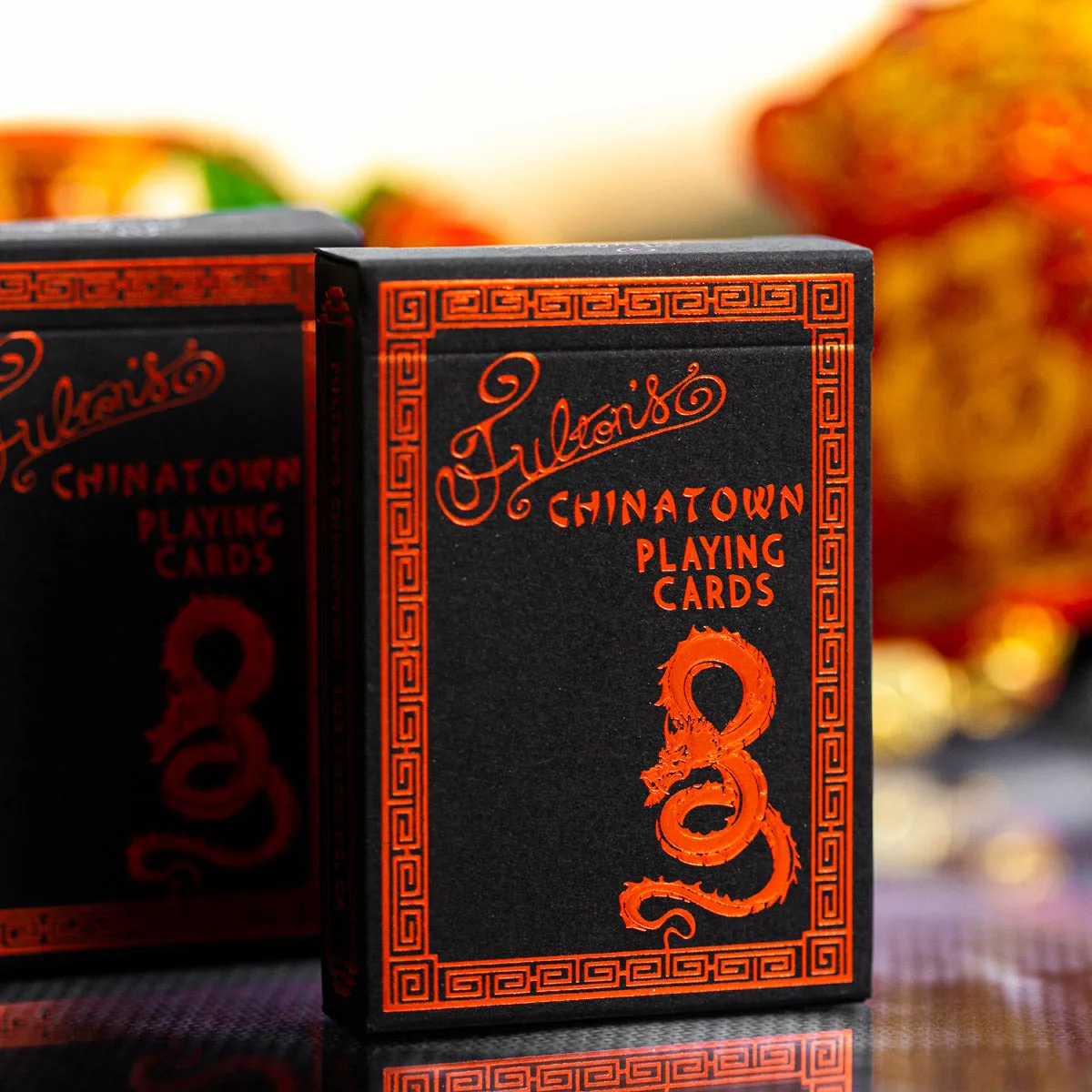
Fulton's Chinatown: Originally released in 2012 for Chinese New Year and offered again in a limited orange colorway. Explains why the deck you see now is not a first printing and why the colorway matters to collectors.
Fulton's Chinatown
-
Fulton's Chinatown: Limited to 999 decks. Sets the supply ceiling for anyone deciding how urgently to buy.
-
Fulton's Chinatown: Printed by the US Playing Card Co. on the proprietary thin stock. The stock is the main handling fact the record confirms.
-
Fulton's Chinatown: Designed by Brad Fulton with longtime collaborator Dan Phillips, inspired by Chinatown in Los Angeles. Connects the design to the people and place behind it rather than to marketing language.
Questions collectors ask before buying
Is this the original 2012 Chinatown deck?
No. The record describes it as originally released in 2012 for Chinese New Year and offered once again in a limited orange colorway. Treat it as a later, limited re-offering of the design, not the 2012 release itself.
How limited is the orange colorway?
The run is stated as limited to 999 decks. That is the only quantity figure the supplied record gives, so do not assume it matches the size of the 2012 release.
What stock are the Chinatown playing cards printed on?
US Playing Card Co. proprietary thin stock. The record names the printer and the stock but gives no caliper or weight figure, so there is no number to compare against other decks.
What is the card finish?
The supplied record does not name a finish. It confirms the thin stock and the USPC printing, but not whether the cards carry a particular coating or finish designation. If finish is your deciding factor, ask before ordering rather than inferring it from another Fulton deck.
Who designed the deck, and what inspired it?
Brad Fulton designed it with longtime collaborator Dan Phillips. The inspiration is Chinatown in Los Angeles, a place the designers say they visited often with Fulton during college.
Is there an age rating or safety information?
The supplied record lists no age range, warnings, or safety information for this deck. That is a gap in the available evidence, not a statement that the deck is unsuitable for any particular buyer.
Are there different versions to choose from?
The only variant in the record is Standard. No other colorway or edition is listed alongside this orange release, so the choice is simply whether to buy this deck.
What thin stock means for handling and storage
Thin stock is the one handling characteristic the record confirms, and it shapes how you should treat the deck. Thin cards flex more readily in the hand, which many cardists and magicians prefer for shuffles and packet work, but they also show bends and edge wear sooner if they are stored loosely or carried without a case. Keep the deck in its box between sessions and store it flat rather than in a pocket or a crowded drawer.
The record does not state a finish, so avoid assuming the cards will feel identical to other Fulton releases printed on different stock. Judge the deck on its own terms once it is in your hands.
Buying the orange colorway as a collector
The case for buying rests on three confirmed points: the orange colorway is a distinct limited release, the run is capped at 999 decks, and the deck carries a documented design history from 2012 to the present. If you collect Fulton releases or limited playing cards generally, those facts are enough to justify a place in your collection.
The case for caution is equally clear. The record gives no finish, no age rating, and no care instructions, and the only variant listed is Standard. If you need any of those details before committing, treat them as open questions to resolve with the seller rather than as settled features.