
Quick answer
Write about one shared, low-stakes moment from your work year, keep the joke on the situation rather than the person, and sign it with a warm line so the humor reads as affection. If the card already carries the punchline, your job is to add a short personal note inside, not a second joke.
Why office humor needs a tighter filter than friend humor
A card for a coworker passes through more hands and more interpretations than a card for a friend. The same joke that gets a laugh at lunch can read as a dig when it sits on someone's desk for a week, so aim for jokes about shared conditions: the coffee machine, the meeting that could have been an email, the holiday party itself. These land because everyone recognizes the target, and no one feels singled out.
The safest funny cards lean on a known reference rather than a personal roast. A card built around an office-party joke does the comedic work for you, which lowers the risk that your handwritten line misfires.
When a printed punchline is enough
If the card's front or inside already delivers a strong joke, resist adding a competing one. Two jokes in one card split the laugh and can make the handwritten note feel like an afterthought. In that case, write a short, warm line that names the shared moment and lets the printed joke stand.
This is also the better choice for a group card that several people will sign, where a long personal message from one person crowds out everyone else's space.
How to write the card, step by step
- Pick one shared moment, not a person: Choose a specific, low-stakes memory from the work year that at least two other people would recognize, such as a recurring meeting joke or the office party itself. Write it in one sentence. If the moment only makes sense to you and the recipient, it is too private for an office card.
- Match your line to the card's format: If the card is blank inside, write two to three sentences: the shared joke, then a warm closing. If the card already prints a punchline, add only a short personal line and your signature. Read the printed card first so you do not repeat its joke in your own words.
- Keep the joke work-safe: Cut anything about a coworker's appearance, age, relationships, drinking, or job performance. Replace it with a joke about the situation, the building, or the calendar. Ask whether you would be comfortable if a manager read the card aloud; if not, rewrite.
- Close with a genuine warm line: End with one sincere sentence, such as thanks for a specific piece of help this year, before your name. The warmth is what tells the reader the joke was affectionate. A funny card with no warm closing can read as a complaint.
- Sign, seal, and hand it over at the right moment: Sign your full name, seal the card in its sleeve or envelope, and give it at the holiday party or before the break rather than leaving it in a mailbox where it may sit unread. For a set of cards, write each coworker's name on the envelope before the party so you are not sorting them in the moment.
Cards that do the joke for you
-
Have a Gary Christmas Greeting Card: An A2 card with a blank inside and a kraft paper envelope, printed in Rhode Island. The blank interior gives you room for a short personal line without fighting a printed message, and the A2 size fits a standard card handoff at a desk or party.
Have a Gary Christmas Greeting Card
Have a Gary Christmas Greeting Card
-
Holiday Party Greeting Card: Available as a single card with envelope or a set of six, printed on A2 recycled white paper with kraft envelopes. The six-card option covers a whole team in one purchase, while the single card suits one coworker or a test run before committing to a set.
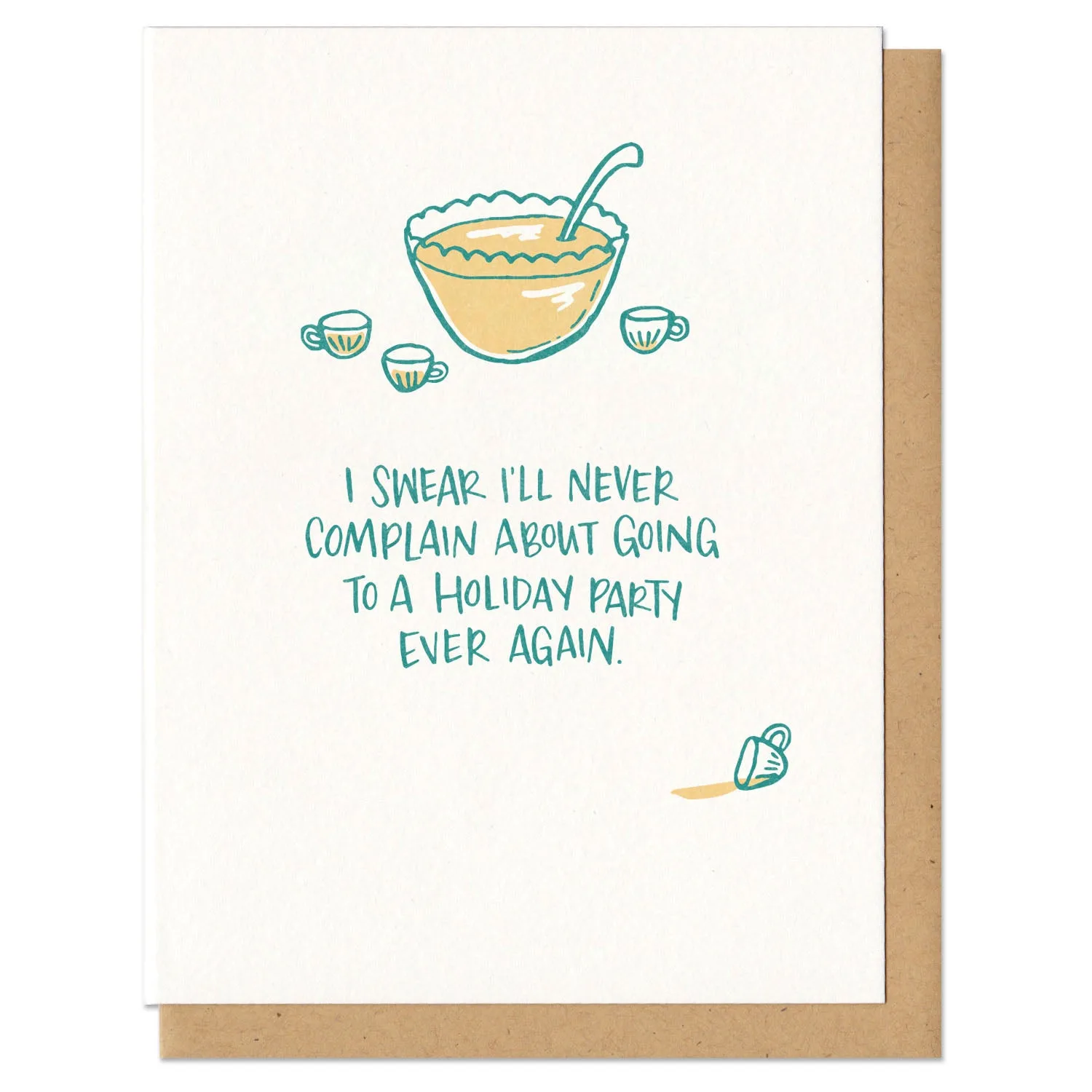
Holiday Party Greeting Card