Start with the set you actually have
The Leather Bond 5-Piece Fur-Lined Wrist & Thigh Cuffs Set is a complete restraint system: two wrist cuffs, two thigh cuffs, and a hogtie connector. The outer layer is firm full-grain cowhide; the inside is soft fur. That combination gives you structure where you need it and comfort against bare skin. Before you plan a hogtie, lay all five pieces out and check that the connector is present and the straps move freely through their buckles.
What the set includes
-
Real Leather 5-Piece Fur-Lined Wrist & Thigh Cuffs Restraint Bondage Set with Hogtie | Black: Set includes 5 pieces: wrist cuffs, thigh cuffs, and a hogtie connector, fully matched. Knowing every piece is present prevents mid-session surprises and confirms you have the connector needed for a hogtie configuration.
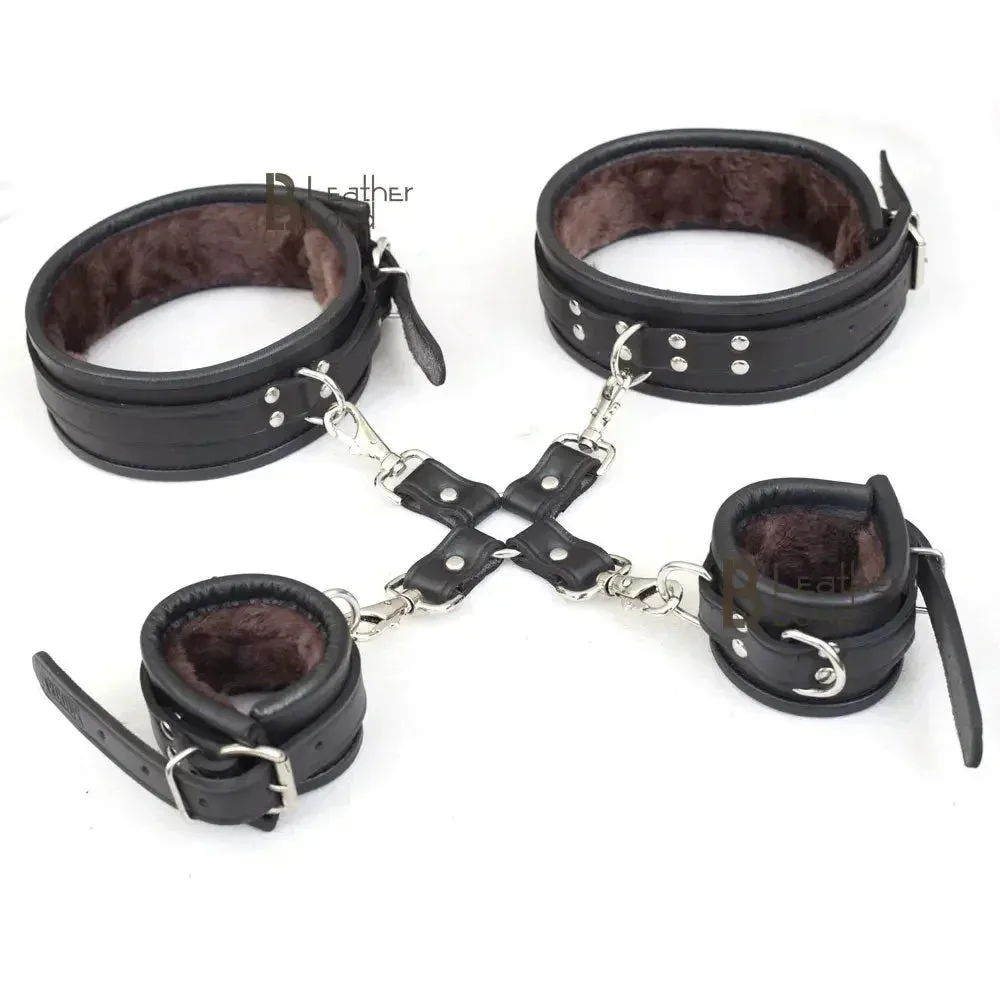
Real Leather 5-Piece Fur-Lined Wrist & Thigh Cuffs Restraint Bondage Set with Hogtie | Black
-
Real Leather 5-Piece Fur-Lined Wrist & Thigh Cuffs Restraint Bondage Set with Hogtie | Black: Material: genuine full-grain cowhide leather firm outside, luxurious fur lining inside. The firm leather holds its shape for restraint, while the fur lining is intended to reduce chafing during extended wear.
Adjust the leather cuff straps before you connect anything
Fit each cuff while the set is still separate. A good starting point is snug but not tight: you should be able to slide one finger under the strap. Because the cuffs are fur-lined, the lining compresses slightly when fastened, so check the fit again after a minute of wear.
- Wrist cuffs: Fasten each wrist cuff around the wrist. The adjustable strap should sit flat against the fur lining, with the buckle centered on the outside of the wrist. Tug gently to confirm the strap holds.
- Thigh cuffs: The thigh bands are wider than the wrist cuffs. Position each band around the lower thigh, above the knee, and fasten until snug. Check that the wide band does not dig in when you flex your thigh.
- Range check: With both wrist and thigh cuffs on, move your arms and legs through a comfortable range. If any strap restricts circulation or causes the fur to bunch, loosen and readjust before adding the connector.
Route the hogtie connector
The hogtie connector links the wrist cuffs to the thigh cuffs. Attach one end to the wrist cuffs and the other to the thigh cuffs according to the connector's design. The supplied information does not specify a single routing method, so test the connection with the cuffs off a body first: clip or loop the connector in place, then gently pull to confirm it holds. Once you are confident, attach it while your partner is already restrained in the wrist and thigh cuffs, and check that the connector length allows a comfortable, not strained, position. The goal is controlled restriction, not forced extension.
Hogtie safety basics to check every time
A hogtie configuration limits movement, so safety checks matter more than in a simple wrist-cuff scene. Run through these points before and during use.
- Circulation and sensation: Ask your partner to report any tingling, numbness, or coldness in the hands or feet. If any occur, release the connector and cuffs immediately.
- Breathing and position: Make sure the hogtie position does not compress the chest or restrict breathing. Keep the head free and the airway clear.
- Strap tension: Recheck the leather cuff strap adjustment after the connector is attached; the change in position can alter how the cuffs sit.
- Escape plan: Keep a safety knife or quick-release method within reach, and agree on a verbal or non-verbal safe word before you begin.
Using the set with a bed frame
The set is described as bed restraint ready and compatible with standard bed frame restraint connector systems. That means you can use the wrist and thigh cuffs with your existing bed connectors instead of the hogtie connector. If you go that route, attach the cuffs to the bed connectors first, then check that the straps are adjusted for comfort in the new position. The supplied information does not detail specific connector types, so verify compatibility with your own bed system before relying on it.
Compatibility note
- Real Leather 5-Piece Fur-Lined Wrist & Thigh Cuffs Restraint Bondage Set with Hogtie | Black: Bed Restraint Ready: Compatible with standard bed frame restraint connector systems. This lets you use the set beyond hogtie play, but you should confirm your bed frame connectors match the set's attachment points.
What the listing does not settle
The supplied product information does not include care instructions, maximum strap lengths, or weight limits. It also does not specify a recommended duration for wear or a single correct way to route the hogtie connector. Treat these as open questions: check the fit carefully, start with short sessions, and rely on your partner's feedback rather than assuming a fixed rule. When in doubt, loosen a strap or end the session early.