Quick answer
Choose Gabin if your long rides move between shade, cloud, and sun, because its single photochromic lens reacts to light. Choose Emile if you ride mostly in bright, high-intensity conditions and want a mirrored lens with large ventilation channels to manage sweat.
Lens behavior is the real split
The biggest difference between these two pairs is how the lens handles light. Gabin uses a single photochromic lens that reacts to light, so it is designed for speed and control across changing conditions. Emile uses a single mirrored lens, which is a fixed tint suited to bright, high-intensity racing.
That makes the choice less about style and more about the light you actually ride in. If your long rides start in low morning light and finish in full sun, a reactive lens reduces the need to swap eyewear mid-ride. If you mostly ride under strong sun, a mirrored lens gives you a consistent view without waiting for a tint to change.
Ventilation and sweat management
Emile is built with large ventilation channels that move sweat away, which matters on long, hard efforts where sweat can pool on the lens or run into your field of view. Gabin's catalog facts emphasize a secure, adjustable fit with silicone grips rather than ventilation channels, so if heavy sweating is your main issue, Emile has the more explicit answer.
Both pairs are described as flexible, unbreakable, and adjustable, so neither is fragile. The difference is that Emile's design leans toward airflow, while Gabin's leans toward a stable, reactive-lens setup.
What the catalog does not tell you
The supplied facts do not include lens tint percentages, frame weight, or exact nose-bridge dimensions. That means you cannot compare these two on precise light transmission or measured fit from the catalog alone. Treat the lens type and ventilation design as the reliable decision points, and plan to confirm fit and tint in person or through the store's fit guidance.
Trade-offs to weigh before you choose
- Light adaptability vs consistent tint: Gabin's photochromic lens adapts to changing light, which is useful for long rides that span dawn to midday. Emile's mirrored lens stays at one tint, so it is more predictable in strong sun but less flexible when conditions shift. Decide whether changing light or consistent brightness is more common on your routes.
- Sweat management vs grip security: Emile's large ventilation channels target sweat on hard efforts. Gabin's silicone grips target a stable fit. If sweat is your main complaint, Emile has the more direct design feature; if slipping is your issue, Gabin's grips are the relevant detail.
- Price difference: At catalog prices, Emile is USD 177.50 and Gabin is USD 170.00, both listed against a USD 250.00 comparison price. The gap is small, so let lens behavior and fit drive the decision rather than the USD 7.50 difference. Check current pricing and availability before ordering, since catalog prices can change.
Product facts
-
Emile: Single mirrored lens with large ventilation channels designed to move sweat away. A fixed mirrored tint and airflow make this pair a strong match for bright, sweaty, high-intensity rides.
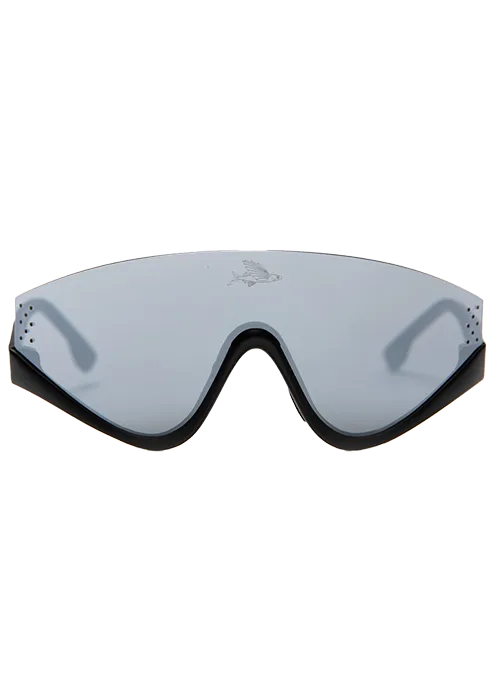
Emile
-
Gabin: Single photochromic lens that reacts to light, with flexible, unbreakable, adjustable frames and silicone grips. The reactive lens and secure grips suit long rides where light changes and the frame needs to stay put.
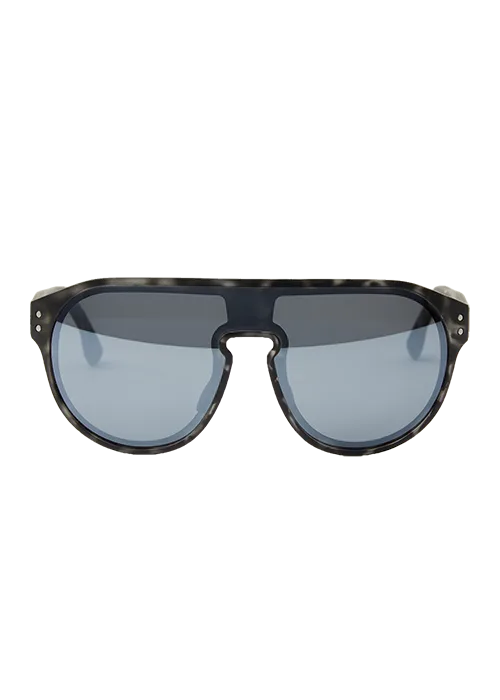
Gabin
Which rider should pick which
Best for
- Riders whose long rides move between low light and bright sun, who want a photochromic lens (Gabin)
- Riders in bright, high-intensity conditions who want a mirrored lens and strong ventilation (Emile)
Not for
- Riders who need a fixed dark mirrored tint for consistent full-sun brightness (choose Emile instead of Gabin)
- Riders whose priority is maximum airflow and sweat clearance over a reactive lens (choose Emile over Gabin)