Quick answer
Pick one hero piece, then let the other accent it. If the fountain is the focal point, choose a planter that is roughly half its height and repeat the fountain's finish or color. If a large planter leads, keep the fountain low and quiet so it reads as a companion, not a competitor.
The 2:1 height rule for planters and fountains
Measure the fountain's height from the ground to its top rim, then choose a planter that is about half that height. A 30-inch fountain sits comfortably beside a 15-inch planter. When the planter is taller than the fountain, the water feature looks like an afterthought, and the planter starts to block the view of the water.
Echo the finish, vary the shape
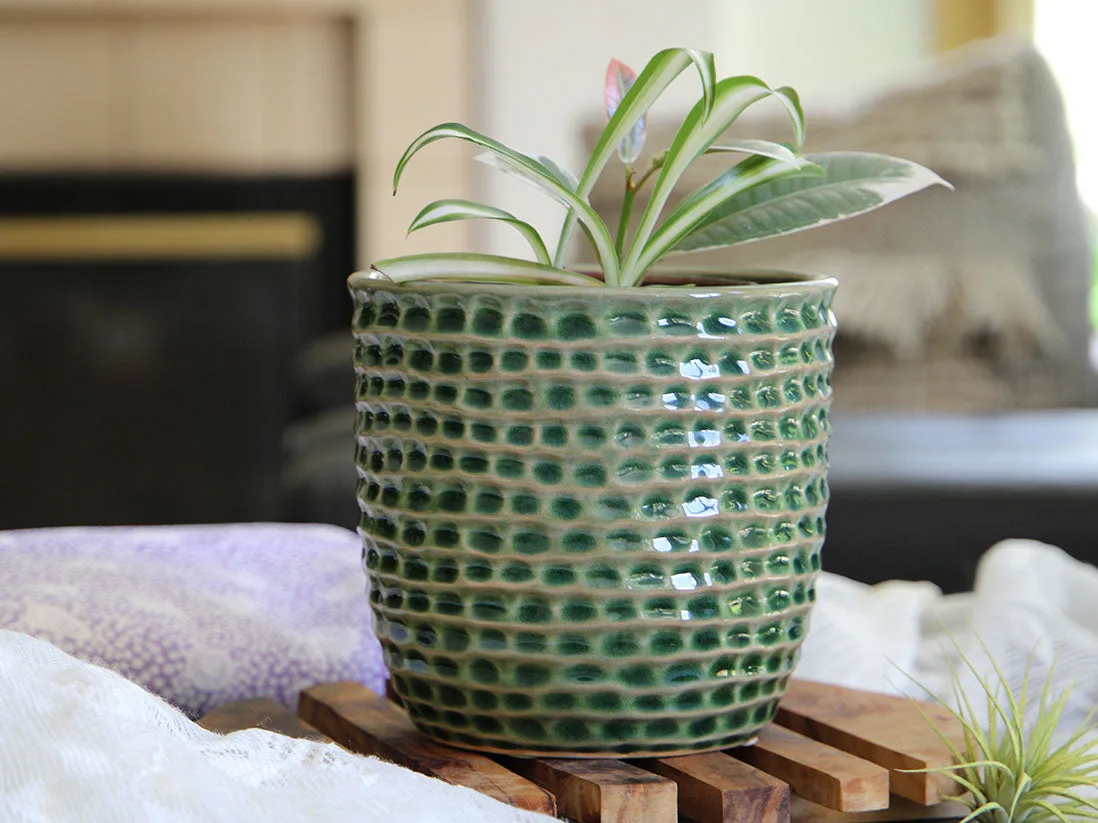
Repeating a finish ties two objects together, but repeating a silhouette makes a corner look like a showroom set. Pair a round, hand-glazed urn with a bowl-shaped planter in a related tone, or set a honeycomb-textured pot near a smooth stone fountain. The texture changes, the palette stays.
Placement rules for patios, balconies, and entries
On a patio, place the fountain where you already sit, not where you walk. Put the planter on the opposite side of the seating area so the two pieces frame the space instead of crowding one path. On a balcony, keep the fountain against the railing wall and the planter at the corner where wind is weakest. At an entry, set the fountain to one side of the door and the planter to the other, both pulled 6 to 10 inches away from the wall so air can move behind them.
When the planter should lead instead
If you already own a large, statement planter, do not add a tall fountain. Choose a low, tabletop-scale fountain and treat it as a detail near the planter's base. This keeps the planter as the garden accent and prevents two large objects from fighting for the same sightline.
Decision rules for pairing planters and fountains
- Fountain is the hero: Choose a planter about half the fountain's height and repeat one finish from the fountain. If the planter is taller than the fountain, swap the planter down a size.
- Planter is the hero: Use a low table fountain or a small water bowl near the planter's base instead of a tall fountain. Two large focal points in one sightline cancel each other out.
- Both pieces are new: Pick the fountain first, then bring the planter's color or texture into the fountain's palette. Buying the planter first often leads to a fountain that is too tall for the space.
- Small balcony or tight patio: Use one planter and one table fountain, and keep both off the main walking line. If you cannot stand back three feet and see both, the pairing is too crowded.
Product facts that affect pairing
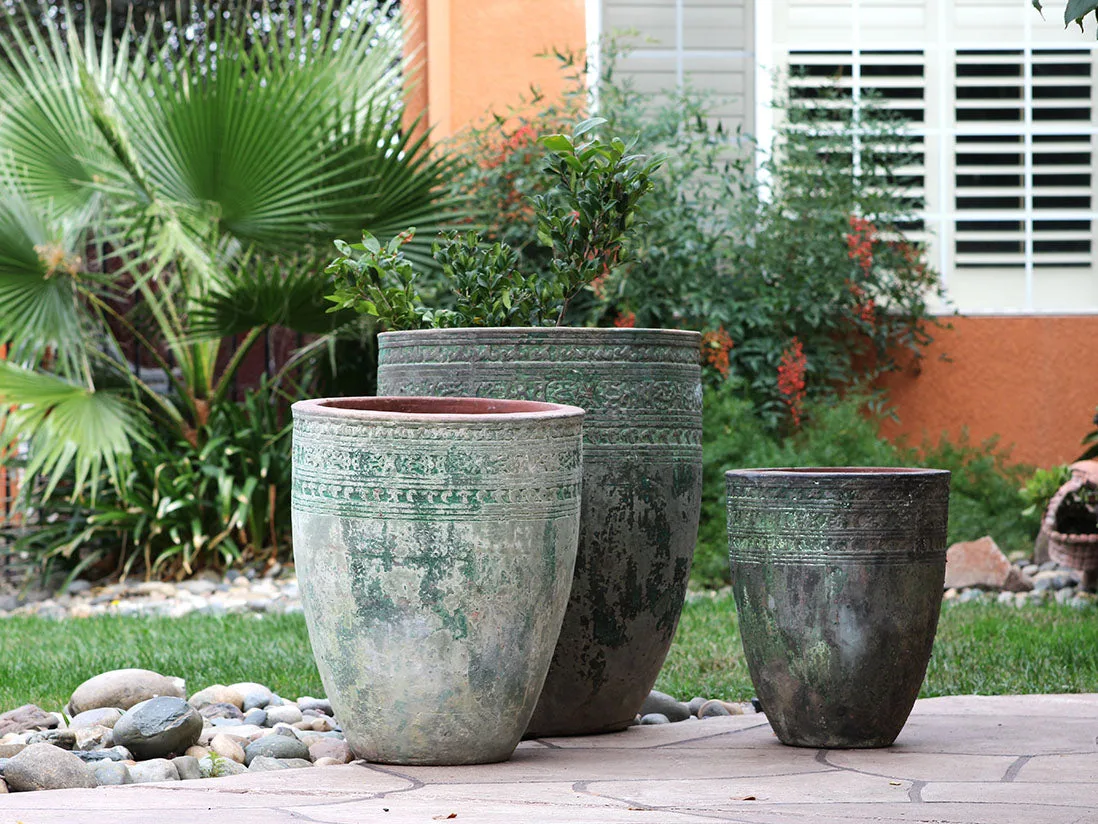
- Cono De Barro By Plantatorem: Cono De Barro By Plantatorem is an Earthen Stoneware outdoor planter made in a wooden kiln fired at 2200 degrees Fahrenheit, with a hand-glazing process that means no two pieces are alike. The one-of-a-kind finish makes it a natural hero piece, so pair it with a quieter fountain rather than a second highly patterned accent.
- Mediterranean Cantaro By Plantatorem: Mediterranean Cantaro By Plantatorem is an outdoor urn with a storytelling, old-world look in the Mediterranean Cantaro style. Its antique character suits a stone or aged-finish fountain; a glossy modern fountain will look mismatched beside it.
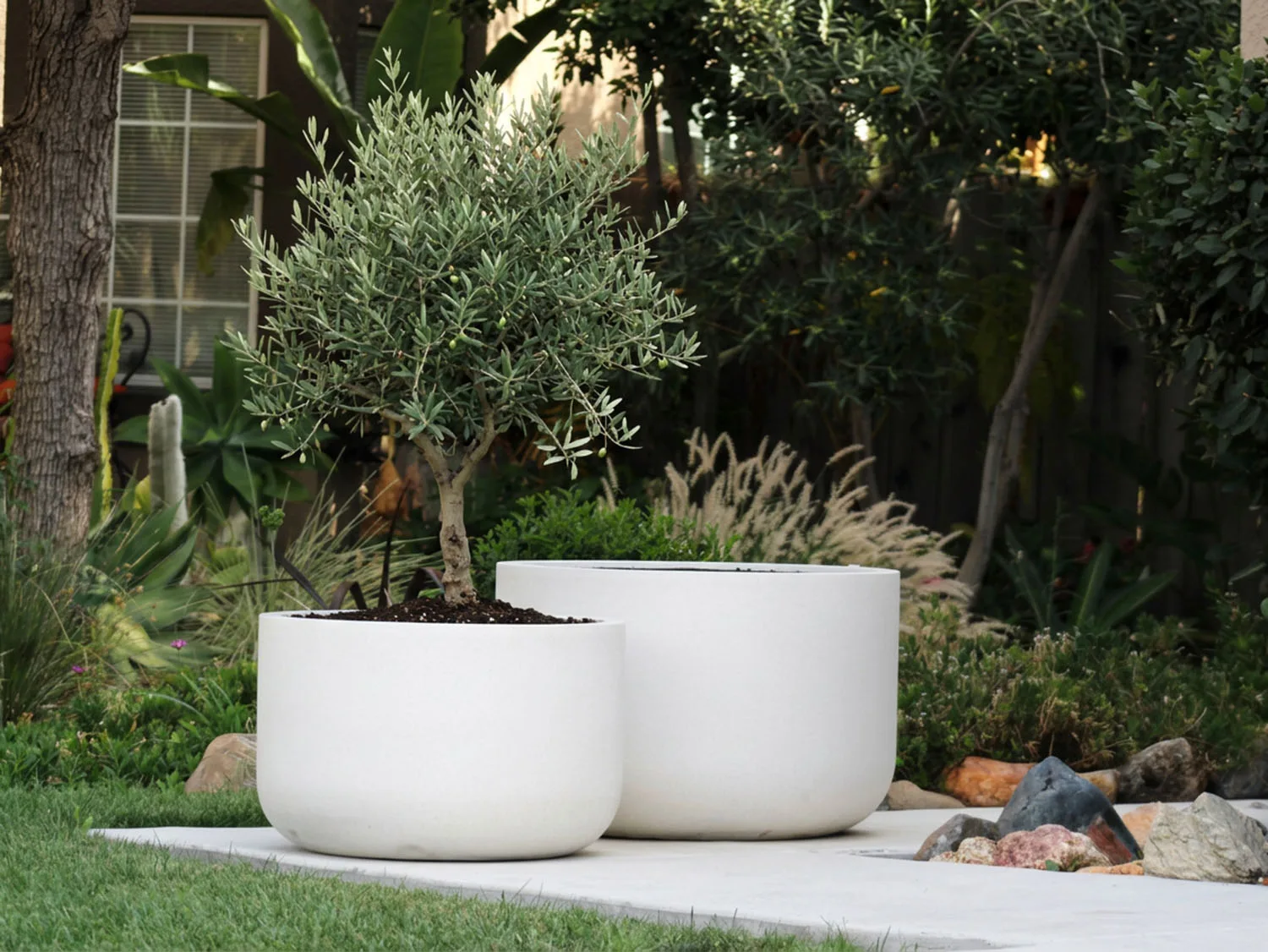
- OLIVE BOWL PLANTER: OLIVE BOWL PLANTER from PLANTATOREM is a ceramic urban planter suited to both indoor and outdoor settings, available in White Sand and Laterite Grey, as a set of 2 (28.5"X19.0" and 24.5"X16.0") or the 28.5"X19.0" size only. The bowl shape and neutral colors make it an easy secondary accent that won't compete with a fountain's finish.
- Honeycomb Planter By Plantatorem: https://plantatoremez.com/products/honeycomb-planter-case-of-6-b80c8d6e97a41c3434584ea4-2580490https://plantatoremez.com/products/honeycomb-planter-large-case-of-6-6240b814a0c72c0b02de6094-2580507https://plantatoremez.com/products/honeycomb-planter-case-of-4-72d6351cb4d6273965a1e8de-2580508Honeycomb Planter By Plantatorem is a ceramic indoor planter with a honeycomb-inspired look, available in Denim, Loyal Blue, Mustard, Matte White, Space Grey, and Seashell, as a single pot or a case of 8, with a single pot size of 5.5" D x 5.0" H. Its small size and color range make it a tabletop companion for a table fountain, not a ground-level pairing piece.
Who this pairing approach fits
Best for
- Homeowners styling a patio or entry with one fountain and one or two planters
- Balcony gardeners who need a small fountain and a compact planter to share limited floor space
- Shoppers choosing a planter to go with a fountain they already own
Not for
- Anyone planning a full fountain-and-planter installation with plumbing or built-in water lines
- Spaces with no outdoor power source if the fountain requires electricity
- Buyers who want a matched set of identical planters rather than a paired accent look