Two ways to spend a spring afternoon
A book and a doll are not competing purchases so much as two different kinds of play. Garden Treasures gives a child a story to follow; a Hazel Village doll or animal gives them something to dress, pose and narrate. The useful question is not which is better, but which one fits the child in front of you, and whether pairing them adds something a single item cannot.
This comparison sticks to what the listings confirm. It covers the Garden Treasures Book's stated age range and format, how reading and dress-up play differ in what they ask of a child, and where pairing them works well. It also flags what the supplied information does not settle, so you can decide without guessing.
What the Garden Treasures listing confirms
-
Garden Treasures Book: Garden Treasures is a 36-page hard cover book measuring 7.125” x 8.75”, written by Hazel Village founder Jane Van Cleef and illustrated by Jane Van Cleef and Sara Tanikawa. The page count and trim size tell you how long a read-aloud session runs and whether the book suits a lap or a shelf.
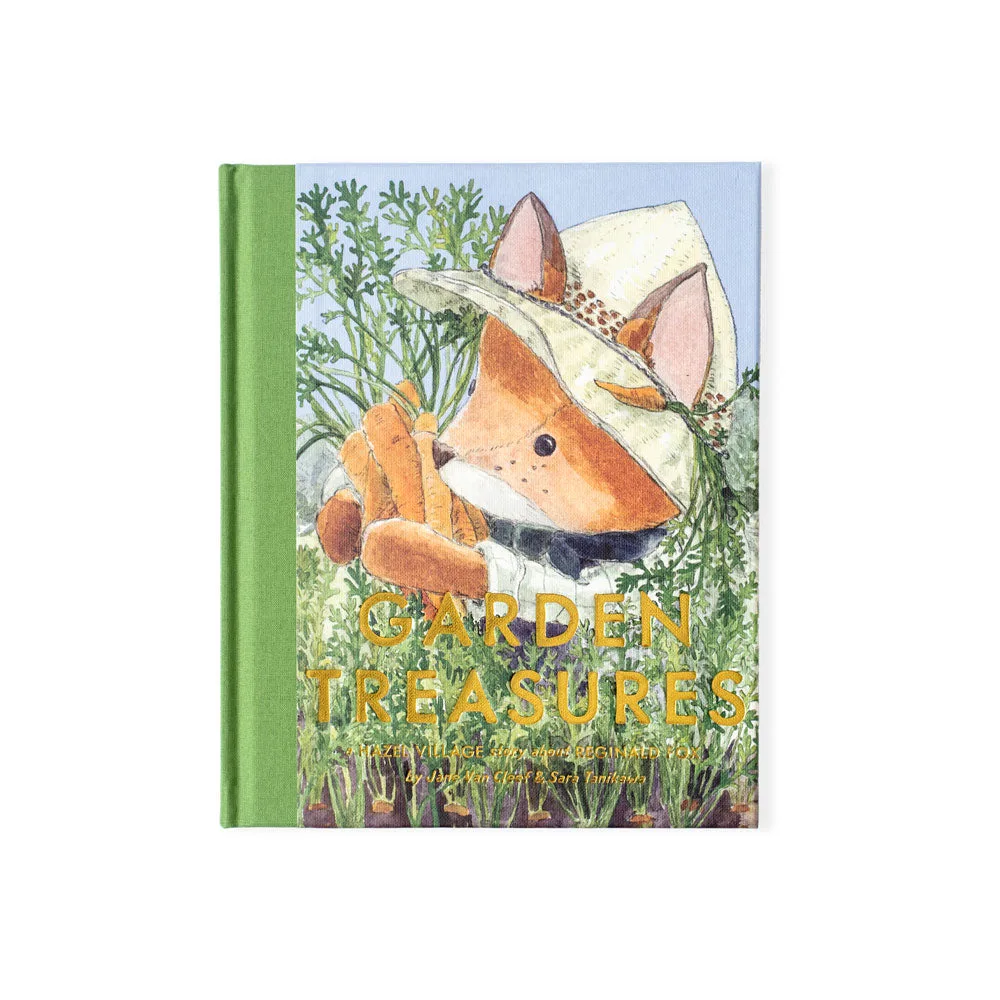
Garden Treasures Book
-
Garden Treasures Book: The listing describes the book as ideal for ages 4-8. That stated range is the clearest guide to whether a child is ready to follow the story, so treat it as the starting point rather than an assumption about any individual child.
-
Garden Treasures Book: The story stars Reginald Fox, who spends a spring day tending the Hazel Village garden, sharing its treasures with friends, and wondering what to do about the snails in the kale. A named central character and a garden setting give dress-up play a ready-made storyline to act out.
Reading vs. dress-up: what each actually asks of a child
Both are open-ended, but they lean on different skills and different amounts of adult involvement.
- Garden Treasures Book: A sit-together activity. The 36-page story works best read aloud to a child in the stated 4-8 range, with an adult or older reader carrying the text. It builds a shared narrative but does not require any props.
- Doll or animal dress-up: A hands-on, self-directed activity. A child dresses, poses and invents dialogue for a Hazel Village friend. The supplied information for this article covers the book only, so check each doll or outfit listing for its own materials and care details before buying.
- Paired play: Combines both: the book supplies characters and a plot, the doll supplies something physical to move through that plot. This is the option that asks the most of an adult, who usually reads while the child acts.
Story-time activity ideas that connect book to doll
These ideas use only what the book's listing describes. They are suggestions for play, not instructions from the manufacturer.
- Follow Reginald through the garden: Read a spread, then have the child walk their Hazel Village friend through the same garden task, such as tending plants or gathering treasures.
- Cast the friends: The listing notes that many Hazel Village animal friends appear in the story. Let the child match the friends they own to the ones on the page and give them lines.
- Solve the kale problem: The snails in the kale give you a small dilemma to act out. Ask the child what their doll would do, then read on to see what Reginald does.
- End at Strawberry Time: The listing mentions Strawberry Time and a friend helping Reginald. Use that beat as a natural place to pause and set up a tea-party-style scene with the dolls.
Where the age range matters most
The 4-8 range is the book's stated guidance, and it is worth taking seriously when you are choosing between a book-led gift and a doll-led one. A four-year-old will mostly listen and look at the illustrations; a seven- or eight-year-old can follow the plot, read some of it themselves, and direct a more elaborate doll scene afterward.
For children below the stated range, the supplied information does not describe the book as suitable, so treat it as a book to grow into rather than a purchase for a younger child. For children above eight, the story may still appeal, but the listing does not make that claim either way. The doll side of the pairing has no age guidance in the material supplied here, so check the individual doll listing.
What pairing the two does not promise
It is tempting to assume a book plus a doll automatically produces richer play. The supplied information does not include any research, test results or developmental claims about pairing books with doll dress-up, so this article does not make them. What you can reasonably expect is a shared activity: an adult reads, a child acts, and the story gives the play a shape.
The book listing also does not specify care or safety instructions for the book itself, and it does not describe a bundled set with any doll. If you want a book-and-doll gift, you are assembling two separate items, so confirm each one's details on its own listing.
Choosing between the book, a doll, or both
- Choose the book alone: Best when the child already has dolls or animals to act out stories with, or when you want a quiet, shared read-aloud that stores flat on a shelf.
- Choose a doll or animal alone: Best when the child prefers hands-on, self-directed play and does not need a script. Check that specific listing for materials and care guidance, which this article does not cover for dolls.
- Choose both as a gift pairing: Best when an adult is available to read aloud and the child is within or near the stated 4-8 range. The book supplies the story; the doll supplies the cast.