The Core Difference: How Each Material Supports Your Wrist
When you're deciding between a gel and a memory foam wrist rest mouse pad, the real difference comes down to how each material handles pressure and conforms to your wrist. Both aim to reduce fatigue during long hours at a computer, but they achieve that in distinct ways.
A gel cushion, like the one in the TECKNET BASICS Gel Mouse Pad, uses a high-quality gel that softly contours to your wrist. It distributes pressure evenly, which can relieve fatigue and discomfort during extended sessions. The gel provides a consistent, cool feel and doesn't change shape over time.
Memory foam, on the other hand, uses slow-rebound material that molds to your wrist's shape and then slowly returns to its original form. The TECKNET BASICS Cloud Ergonomic Mouse Pad features memory foam filling that evenly distributes pressure and resists deformation. It offers a plush, cradling sensation that adapts to your movements.
Pressure Distribution and Comfort Evidence
-
TECKNET BASICS Gel Mouse Pad with Wrist Rest, Ergonomic Office Mousepad with Wrist Support, Non-Slip & Smooth Surface, Comfortable Desk Mat for Office Gaming Study- Pink: A high-quality gel cushion softly contours to your wrist, distributing pressure evenly to relieve fatigue and discomfort during long sessions. If you want consistent, immediate pressure relief that doesn't change with temperature or humidity, gel provides a predictable feel throughout the day.
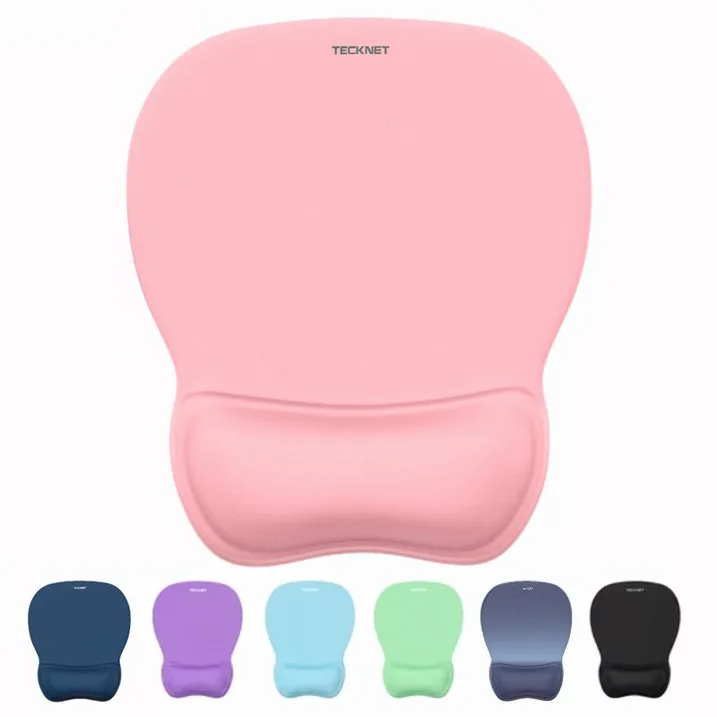
TECKNET BASICS Gel Mouse Pad with Wrist Rest, Ergonomic Office Mousepad with Wrist Support, Non-Slip & Smooth Surface, Comfortable Desk Mat for Office Gaming Study- Pink
-
TECKNET BASICS Cloud Ergonomic Mouse Pad with Wrist Rest, Memory Foam Support & Non-Slip Base for Pain Relief, Office & Gaming, Rainbow: High-quality slow-rebound memory foam provides superior comfort and evenly distributes pressure. Soft, durable, and resists deformation – enjoy lasting support during work or gaming. Memory foam adapts to your unique wrist shape and offers a softer, more personalized cradle. The slow rebound means it supports your wrist even when you shift position.
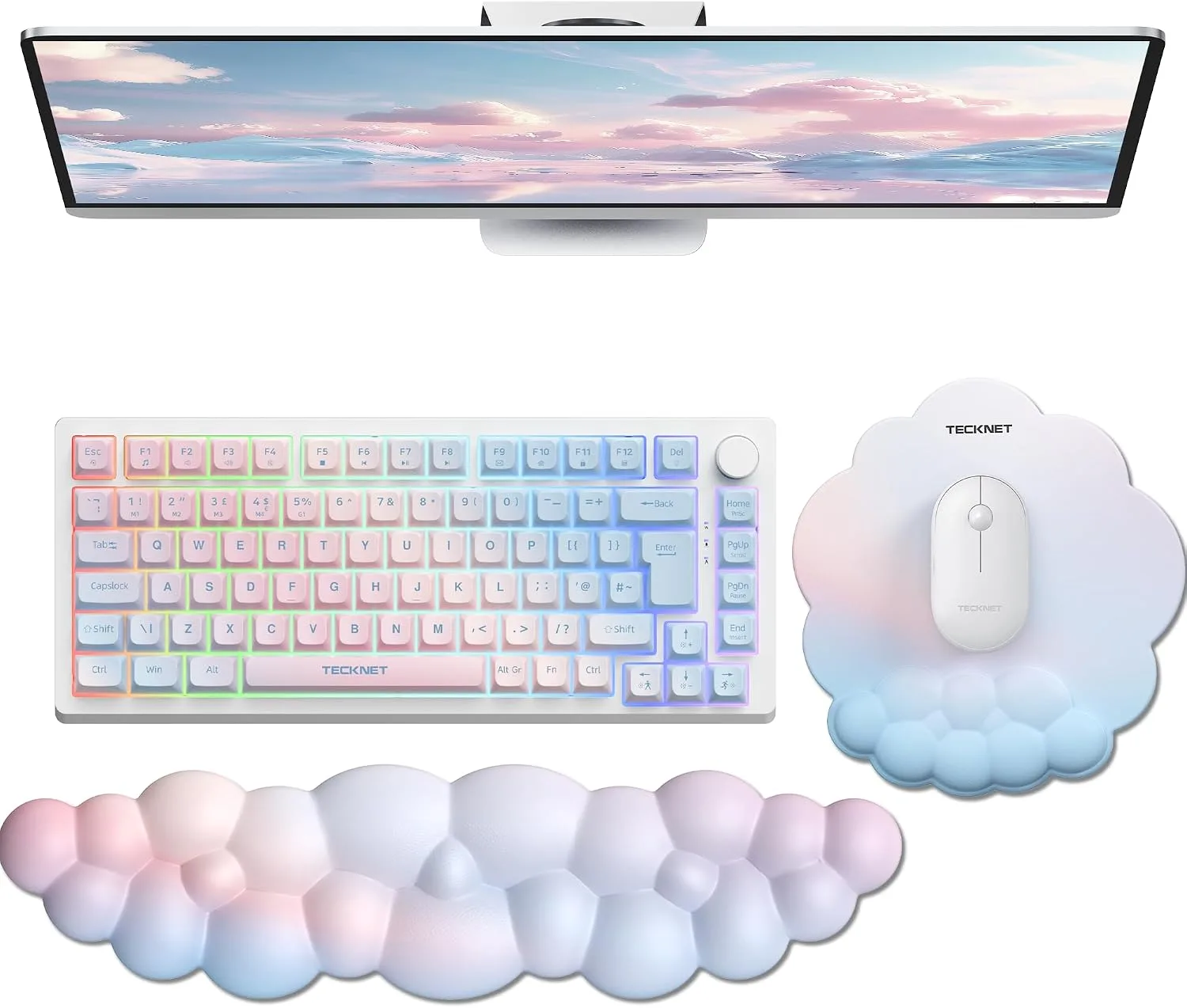
TECKNET BASICS Cloud Ergonomic Mouse Pad with Wrist Rest, Memory Foam Support & Non-Slip Base for Pain Relief, Office & Gaming, Rainbow
Size and Desk Fit: What Each Model Offers
Your desk space and mouse movement range affect which size works best. The TECKNET BASICS Gel Mouse Pad has a large 9.5" x 8.1" surface that allows smooth, unrestricted mouse movement. Its gel wrist rest is integrated into the pad, so you get a unified surface.
The TECKNET BASICS Cloud Ergonomic Mouse Pad comes as a two-piece set: a 16.93" x 4.72" x 0.79" keyboard wrist rest and a separate 10.43" x 9.84" x 0.9" mouse pad. This gives you more flexibility to position the wrist rest exactly where you need it, and the mouse pad offers a larger tracking area. Both fit any keyboard and mouse size, according to the product details.
Gel vs Memory Foam: Quick Comparison
Here's a side-by-side look at key features from the supplied evidence.
- Material feel: Gel: consistent, cool, immediate contouring. Memory foam: slow-rebound, plush, adapts to your wrist shape.
- Surface texture: Gel: smooth Lycra fabric that resists abrasion. Memory foam: textured surface that enhances air circulation and keeps wrist dry.
- Base stability: Both have non-slip bases. Gel uses a PU base; memory foam uses a rubber base that prevents sliding during use.
- Water resistance: Memory foam pad has a waterproof surface that withstands spills and sweat. Gel pad's surface is not specifically described as waterproof.
- Set configuration: Gel: single integrated pad. Memory foam: two-piece set (keyboard wrist rest + mouse pad).
What the Evidence Doesn't Tell You
Neither product record specifies the exact firmness level or temperature sensitivity of the materials. The gel pad's Lycra surface is heat-tested for durability, but there's no information on how the gel responds to cold environments. Similarly, the memory foam's slow-rebound performance in hot or cold conditions isn't detailed.
Both pads are described as universal fit, but if you have a very thick or very thin wrist, you'll need to judge comfort by feel. The gel pad's integrated design might suit those who prefer a single, stable surface, while the two-piece memory foam set allows more positioning flexibility but requires more desk space.
Ultimately, your choice depends on personal comfort preference: the immediate, consistent support of gel versus the adaptive, plush cradle of memory foam. Both are valid ergonomic tools for reducing wrist fatigue.