The German Infantry Assault Badge (Infanterie-Sturmabzeichen) is one of the most recognizable and historically significant awards from World War II. Instituted on December 20, 1939, it recognized infantry soldiers who participated in three or more assault actions on separate days. For collectors, this badge represents a tangible connection to the bravery and sacrifice of the German infantryman. Whether you are a reenactor, a history enthusiast, or a serious collector, understanding the nuances of this badge is essential for building an authentic collection.
This beginner's guide will walk you through the history, design variations, and key authentication points for the Infantry Assault Badge. We will also discuss how to pair your award with other period-correct gear, such as the Officer Sleeve Eagle, Bullion, to create a complete impression. By the end, you will have the confidence to identify genuine examples and avoid common reproduction pitfalls.
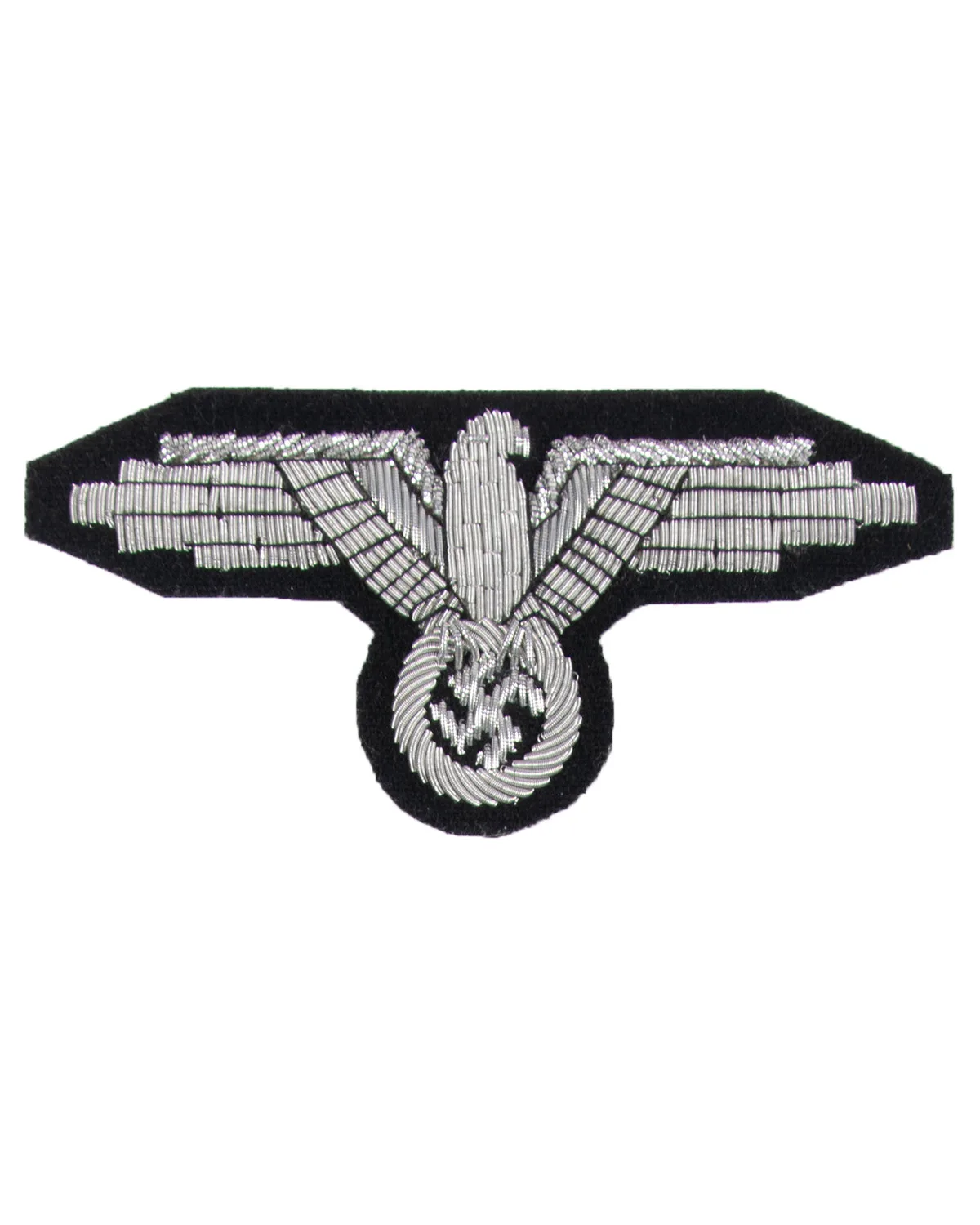
Officer Sleeve Eagle, Bullion
History and Purpose of the Infantry Assault Badge
The Infantry Assault Badge was created by the German High Command to boost morale and recognize the unique hardships faced by infantrymen during the early Blitzkrieg campaigns. Unlike the Panzer Assault Badge for tank crews, this award was specifically for foot soldiers who engaged in direct combat. The design features a rifle (the Kar98k) superimposed over a wreath of oak leaves, topped by the national eagle and swastika. The badge was worn on the left breast pocket, below the Iron Cross if awarded.
Initially, the badge was awarded in silver for infantry and bronze for motorized infantry (Panzergrenadiers), though the bronze version was introduced later in 1940. Over the course of the war, production expanded to multiple manufacturers, each with subtle die variations. Understanding these manufacturer marks is key to dating and authenticating a badge. For example, early badges by Juncker or Schwerin are highly sought after, while later war examples by companies like Rudolf Souval show signs of material simplification.
- Look for the manufacturer's mark on the reverse, typically a three-letter code or a logo. Common makers include 'J' (Juncker), 'S' (Schwerin), and 'L/12' (Rudolf Souval).
- Check the hinge and catch construction. Early badges often have a round wire hinge and a flat catch, while later badges may use a simpler, pressed catch.
Key Design Variations and What to Look For
The Infantry Assault Badge underwent several design changes during the war. Early examples (1939-1942) are characterized by fine detail, a hollow reverse, and a high-quality silver finish. The eagle's head is often more pronounced, and the oak leaves show distinct veining. As the war progressed and materials became scarce, manufacturers shifted to a solid reverse and a less detailed strike. Late-war badges may have a rough, matte finish and a thinner wreath.
One of the most common pitfalls for beginners is confusing the Infantry Assault Badge with the General Assault Badge. The General Assault Badge features a grenade and a wreath without the rifle, and it was awarded to combat support troops. Always examine the central motif: if it includes a rifle, it is an infantry badge. For a complete impression, consider pairing your badge with a high-quality reproduction uniform and insignia, such as the Officer Sleeve Eagle, Bullion, which adds authenticity to any WWII German display.
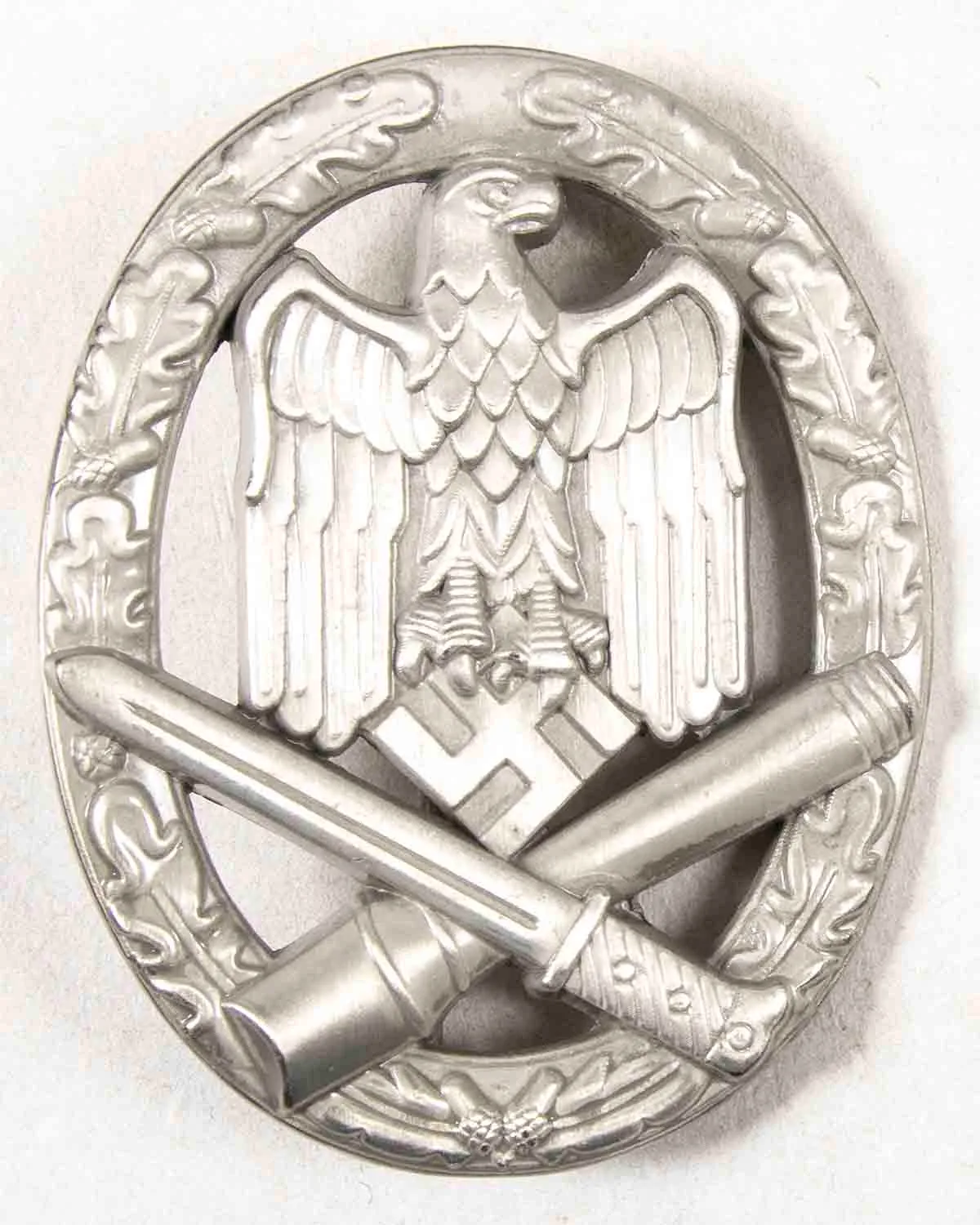
General Assault Badge
- Use a jeweler's loupe to inspect the details of the eagle's feathers and the rifle stock. Sharp, crisp lines indicate an original die strike.
- Beware of 'pot metal' reproductions that are too heavy or have a shiny, modern finish. Originals have a subdued, aged patina.
Building Your Collection: From Badge to Full Kit
Once you have acquired a genuine Infantry Assault Badge, the next step is to integrate it into a broader collection. Many reenactors and collectors aim to create a complete field kit that reflects the soldier who earned the award. This includes period-correct uniforms, headgear, and field equipment. For example, a soldier wearing the badge would likely have carried a https://wildernessworks.shop/products/m1923-cartridge-belt-made-in-usa-99180M1923 Cartridge Belt, Made in USA (though US-made, it was widely used by German forces in the later war years as captured equipment).
Additionally, consider adding other small items that round out the impression, such as the US WWII Eating Utensils, which were often scavenged by German troops. The key is to research the specific unit and time period you are portraying. A late-war Volksgrenadier unit would have different equipment than a 1940 motorized infantry division. The Infantry Assault Badge is a versatile centerpiece that works for both early and late war impressions, but the supporting gear must match.
- Cross-reference your badge's manufacturer mark with known production periods to determine the correct year for your impression.
- Join online forums or collector groups to see photos of original soldiers wearing the badge. This helps you understand how it was positioned and worn.
Avoiding Common Reproduction Traps
The market for German WWII awards is flooded with high-quality fakes, especially for popular badges like the Infantry Assault Badge. Beginners should be cautious of deals that seem too good to be true. Common reproduction indicators include a perfectly uniform finish, a lack of wear on high points, and a hinge that is too large or crudely soldered. Original badges often show subtle signs of age, such as a slight darkening in the crevices and a soft, worn finish on the eagle's wing tips.
Another red flag is the absence of a manufacturer mark. While some late-war badges were left unmarked, most originals bear at least a partial code. Always buy from reputable dealers who offer a return policy. For those starting out, purchasing a known original example from a trusted source can serve as a reference for future acquisitions. Pairing your badge with a high-quality reproduction like the M1923 Cartridge Belt, Made in USA can help you learn to distinguish between original and reproduction equipment.
- Learn the weight of an original badge. Most are around 20-30 grams. Fakes are often heavier due to different alloys.
- Use a magnet. Original badges are typically made of zinc or tombac (a brass alloy) and are non-magnetic. Steel-based fakes will stick.
The German Infantry Assault Badge is a rewarding entry point into WWII collecting, offering a blend of history, craftsmanship, and personal connection to the soldiers who wore it. By understanding its design variations, manufacturer marks, and common fakes, you can build a collection with confidence. To start your journey, explore our selection of authentic reproduction gear, including the M1923 Cartridge Belt, Made in USA, which pairs perfectly with your badge for a complete and accurate impression.