Quick answer
Work the Gingerbread Man Counted Cross Stitch Leaflet by reading its chart in 10x10 blocks, marking your fabric center first, and stitching one color at a time. Treat the leaflet as both a map and a checklist, not a picture to copy freehand.
Why a leaflet is not a kit
A counted cross stitch leaflet gives you the chart and instructions; it does not include fabric, floss, or a needle. That changes your first step: you must match your own supplies to the leaflet's symbol key before you thread a needle. If you are used to kits, the freedom is useful, but it also means a missing color is your decision to solve, not a manufacturer's omission.
Where beginners lose the count
The most common mistake is starting at the top-left corner of the chart instead of the center of the fabric. The leaflet's chart is designed around a center point, and starting elsewhere makes every later block harder to align. Another frequent error is stitching all the outlines first; outlines are easy to see but they do not help you verify interior placement. Work large color areas first, then add detail.
Your step-by-step stitch plan
- Read the symbol key before you cut fabric: Unfold the leaflet and highlight every symbol in the key. Count how many colors the chart uses, then pull those floss numbers from your stash. Checkpoint: if a symbol appears only in a small area, flag it so you do not run out mid-block. A missing color is easier to substitute before you start than after you have stitched around it.
- Find and mark the fabric center: Fold your fabric in half horizontally and vertically, press the creases lightly, and mark the intersection with a removable stitch or pin. Match that point to the center arrows on the chart. Common mistake: counting from the fabric edge instead of the center, which shifts the whole design.
- Grid the chart, not the fabric: Use a ruler to draw light pencil lines every 10 squares on a photocopy of the chart, or place it in a plastic sleeve and mark with a dry-erase pen. Do not draw permanent grid lines on your fabric. Checkpoint: confirm each 10x10 block on the chart matches a visible landmark, such as the gingerbread man's button row. Gridding the chart keeps your place without risking stains on the finished piece.
- Stitch one color at a time in large areas: Start with the largest single-color region, usually the body of the gingerbread man. Work in rows or columns within that color, completing each cross before moving on. Common mistake: jumping between colors, which makes it hard to count rows and easy to carry threads across the back.
- Check your count every ten stitches: After each 10x10 block, compare your fabric to the chart before adding the next block. If a stitch is off by one, remove it now rather than after surrounding colors are in place. Checkpoint: the edge of your stitched area should line up with the chart's grid line, not drift. A ten-stitch check catches errors while the fix is still small.
- Add outlines and details last: Once the main color blocks are complete, stitch any backstitch or accent lines shown in the leaflet. Use a shorter length of floss for details so it does not fray. Common mistake: pulling detail stitches too tight, which distorts the fabric and hides the design's shape.
Leaflet facts that shape your plan
-
Gingerbread Man Counted Cross Stitch Leaflet: The leaflet includes clear instructions and a detailed pattern for crafters of all levels. You can follow the printed chart without buying a separate guide, but you still supply your own fabric and floss.
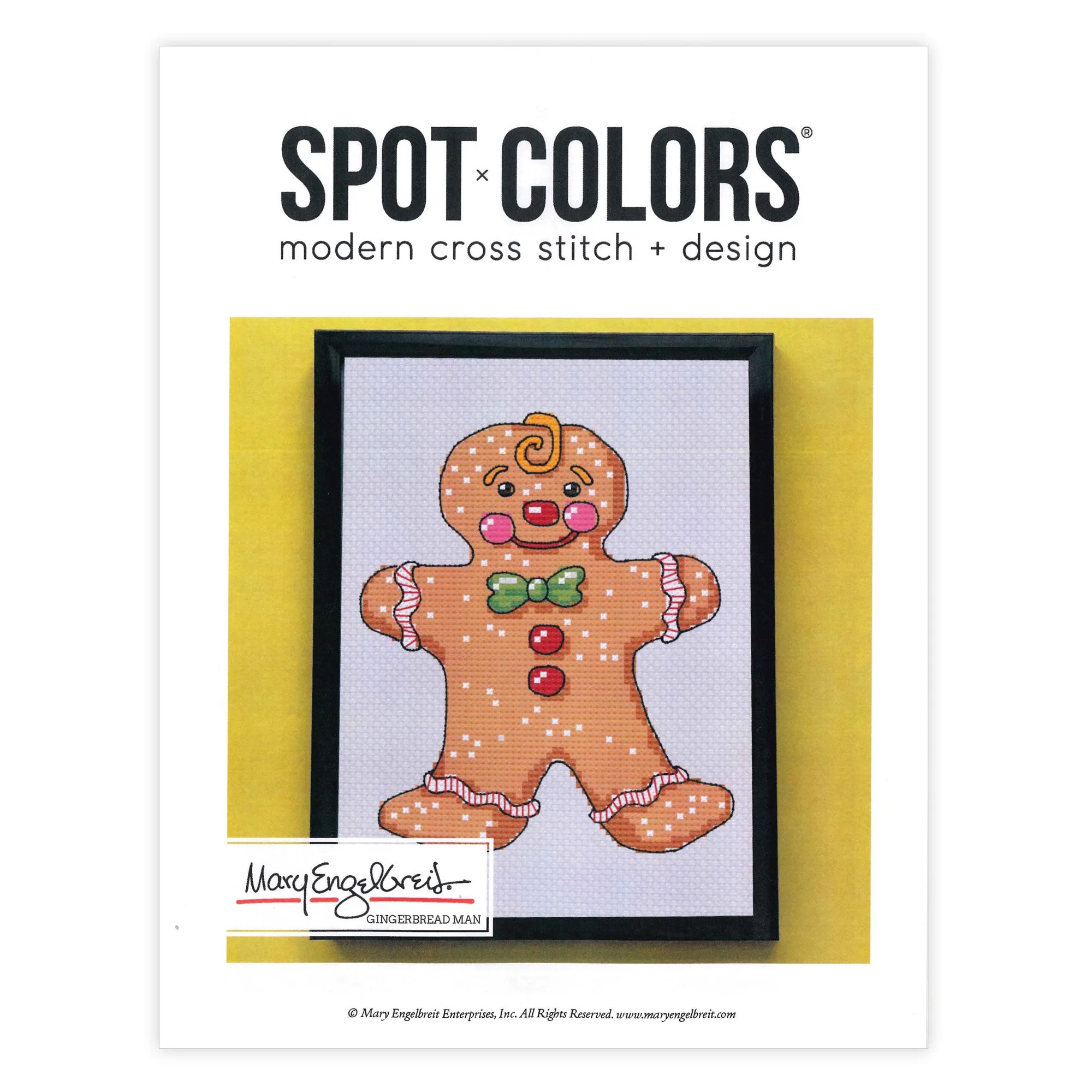
Gingerbread Man Counted Cross Stitch Leaflet