Gino the Bead: Same Shape, Different Metal
Gino the Bead is a two-piece end stop lanyard bead. A titanium head threads into a metal hat to hide the end of your lanyard. The shape and thread design are the same across both versions, so your decision comes down to the hat material, the weight it adds, and how you want the bead to age.
The catalog lists two versions: Gino the Bead Brass and Gino the Bead Mokuti. Both are available on their own or with a black paracord knotted lanyard. That variant choice matters as much as the metal, especially if you want a complete setup rather than just the bead.
What Each Version Weighs and Measures
-
Gino the Bead Brass: Gino the Bead Brass weighs 29.2 grams and measures 13/16" (21mm) tall with a 7/8" (22mm) diameter. At nearly 30 grams, this is a substantial end stop. The listed size helps you judge whether it will feel bulky or balanced on your lanyard.
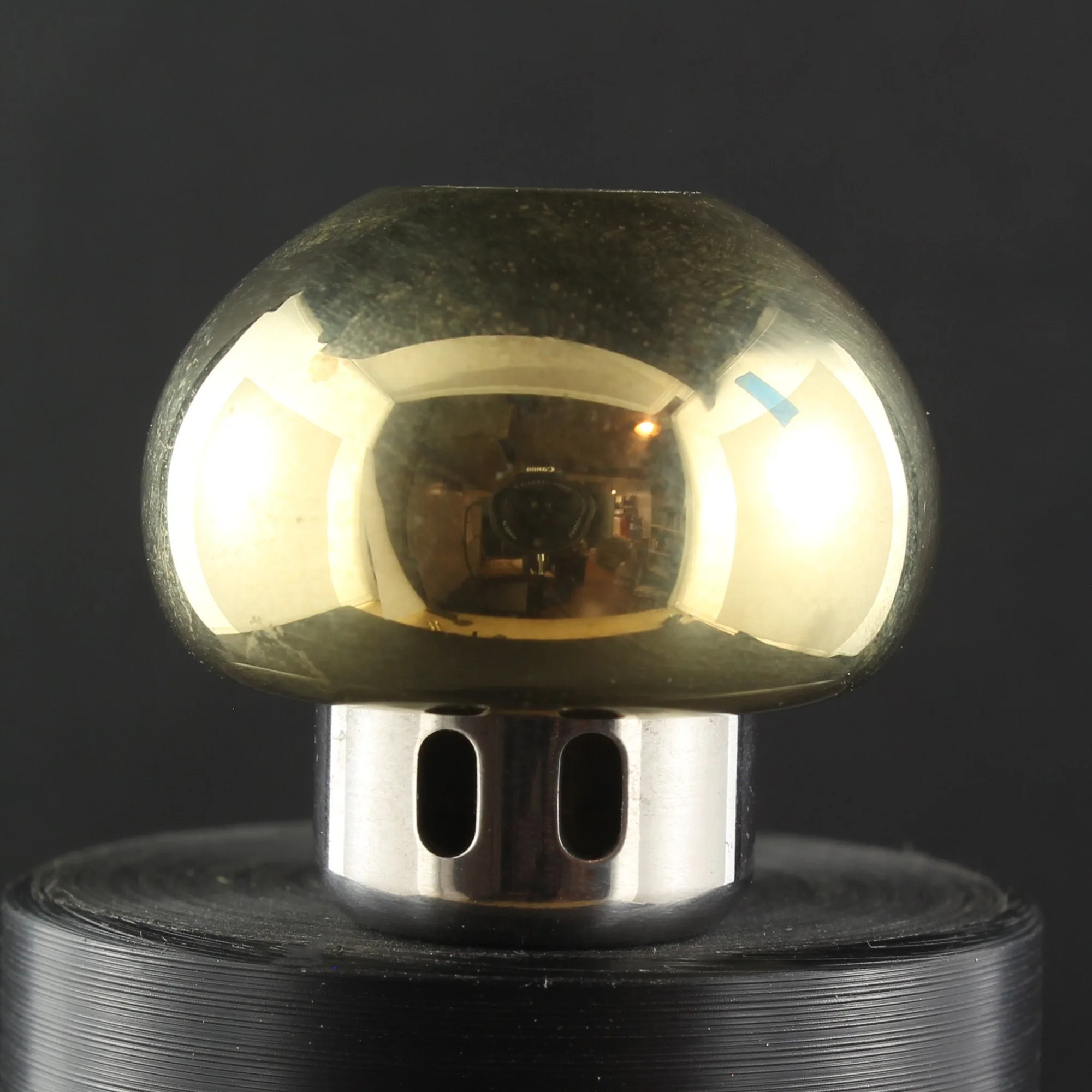
Gino the Bead Brass
-
Gino the Bead Mokuti: Gino the Bead Mokuti weighs 17.2 grams and shares the same 13/16" (21mm) height, 7/8" (22mm) diameter, and 1/4" (6.5mm) thru hole. The mokuti version is about 12 grams lighter than brass, which you may notice in hand or on a longer lanyard. The identical thru hole means either version fits the same lanyard cord.
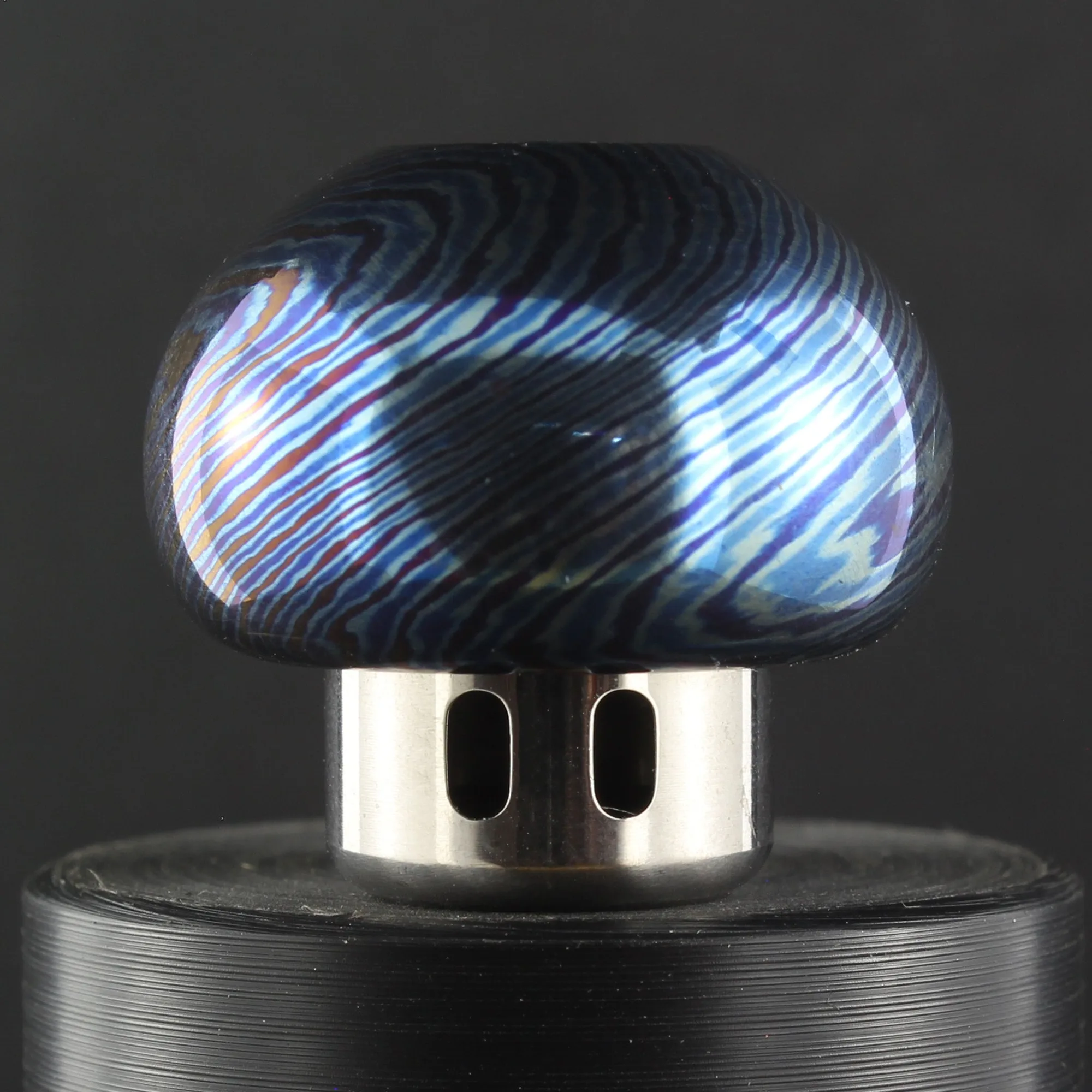
Gino the Bead Mokuti
Brass: Weight, Warmth, and a Changing Finish
Brass gives Gino a heavier, denser feel. If you like an end stop that makes its presence known when you pick up your keys or tool, the 29.2-gram brass version delivers that. The catalog does not describe a specific finish or patina process for the brass, so treat any color change over time as a natural characteristic of the metal rather than a guaranteed feature.
The brass hat threads onto the titanium head just like the mokuti version. Because brass is a softer metal than titanium, it may show handling marks more readily, but the supplied information does not include a care routine or hardness rating. Keep your expectations conservative and avoid abrasive cleaners unless the maker confirms them.
Mokuti: Lighter and Visually Busy
Mokuti is a hand-made titanium damascus metal, according to the catalog. That means the hat has a layered, patterned look rather than a uniform color. No two pieces are likely to be identical, though the catalog does not make that claim explicitly. If you want a bead that reads as a small piece of craft rather than a plain metal cap, mokuti is the more decorative choice.
At 17.2 grams, the mokuti version is noticeably lighter than brass. That can matter if you carry a lanyard on a small knife or a light set of keys where extra weight is unwelcome. The trade-off is that the patterned surface may be harder to visually match with other gear, and the catalog does not provide care instructions for mokuti specifically.
Brass vs Mokuti at a Glance
- Weight: Brass is 29.2 grams; mokuti is 17.2 grams. Choose brass for heft, mokuti for a lighter carry.
- Hat material: Brass is a traditional metal with a warm tone. Mokuti is a hand-made titanium damascus with a layered pattern.
- Look over time: The catalog does not specify a patina or aging process for either version. Brass may darken naturally; mokuti's pattern is built into the material.
- Lanyard options: Both versions are offered alone or with a black paracord knotted lanyard.
- Shared dimensions: Both list a 1/4" (6.5mm) thru hole, 13/16" (21mm) height, and 7/8" (22mm) diameter.
Should You Add the Paracord Lanyard?
The catalog lists a black paracord knotted lanyard as an option for both Gino versions. If you already have a lanyard you like, buying the bead alone makes sense. If you are starting from scratch, the bundled option saves you from matching cord and knot style yourself.
There is no supplied information on the lanyard's length, cord diameter, or knot type beyond the description "black paracord knotted lanyard." If those details matter to you, ask before ordering. The 1/4" thru hole is the one compatibility figure the catalog provides, and it is the same on both versions.
A Simple Way to Decide
Pick brass if you want a heavier end stop with a classic metal look and you do not mind the possibility of natural color change. Pick mokuti if you prefer a lighter bead and want the visual interest of a hand-made titanium damascus pattern. Both hide your lanyard end the same way, and both fit the same 1/4" cord.
If you are still unsure, start with the version whose weight matches the gear you plan to attach it to. A heavy bead on a light knife can feel unbalanced; a light bead on a heavy tool may disappear. The catalog gives you the numbers to make that call without guessing.