The short answer: match the file to the edge you want
For natural nails, the choice between a glass nail file and an emery board comes down to how each one treats the free edge. A glass file is designed to gently buff the edge, while an emery board is the familiar disposable abrasive strip. Neither is universally better — the right pick depends on how often you file, how much you want to carry, and how much you care about a smooth, sealed-feeling edge.
If your priority is gentle nail filing on natural nails and you want a reusable tool, a glass file is the more considered option. If you want a cheap, lightweight file you can replace often or stash in a bag, an emery board still makes sense.
How a glass file and an emery board differ in use
The comparison below sticks to what each tool is designed to do. It does not assume a level of grit, a filing direction, or a lifespan that the supplied product information does not confirm.
- Edge finish: A glass nail file gently buffs the edges without leaving them prone to splitting and breaking, according to the Hanami Glass Nail File description. An emery board is an abrasive surface; its finish depends on the board's grit, which varies between products.
- Reusability: The Hanami Glass Nail File is a single file included in the pack, positioned as an eco-friendly addition to a manicure kit. Emery boards are typically treated as disposable, though this varies by product.
- Natural nail suitability: The Hanami file's stated benefit is aimed at natural nails and reducing splitting and breaking at the edge. Emery boards are widely used on natural nails too, but a coarse board can feel more aggressive — check the grit before use.
- Care and storage: The supplied information for the Hanami Glass Nail File does not include specific cleaning or storage instructions. Treat any missing care detail as a gap to confirm with the manufacturer rather than assuming glass is maintenance-free.
- Cost and longevity: The Hanami Glass Nail File is listed at USD 9.41 (catalog comparison price USD 14.05). Emery boards are usually cheaper per unit, but they are replaced more often. The better value depends on how long each tool lasts in your routine.
What glass nail file benefits actually mean for natural nails
The phrase 'glass nail file benefits' often gets stretched to mean a file never wears out or suits every nail type. The supplied product description makes a narrower, more useful claim: glass files gently buff the edges without leaving them prone to splitting and breaking. That is the benefit to weigh — a smoother, less trauma-prone edge on natural nails.
Does a glass nail file work? It works as a filing and buffing tool for the nail edge. It is not a treatment for an existing nail condition, and it does not replace professional advice if your nails are persistently splitting, peeling, or painful. If that is your situation, speak to a qualified professional rather than trying to file the problem away.
Product evidence: Hanami Glass Nail File
-
Glass Nail File: Hanami Glass Nail File is described as gently buffing the edges without leaving them prone to splitting and breaking. This is the core gentle-filing claim to compare against an emery board's abrasive action.
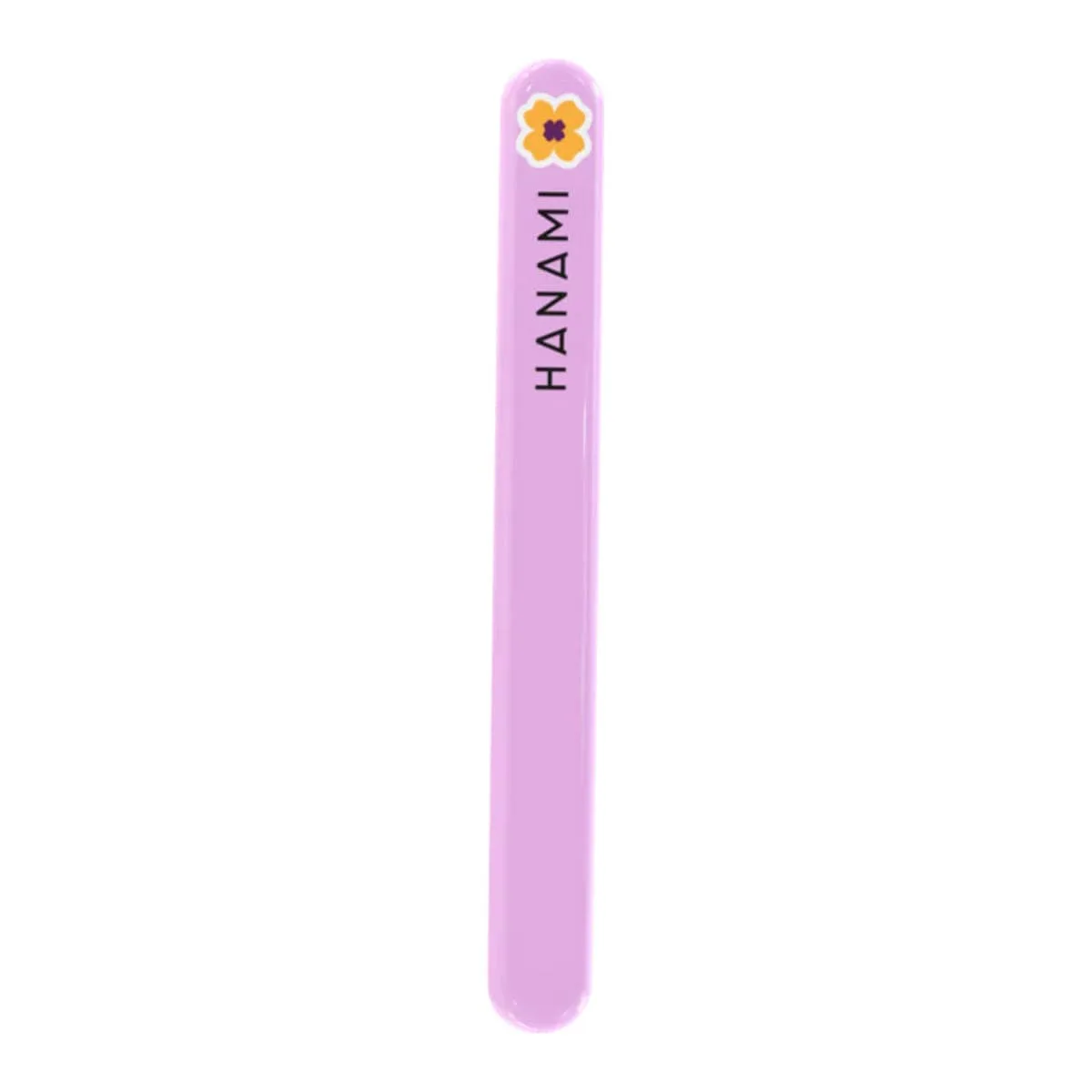
Glass Nail File
-
Glass Nail File: One file is included, and it is vegan and cruelty free. Useful if you want a single reusable tool and prefer vegan, cruelty-free manicure kit.
-
Glass Nail File: Made in China; catalog price USD 9.41 (comparison price USD 14.05). Gives a concrete cost reference when weighing a reusable glass file against disposable emery boards.
Where an emery board still wins
An emery board is not the villain of this comparison. It is inexpensive, light, and easy to replace, which makes it a practical choice for travel, for a shared bathroom drawer, or for anyone who prefers not to carry a glass tool. If you file infrequently and replace the board when it loses bite, the cost difference may not matter to you.
The trade-off is control. Because emery boards vary in grit and wear down, the same board can feel different over time. If you want a consistent, gentle edge on natural nails and you are willing to look after a single tool, the glass file is the more predictable option.
How to choose between them in practice
Use these steps to make the decision for your own nails and routine. They are selection steps, not a filing protocol — follow the manufacturer's instructions for the tool you buy.
- 1. Decide how often you file: Frequent filing on natural nails makes a gentle, reusable tool more valuable. Occasional filing makes a cheap emery board perfectly serviceable.
- 2. Check the edge you are starting with: If your nails split and break easily at the edge, the Hanami file's stated gentle-buffing benefit is directly relevant. If your nails are healthy and you just want a quick shape, either tool can work.
- 3. Weigh portability against care: An emery board can be binned and replaced anywhere. A glass file is a single item to keep clean and carry safely; the supplied information does not specify cleaning or storage, so confirm that with the manufacturer.
- 4. Compare cost over time, not per unit: A USD 9.41 glass file that lasts many sessions may cost less per use than a stream of emery boards — but only if you actually keep and use it.
The honest limitation of this comparison
The supplied information for the Hanami Glass Nail File does not include grit ratings, filing direction, cleaning instructions, or a stated lifespan. It also does not make claims about strengthening nails or treating damage. Any comparison that promises those outcomes is going beyond the evidence.
What the evidence does support is a simple choice: a reusable glass file positioned for gentle buffing of natural nail edges, versus a disposable abrasive board. Pick the one whose trade-offs match how you actually file.