Quick answer
Choose the Dr Brown's wide-neck glass bottle if you feed at home, want a heavier, non-porous bottle and don't mind the weight; choose the plastic wide-neck Options+ if you need a lighter bottle for travel, daycare or independent holding. Both use the same anti-colic vent system, so the real decision is material handling, not colic performance.
What stays the same across both materials
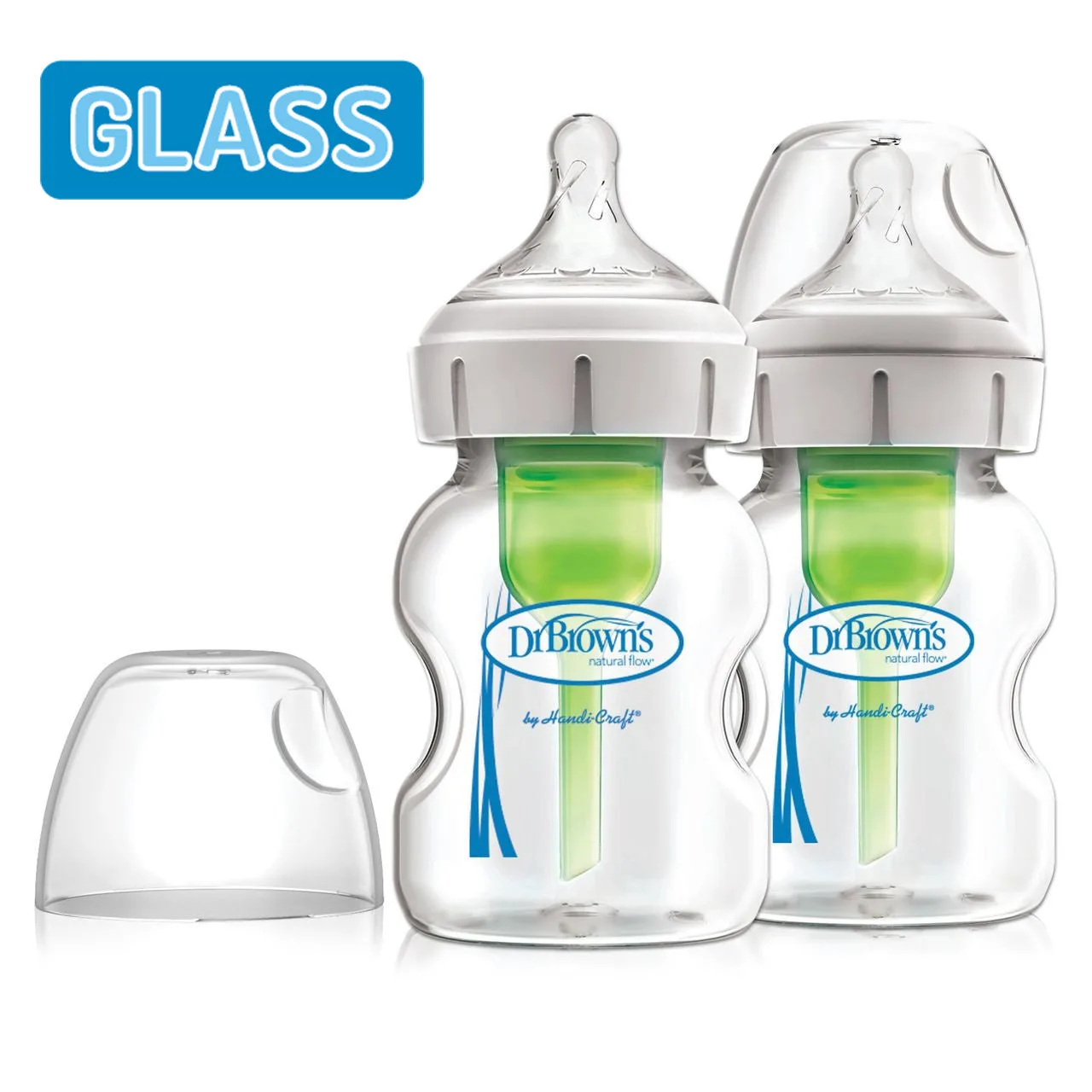
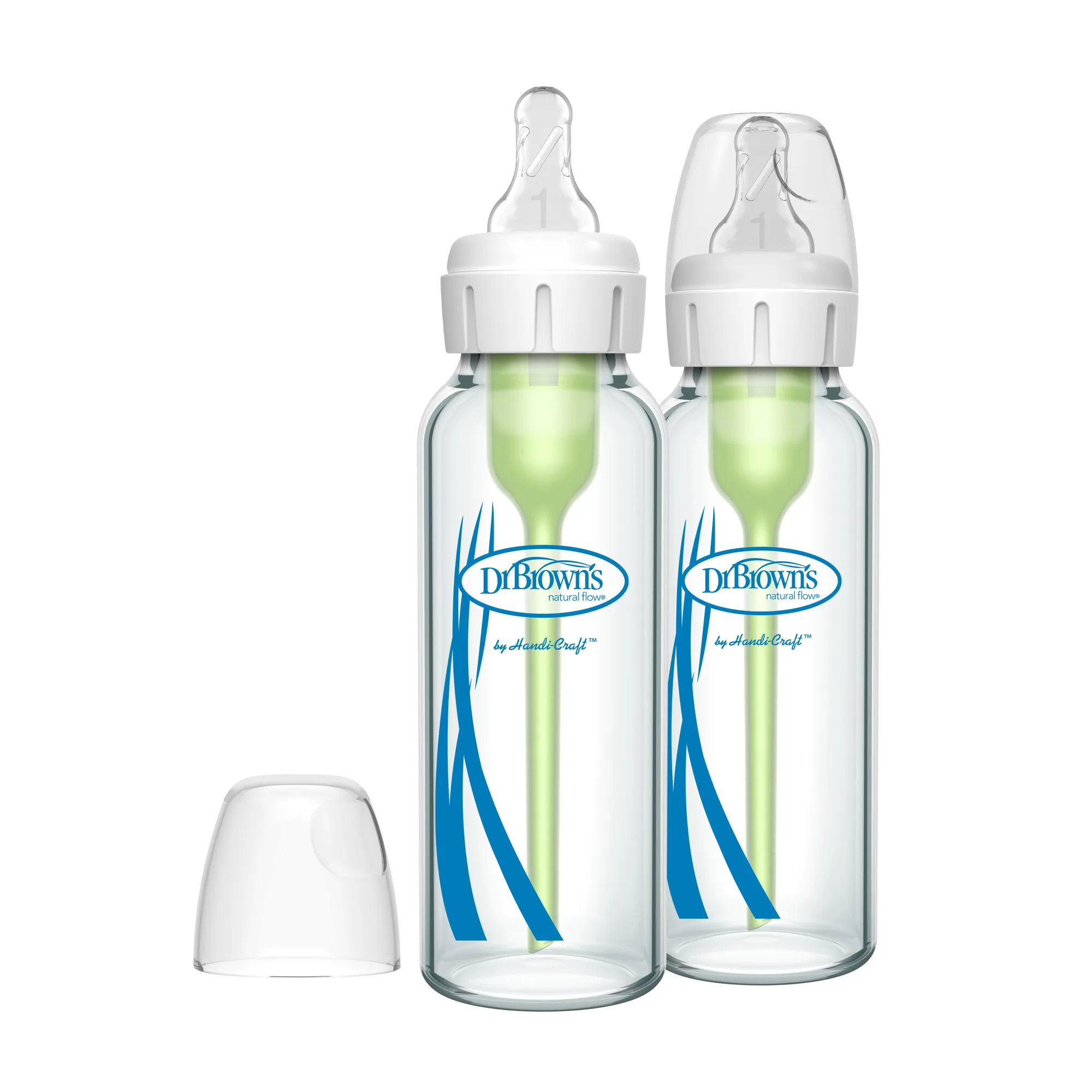
Dr Brown's wide-neck Options+ bottles share the same internal vent system and wide-neck nipple fit, so the anti-colic mechanism and latch experience are consistent whether you pick glass or plastic. That means you are not trading away colic support by choosing one material over the other; you are trading weight, thermal feel and breakage risk.
Where glass pulls ahead
Glass is heavier and feels more substantial in the hand, which can help you control the tilt during paced feeding. It also does not retain milk odors or stains the way some plastics can over time, and it can be washed in hot water without warping. The trade-off is breakage risk: glass can chip or shatter if dropped on a hard floor, so it suits a settled feeding spot more than a diaper bag.
Where plastic earns its place
Plastic wide-neck Options+ bottles are lighter, which matters when you are feeding one-handed, traveling, or sending bottles to daycare. They are more forgiving if knocked off a table and easier for older babies to hold during self-feeding. The trade-off is that plastic can scratch over time and may hold onto milk smells, so inspect often and replace when worn.
The 150ml size question
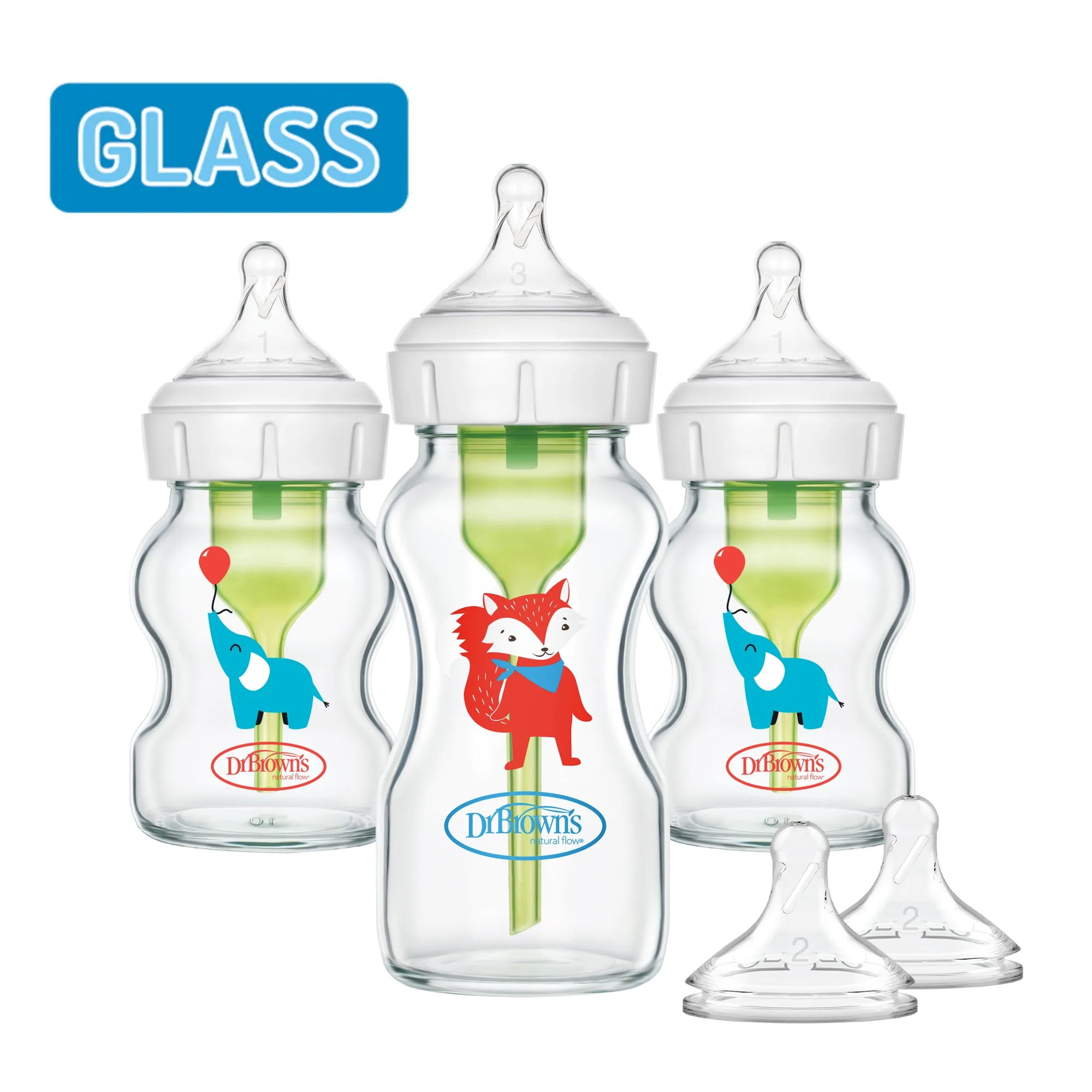
The Dr Brown's Elephant 150ml glass bottle is a small-format option that suits early newborn feeds and topping up, but it will not carry a larger appetite through a growth spurt. If you are combination feeding or pumping, a 150ml glass bottle works well as a backup while a larger plastic bottle handles the main feed. Do not assume the glass version is available in every size; check the catalog before you commit to a full set.
Trade-offs at a glance
- Weight and handling: Glass is heavier and steadier for paced feeding at home; plastic is lighter for one-handed feeding and travel. If you often feed away from home, start with plastic and add glass for home feeds.
- Breakage and wear: Glass can chip or shatter if dropped; plastic resists drops but can scratch and retain odors over time. Inspect both materials regularly and replace any bottle with chips, cracks or deep scratches.
- Cleaning and odor: Glass does not absorb milk smells and tolerates hot washing; plastic is lighter to wash but may need more frequent replacement. If you wash in hot water or sterilize often, glass holds up better long-term.
- Size and stage: The 150ml Elephant glass bottle suits early newborn feeds; larger plastic Options+ bottles carry bigger appetites and self-feeding. Match bottle size to your baby's current intake, not to a full set you buy in advance.
Product facts
-
Dr. Brown’s Natural Flow® Anti-Colic Options+™ Wide-Neck Glass Baby Bottle - Elephant 150ml: Dr. Brown’s Natural Flow® Anti-Colic Options+™ Wide-Neck Glass Baby Bottle in Elephant design holds 150ml and uses the clinically proven anti-colic internal vent system. The small glass format gives you the anti-colic benefit in a newborn-friendly size, but you will need a larger bottle as intake grows.
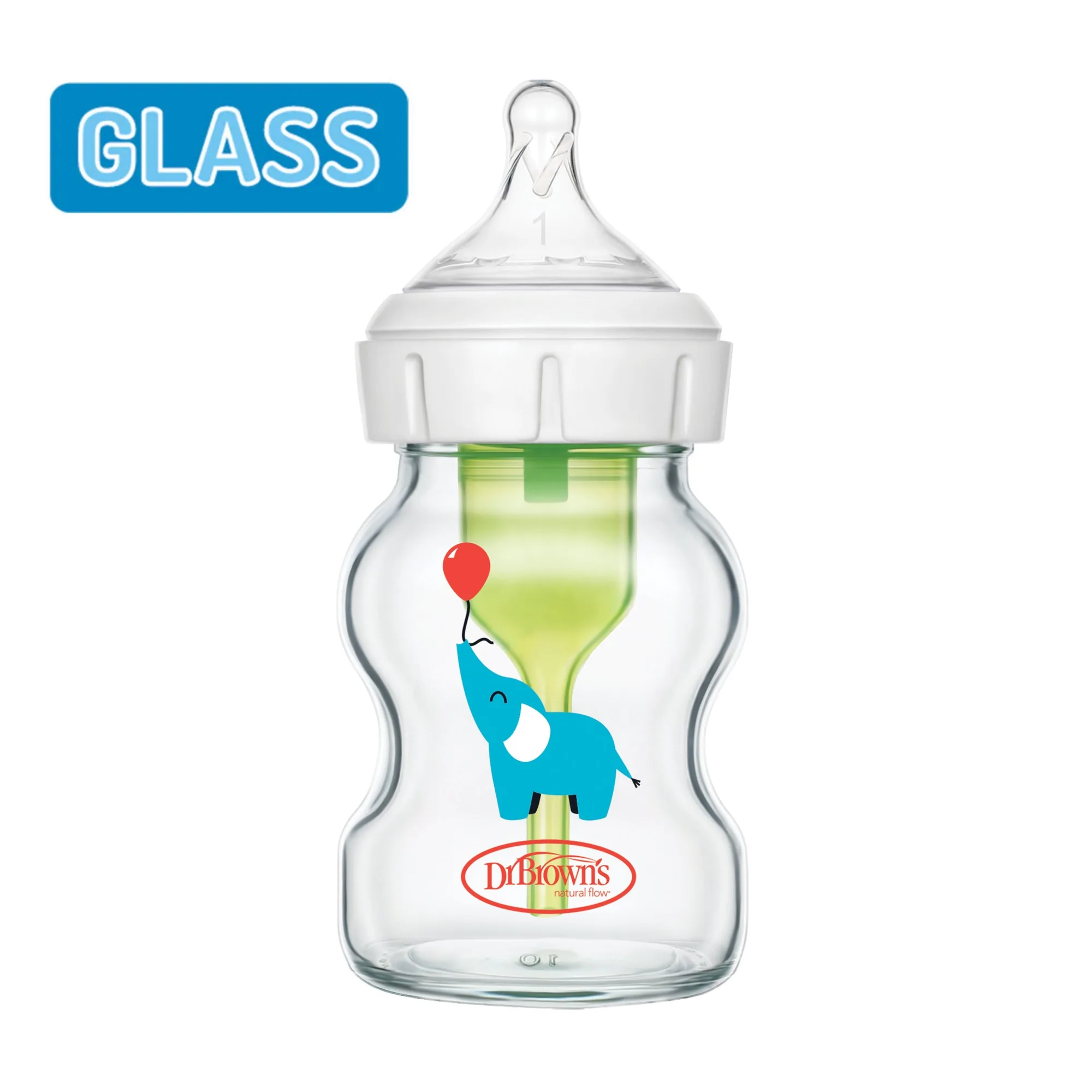
Dr. Brown’s Natural Flow® Anti-Colic Options+™ Wide-Neck Glass Baby Bottle - Elephant 150ml
Who should choose which
Best for
- Parents who mostly feed at home and want a heavier, non-porous bottle
- Newborns taking small 150ml feeds who need the anti-colic vent system
- Caregivers who wash and sterilize bottles frequently
Not for
- Families who need a light bottle for daycare, travel or stroller feeds
- Babies who hold their own bottle during feeding
- Homes with hard floors where dropped bottles are likely