Quick answer
Start with a shallow, room-temperature water table and add one or two Glo Pals characters plus their Light-Up Cubes. For a sensory bin, keep it dry or damp rather than full of water, and place a cube in a small cup of water beside the bin so the glow still works. Test one cube first, then build the setup around what your child actually reaches for.
A glowing character bobbing in a water table gets attention fast, but the setup around it decides whether your child stays for two minutes or twenty. The good news is that Glo Pals are simple by design: a cube goes in the back of a character, the character meets water, and the glow starts. That makes them easy to fold into whatever water or sensory play you already have running.
These setups work for toddlers who need a reason to approach water, for kids who like to pour and scoop, and for quieter sensory bin sessions where the glow is the calm focal point. Below are practical steps for both stations, including the mistakes that cause cubes to stop glowing or characters to get lost in the bin.
Set up the water table so the glow reads clearly
Fill the table only two to three inches deep. Deeper water dilutes the glow and makes it harder for small hands to retrieve a character that drifts out of reach. Room-temperature water is comfortable and keeps the session longer; very cold water tends to shorten how long kids want to stay with their hands in it.
Place the table out of direct sun if you can. Bright daylight washes out the light, while shade, an overcast day, or an evening session indoors makes the glow obvious. If you are indoors, a plain white or light-colored towel under the table catches splashes and bounces a little light back up.
- Checkpoint: drop one cube in the water before your child arrives so you know it lights up.
- Keep a small towel and a shallow cup nearby for rinsing and quick retrieval.
Choose characters that match the water table's play pattern
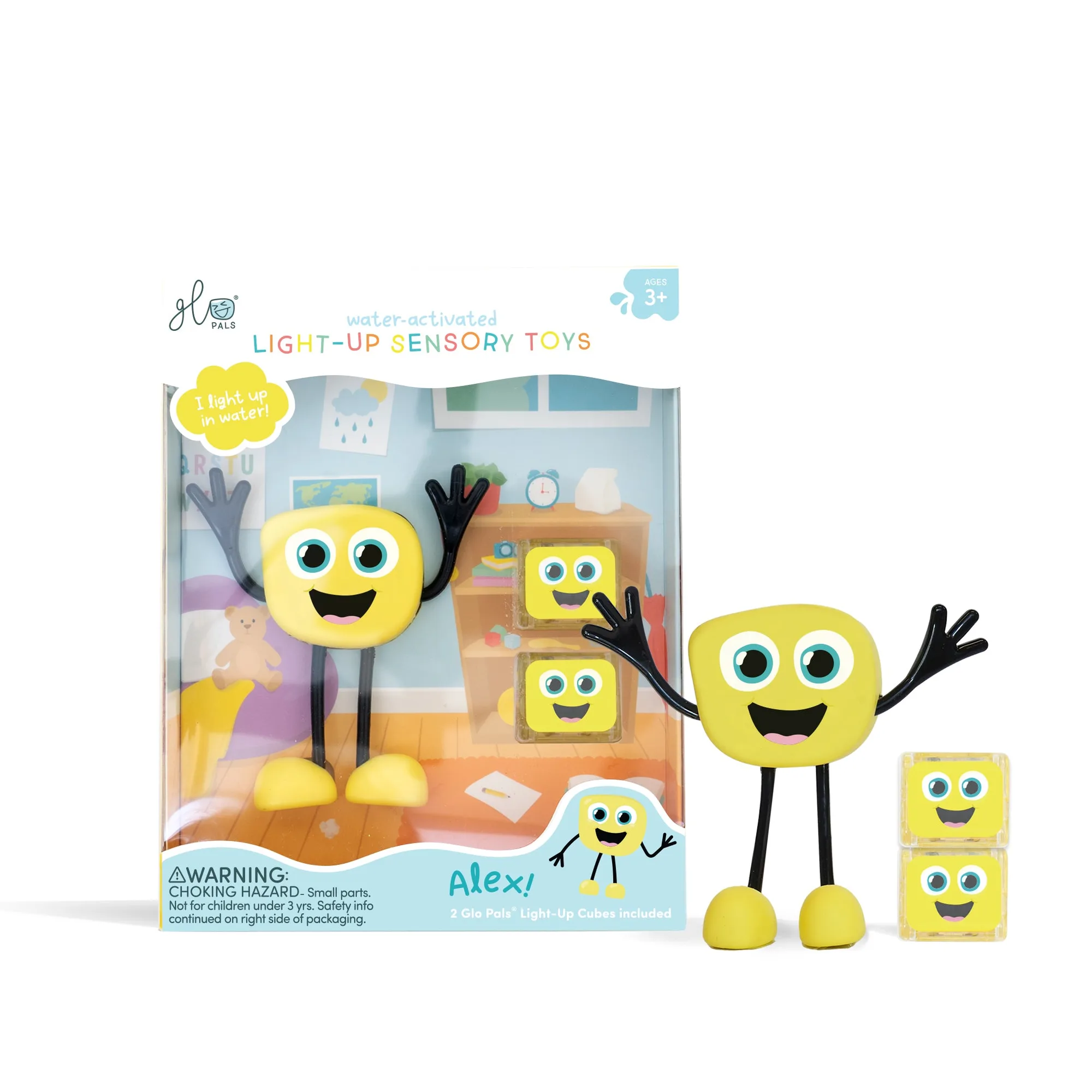
Characters give the water table a cast. Alex® Light-Up Character and Pippa® Light-Up Character each include 2 Light-Up Cubes, so a single purchase gives you a spare cube if one gets set aside or needs a rest. That spare matters more than it sounds: a cube that stops glowing mid-session can end the play, and having a second one keeps the momentum going.
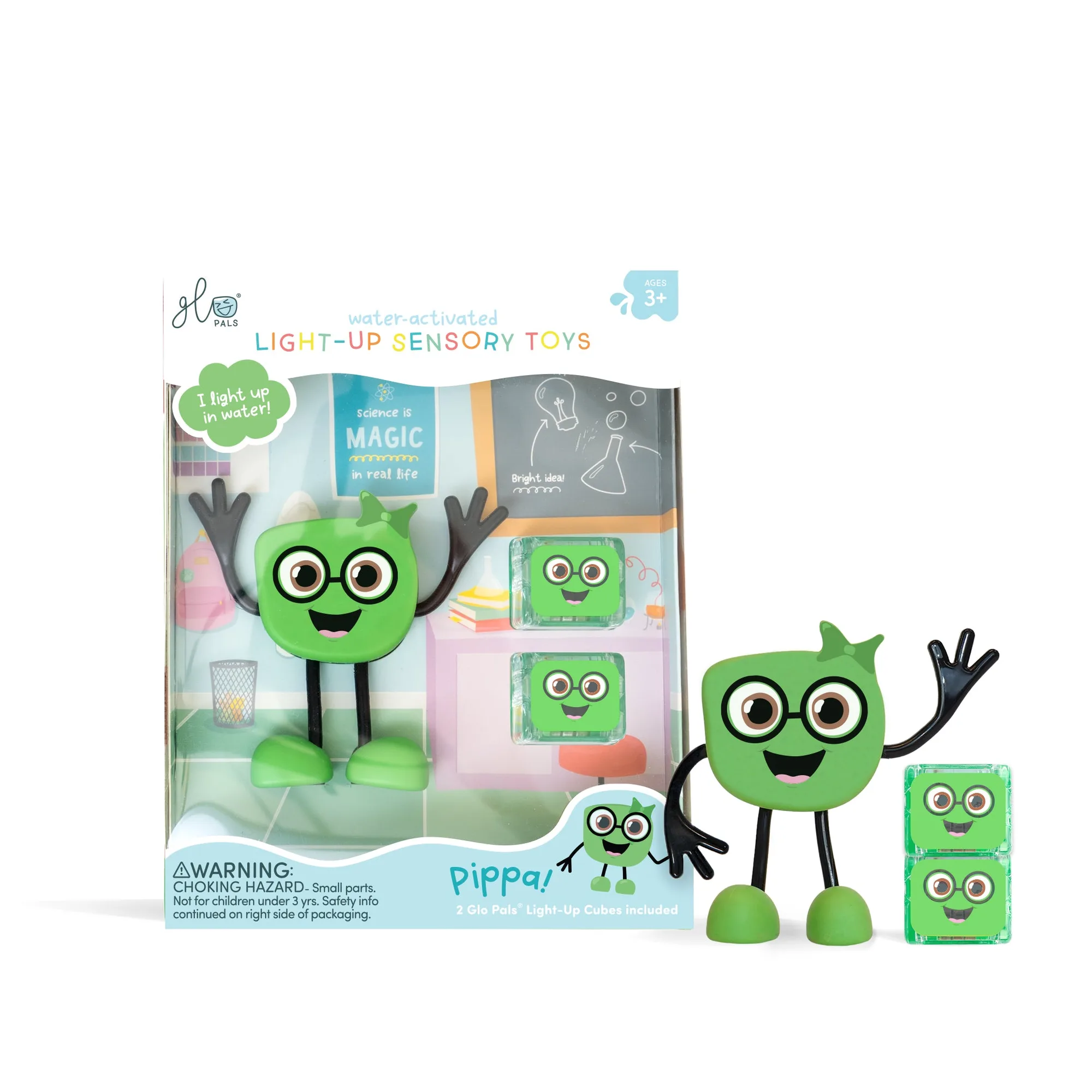
Pippa® Light-Up Character
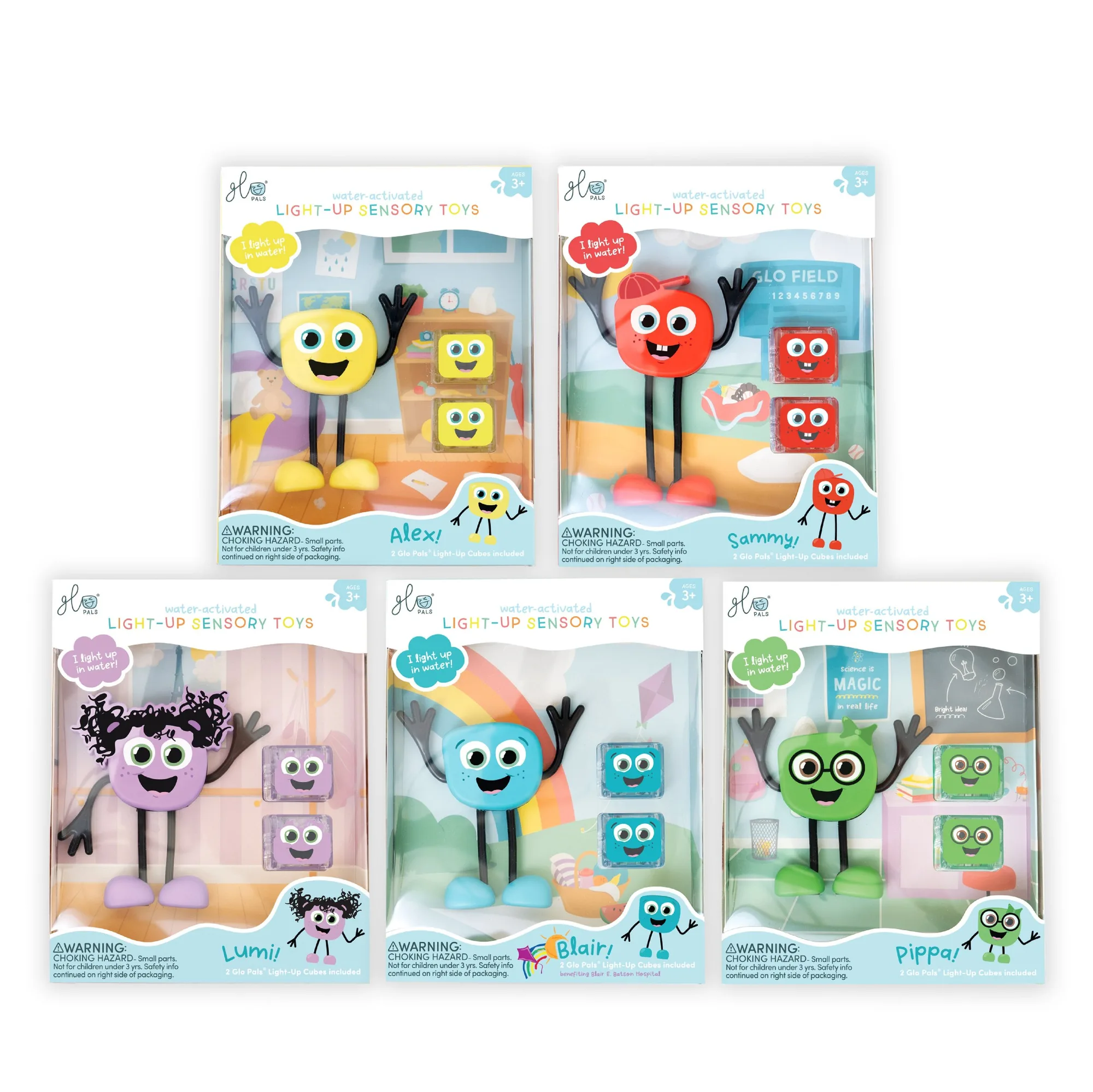
If your child likes variety, the Glo Crew Character Bundle brings all five original Glo Pals, each with its own personality and cubes. That is a lot of glowing bodies for one water table, so introduce two or three at a time and rotate the rest. Fewer characters in the water means each one gets noticed and used.
- Common mistake: adding every character at once, which turns the table into a crowded bin and hides the glow.
Build a sensory bin that still lets the cubes glow
Light-Up Cubes activate with liquid, so a fully dry bin will not make them glow. The workaround is a small cup, bowl, or sealed water bottle placed inside or beside the bin. Kids can move a character between the dry filler and the water cup, which adds a pouring and transferring loop to the play.
For the filler itself, choose something easy to sift: rice, dried chickpeas, or large scoops work well with little hands. Avoid anything fine and dusty, because grit sticks to wet characters and cubes and has to be rinsed off. Keep the water cup shallow and refill it as needed rather than flooding the bin.
- Checkpoint: if the filler is damp, the cube may activate on its own and stay lit longer than you expect.
- Common mistake: burying a cube in dry filler and assuming it is broken when it does not light.
Layer in light, contrast, and a landing spot
Glow reads best against contrast. A dark towel, a navy bin, or a shadowed corner makes even a single cube look like a small lantern. If your play space is bright and white, the effect is subtler, and that is fine; the sensory value does not depend on drama.
Give every character a home base. A small bowl, a silicone cup, or a marked corner of the table becomes the place characters rest when they are not swimming. This reduces the frantic search that happens when a character sinks under filler or drifts to the far edge, and it gives kids a natural pause point between rounds of play.
- Common mistake: no landing spot, which leads to characters getting lost and cubes drying out unnoticed.
Run the session and reset it the same way every time
Start with one or two cubes in the water and let your child discover the glow rather than narrating it. Cause and effect is the point: the cube goes in, the light comes on. If your child is hesitant, model dropping a cube in and waiting quietly instead of prompting.
At the end, pull the cubes out, rinse and dry them, and store them separately from the characters. A consistent reset keeps cubes working and makes the next setup faster. If a cube stops lighting, check for trapped moisture or a dead battery before assuming it needs replacing.
- Checkpoint: end the session before your child is done, not after, so the setup stays associated with fun.
- Common mistake: leaving cubes sitting in water for hours after play ends.
Water table and sensory bin setup steps
- 1. Test one cube before you build anything: Drop a single Light-Up Cube into a cup of room-temperature water and confirm it glows. Do this before your child sees the setup so a non-working cube does not derail the session. Checkpoint: if it does not light, try a second cube before troubleshooting the whole setup.
- 2. Fill the water table shallow: Two to three inches of room-temperature water is enough for characters to float and for small hands to reach them. Deeper water hides the glow and makes retrieval harder. Common mistake: filling to the top because it looks more inviting.
- 3. Add two or three characters, not the whole crew: Place Alex® Light-Up Character, Pippa® Light-Up Character, or another Pal in the water with a cube loaded in the back. Keep the rest nearby for rotation. Common mistake: crowding the table so no single character gets attention.
- 4. For a sensory bin, keep the filler dry and add a water cup: Use rice, dried chickpeas, or another siftable filler, and set a shallow cup of water inside or beside the bin. Characters move between the dry filler and the water, which adds a transferring loop. Checkpoint: the cube only glows when it meets liquid, so the cup is not optional.
- 5. Create contrast and a landing spot: A dark towel or shaded corner helps the glow stand out, and a small bowl gives characters a place to rest between swims. Common mistake: skipping the landing spot and losing characters under the filler.
- 6. Reset the same way every time: At the end, remove the cubes, rinse and dry them, and store them separately from the characters. A repeatable reset keeps cubes working and makes the next setup quicker. Checkpoint: end the session on a high note rather than waiting for your child to lose interest.
Which Glo Pals products fit these setups
- Alex® Light-Up Character: The Alex Character includes 2 Light-Up Cubes so the fun can begin right out of the box. One purchase covers a water table session and leaves a spare cube ready if the first one needs a rest.
- Pippa® Light-Up Character: Includes 2 Liquid-Activated Light-Up Cubes; place a cube in the back of Pippa, drop it into water, and watch it instantly glow. The two-cube format makes Pippa a natural fit for a sensory bin with a small water cup, since one cube can stay dry while the other glows.
- Glo Crew Character Bundle: Get all 5 Original Glo Pals, each designed with a unique personality; insert a Light-Up Cube into the back of each Pal, drop it in the water, and watch them light up. Useful if you want enough characters to rotate across several setups instead of buying them one at a time.
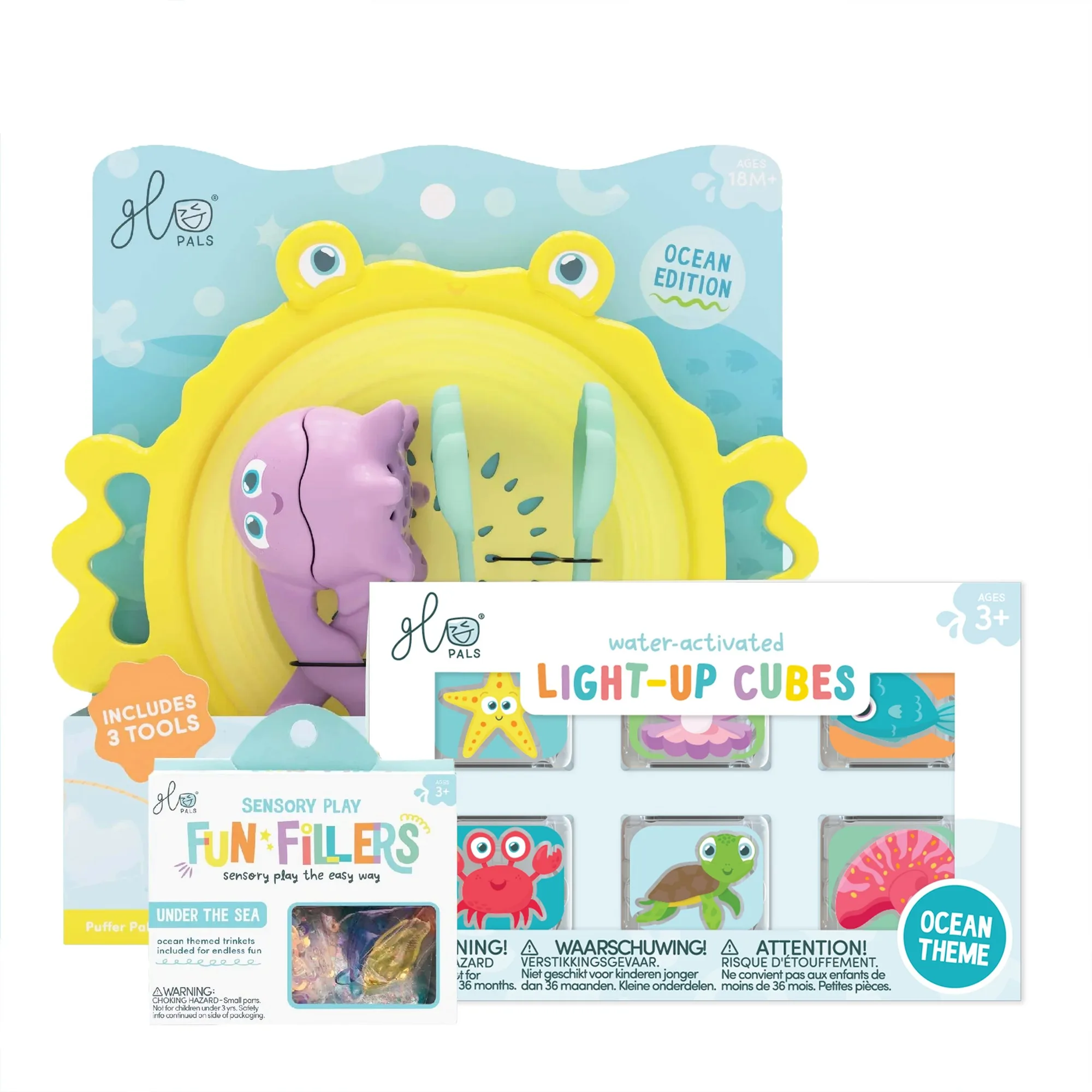
- Ocean Explorer Bundle: A bundle of Glo Pals best-sellers that includes the limited edition Ocean Light-Up Cubes. A themed option for an ocean-focused water table, with extra cubes to spread across stations.
The best Glo Pals setup is the one you can repeat without fuss: shallow water, a couple of characters, a spare cube, and a clear place for everything to land when play ends. Start simple, watch what your child does with the glow, and add the next layer only when the first one stops being interesting.