Quick answer
Choose a political globe if you need clear country borders and names for current events or schoolwork. Choose a physical globe if you want to teach landforms, biomes, and Earth science. Choose an illuminated globe if the globe will be used in a dim room or as a bedside learning tool, because the internal light makes labels readable and turns the globe into a soft nightlight. For most students, a political globe is the most versatile first purchase; add an illuminated model later if bedtime reading is part of the routine.
Start with the room, not the globe
Before comparing surface styles, measure the space where the globe will live. A 12-inch diameter globe needs roughly 14–16 inches of vertical clearance on a stand and at least 6 inches of free space around it to rotate without knocking into books or walls. A 9-inch globe fits on a narrow shelf but its labels are smaller, which matters if the primary user is under age 10 or has vision needs. If the globe will sit on a shared desk, a smaller diameter plus a stable base beats a larger globe that gets pushed off.
Political globe: borders and names first
A political globe prints countries in distinct colors with capital cities and major boundaries. It is the right pick when the user needs to answer 'which country is this?' or follow news about a specific region. The trade-off is that political boundaries change; a globe printed in 2015 may show a different set of countries than one printed in 2025. Check the copyright or revision date on the globe or its packaging before buying, and treat a political globe as a reference that may need replacing every several years rather than a permanent fixture.
Physical globe: terrain, water, and climate
A physical globe uses color and shading to show mountains, deserts, oceans, and vegetation zones instead of political borders. It answers 'what is this place like?' rather than 'who governs it?' Physical globes rarely need updating because mountain ranges and ocean currents do not change on a human timescale. They are the better choice for earth science units, biome projects, and any learner who is more interested in landscapes than in capitals. The limitation is that country names may be sparse or absent, so a physical globe alone is a poor tool for current-events homework.
Illuminated globe: when light changes the use case
An illuminated globe has a light inside the sphere. In a lit room it looks like a standard globe; in a dark room it glows and the printed surface becomes readable without overhead light. That makes it useful as a bedside reference and a comfort object for kids who want a nightlight with a purpose. The trade-offs are real: illuminated globes cost more than comparable non-lit models, they need a power source or batteries, and the bulb or LED may eventually need replacement. If the globe will live in a bright living room and never be used after dark, the illumination feature adds cost without adding function.
Match the globe to the user's age and task
For ages 5–8, prioritize a sturdy base, a moderate diameter (around 9–12 inches), and simple, high-contrast printing. Political and physical styles both work at this age; the deciding factor is whether the adult wants to teach country names or landforms. For ages 9–12, a political globe supports school assignments, while a physical globe supports science projects. For teens and adults, consider a larger diameter (12 inches or more) and a style that matches the specific subject: political for civics and news, physical for geography and earth science. If the same globe must serve multiple ages, a political globe with clear labels is the safer default because it answers the most common homework questions.
Decision rules for buying a globe
- If the main use is current events or homework with country names: Buy a political globe and check the revision date. Plan to replace it if borders change in a region you study often. Political is the default for school-age users.
- If the main use is earth science, biomes, or landforms: Buy a physical globe. You trade country-name density for terrain and climate information that does not go out of date. Physical is the better long-term reference for science.
- If the globe will be used in a dark room or as a nightlight: Buy an illuminated globe only if the room is regularly dim. Confirm the power source and whether the bulb or LED is replaceable. Skip illumination if the room is always bright.
- If the user is under 10: Prioritize a stable base and a diameter between 9 and 12 inches. Check that labels are large enough to read without leaning in. Stability and legibility beat extra features.
Related products from our catalog
- SolarFlower - Golden Sunrise: SolarFlower - Golden Sunrise is a motorized flower model with moving petals, powered by a solar panel, that teaches mechanical systems like motors and planetary gears and how solar cells generate electricity. If the learner is more interested in how sunlight becomes motion than in memorizing borders, this kit turns solar energy into a hands-on build instead of a static display.
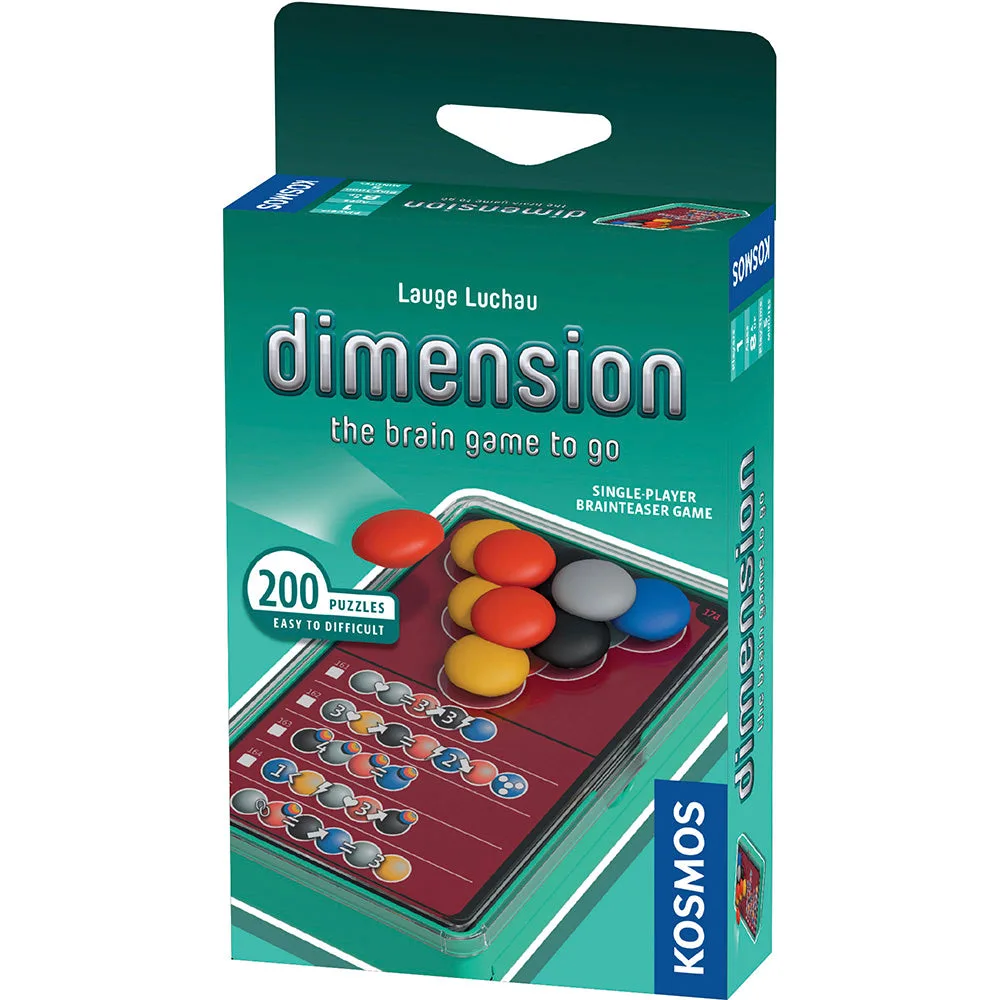
- Dimension: The Brain Game To Go: Dimension: The Brain Game To Go is a puzzle game with 200 challenges in four difficulty levels in a compact case, played solo or by passing the game. A compact, screen-free option for travel or waiting rooms that builds spatial reasoning without requiring a table full of pieces.
Who should buy which globe
Best for
- Students who need to identify countries and capitals for homework
- Families who want a bedside learning tool that doubles as a nightlight
- Teachers setting up a classroom reference for current events
Not for
- Buyers who want a permanent reference with no risk of outdated borders
- Shoppers who need a globe for a brightly lit room and never use it after dark
- Anyone looking for a hands-on building project rather than a display object