Start with what the pins are made of
Gloomhaven Collectors Pin Series #1 is a set of hard enamel pins, each 1.5" to 2.5" in size. The pins are cast in black nickel and finished with rubber backing clasps. Those three details—hard enamel, black nickel, and rubber backings—shape every care and display decision that follows.
Hard enamel is a durable finish, but it still benefits from gentle handling. Black nickel plating can show fingerprints and surface wear over time, and rubber backings are the part most likely to loosen or dry out with heavy use. The tips below focus on protecting all three.
Catalog details that guide care
-
Gloomhaven Collectors Pin Series #1: High quality synthetic hard enamel. Hard enamel resists light scratches better than soft enamel, but the surface can still dull if cleaned with abrasives.
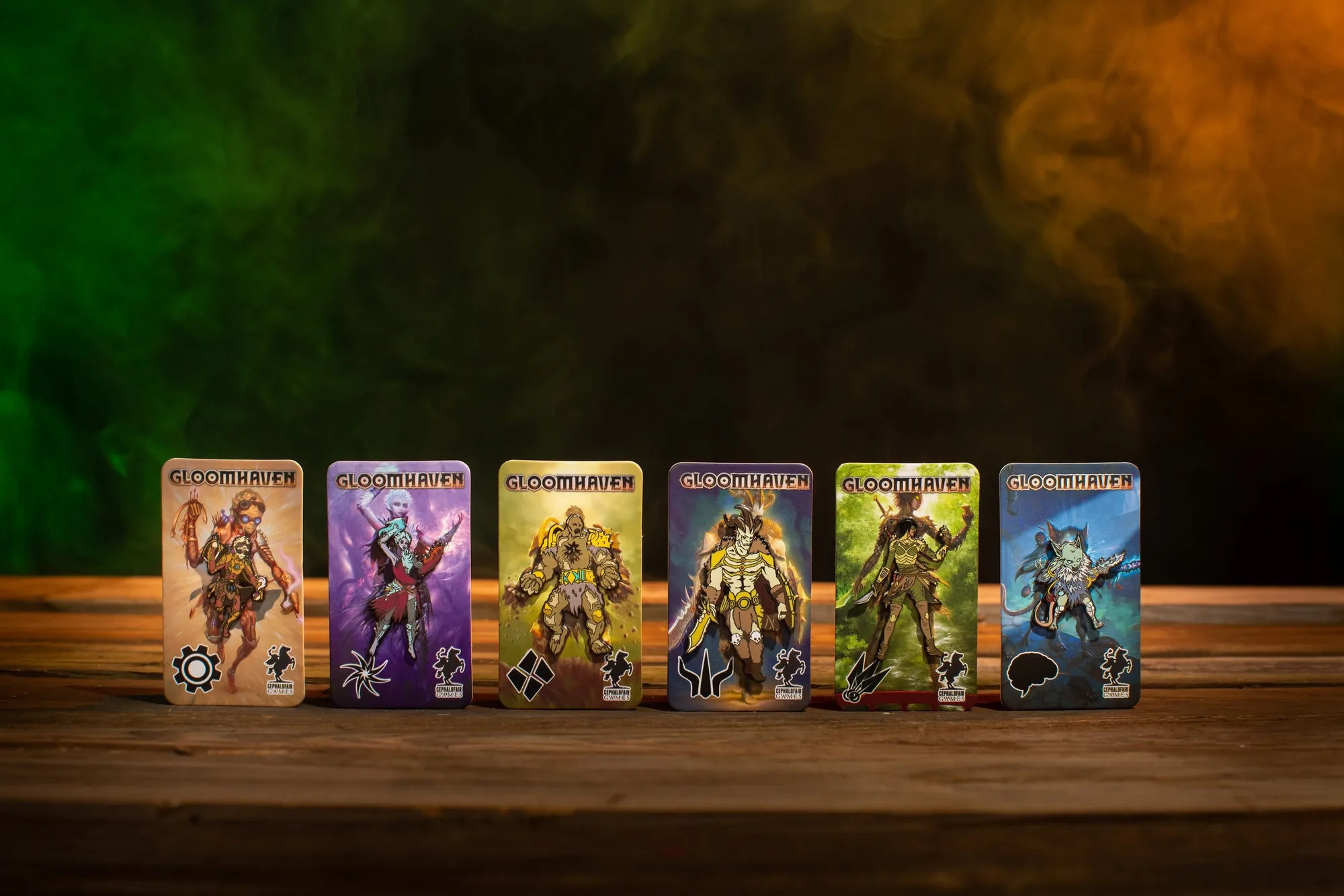
Gloomhaven Collectors Pin Series #1
-
Gloomhaven Collectors Pin Series #1: Cast in black nickel. The black nickel finish is the visible metal surface; wiping it gently keeps it looking consistent.
-
Gloomhaven Collectors Pin Series #1: Rubber Backing Clasps. Rubber backings grip the pin post; checking and replacing them is the simplest way to prevent loss.
-
Gloomhaven Collectors Pin Series #1: Size 1.5" - 2.5" each. The size range helps you choose a display board or storage case with enough spacing between pins.
How to clean collectible enamel pins safely
Use these steps for routine cleaning. They are general care advice, not manufacturer instructions; the supplied catalog does not include a cleaning procedure.
- Remove the pin from its backing and display: Take the pin off your board or fabric before cleaning so you can work on a flat, stable surface.
- Wipe with a soft, dry cloth: A dry microfiber cloth lifts fingerprints and light dust without adding moisture to the enamel or metal.
- Dampen the cloth only if needed: For smudges, use a barely damp cloth and wipe gently. Avoid soaking the pin or letting water sit around the black nickel edges.
- Dry immediately: Buff the surface dry with a clean, soft cloth to prevent water spots on the metal.
- Inspect the rubber backing: Check that the rubber clasp still grips the post firmly. If it feels loose, replace it before returning the pin to display.
Pin backing maintenance: keep rubber clasps working
Rubber backings are the most wearable part of the pin. A little attention keeps them from becoming the reason a pin goes missing.
- Check grip regularly: Press each backing onto its post and give a gentle tug. If it slides off easily, swap it for a spare rubber clasp.
- Keep spares on hand: Rubber backings are small and easy to lose. Store a few extras with your pin supplies so a loose clasp does not sideline a pin.
- Avoid heat and prolonged sunlight: Rubber can dry out or degrade faster with heat and direct sun. Display pins away from radiators and sunny windowsills.
- Remove pins before storing in tight spaces: If a pin case presses on the backing, the clasp can bend or pop off. Give each pin a little clearance.
Enamel pin display ideas that protect the finish
The right display keeps pins visible without putting stress on the enamel or the backings.
- Use a dedicated pin board or shadow box: A fabric-covered board or shallow shadow box lets you arrange pins without stacking them. Choose one deep enough that the glass or lid does not press on the pin faces.
- Space pins by size: The series ranges from 1.5" to 2.5" per pin. Leave enough room between pins that the larger ones do not overlap or knock against smaller ones.
- Display away from direct sun: Ultraviolet light can fade enamel colors over time. A wall that gets indirect light is safer than a bright window.
- Avoid fabric that snags: Loose weaves and coarse burlap can catch on pin posts and edges. A tight-woven fabric or felt backing is gentler.
- Rotate pins rather than overcrowd: If your board fills up, rotate a few pins into storage instead of layering them. Crowded pins are more likely to scratch each other.
Gloomhaven pin storage between displays
When pins are not on display, store them so they stay dry, separated, and easy to find.
- Use a compartment case or pin album: Individual compartments or a pin album with soft pages keep pins from rubbing against each other.
- Keep the rubber backings attached: Store each pin with its backing on the post to reduce loss and protect the post from bending.
- Control moisture: Store pins in a dry room. A silica packet in the case can help in humid climates, but keep it out of direct contact with the pins.
- Label the case if you own multiple series: A small label on the case or compartment helps you find a specific pin without emptying the whole collection.
What the catalog does not specify
The supplied product information does not include a recommended cleaning solution, a polishing method, or a manufacturer care sheet. It also does not confirm whether replacement rubber backings are included. Treat the steps above as general best practice for hard enamel pins, and test any cleaning product on an inconspicuous area first.
If you are unsure about a specific cleaner or storage material, err on the side of gentler care. Hard enamel and black nickel are durable, but they are not indestructible.