The short answer: the lens is designed for a natural daily look, not a costume effect
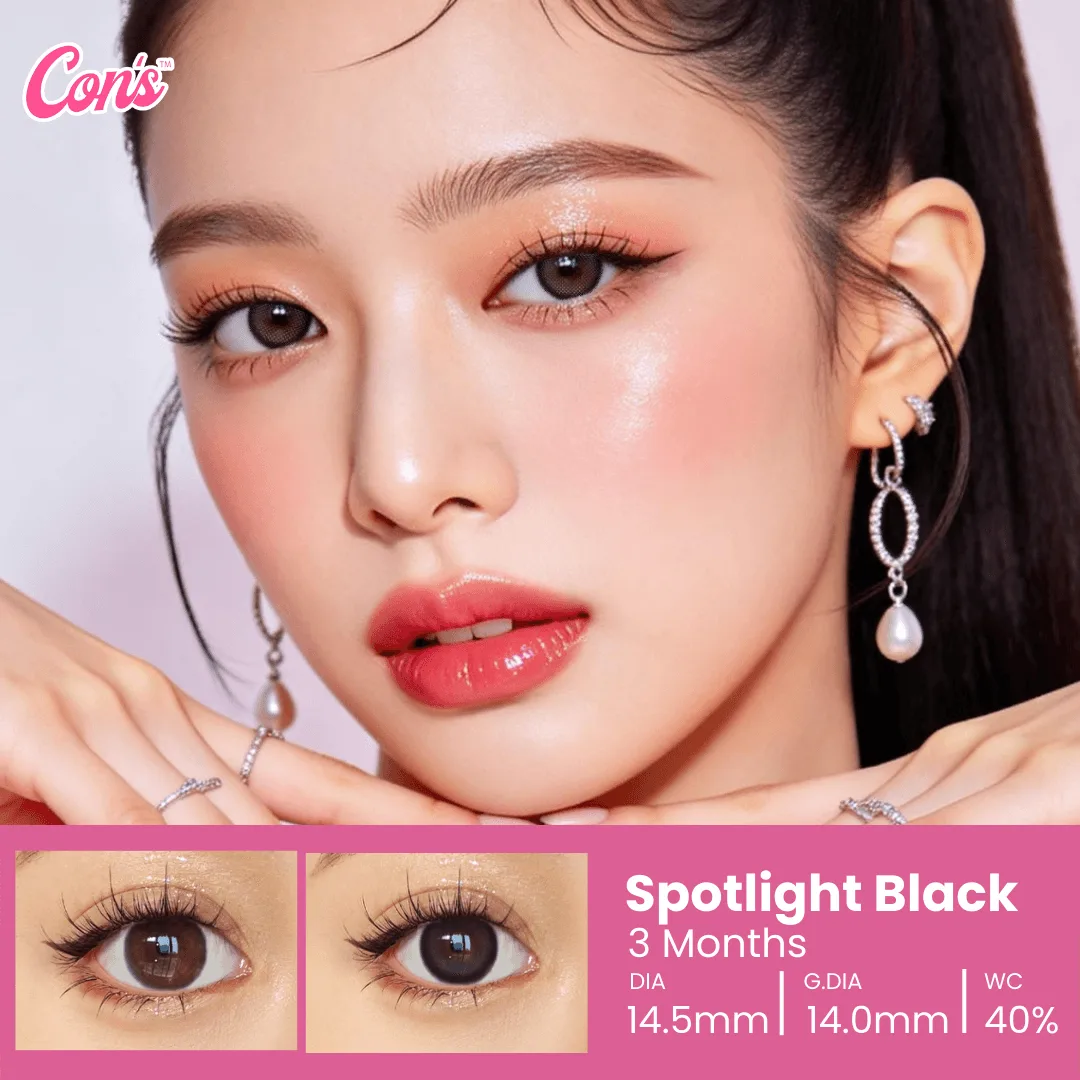
If you have avoided black colored contacts because you expect a flat, doll-like stare, the Gloria Spotlight Black 14.5mm is worth a second look. The supplied product description calls it a natural daily colour contact lens with a subtle to moderate enlargement effect, positioned for Korean and Japanese natural daily styling. That is a different brief from a dramatic black-out lens.
The honest limit: "natural" is a styling claim, not a measurable guarantee. The catalog does not include before-and-after photos, iris-coverage percentages or independent test results, so the fairest way to judge this lens is against its stated tone, diameter, wear cycle and care requirements.
Myth 1: "Black contacts always look fake"
- What the claim gets right: A high-contrast black lens with a heavy limbal ring can read as obvious, especially in bright light or close-up photos.
- What the Gloria Spotlight Black record actually says: The lens is described as having a natural daily colour tone and a subtle to moderate enlargement effect. It is not presented as a bold, opaque black-out style.
- The uncertainty to accept: The supplied information does not include a pigment pattern diagram or coverage specification. How natural it looks on your own iris will vary with your natural eye colour and lighting.
Myth 2: "A 14.5mm lens is too large for everyday wear"
Diameter is often treated as a proxy for how dramatic a lens looks, but the catalog gives the Gloria Spotlight Black a 14.5mm diameter and pairs it with a subtle to moderate enlargement description. The two facts belong together: the lens is sized for a visible enlargement effect, yet the stated styling is daily and natural rather than theatrical.
What the supplied record does not give is base curve, so lens fit cannot be assessed from the listing alone. A diameter figure tells you about the lens size, not whether it will sit comfortably on your eye. If you have not worn this lens before, treat the first wear as a fit check rather than assuming the size will suit you.
What the Gloria Spotlight Black record confirms
-
Gloria Spotlight Black 14.5mm, 3 Month 2 Pcs: Gloria Spotlight Black 14.5mm by CONSMY is described as a natural daily colour contact lens with a subtle to moderate enlargement effect. This is the core evidence against the "black lenses look fake" myth: the product is positioned for natural daily styling, not costume drama.
-
Gloria Spotlight Black 14.5mm, 3 Month 2 Pcs: Wear cycle: 3 Month quarterly disposable; pack: 2 pcs. The replacement rhythm is quarterly, so the care routine matters more than it would for a daily disposable lens.
-
Gloria Spotlight Black 14.5mm, 3 Month 2 Pcs: Available lens powers range from 0.00 through -3.50 in 0.25 steps. The listing includes plano and a defined power range; if your prescription falls outside it, the supplied catalog does not confirm a match.
Myth 3: "A 3-month lens is a set-and-forget purchase"
- The claim: Because the lens lasts three months, some shoppers assume it needs less attention than a daily lens.
- What the supplied care evidence says: The record lists practical care steps: wash and dry your hands, check the lens shape to ensure it has not turned inside out, rinse the lens with fresh solution, and replace it every 30 days, marking your calendar.
- First-wear preparation: For non-daily disposable lenses, the supplied instructions say to soak the lenses in multi-purpose solution for at least 8 hours before the first wear.
- The honest trade-off: A quarterly lens asks for a consistent cleaning and storage routine. If you want the lowest-maintenance option, a daily disposable format is the simpler rhythm. The catalog does not confirm whether a daily version of this exact lens exists.
Myth 4: "Black lenses are only for evening or event makeup"
The Gloria Spotlight Black record lists everyday wear, work, school and content creation among its occasions, with a Korean glass-skin base, glossy nude lip and soft brown liner as the suggested makeup pairing. That is a daytime styling brief, not an evening-only one.
The practical takeaway is to match the lens to the rest of your look. A natural daily lens tends to sit more comfortably with soft, low-contrast makeup than with heavy graphic liner. The catalog does not supply a wear-time limit, so the supplied information does not confirm how many hours the lens is intended to be worn in a day.
Myth 5: "Pigment sits directly on the eye"
- The claim: Colored contacts are sometimes assumed to place pigment in direct contact with the cornea.
- What the supplied product features say: The record describes sandwich technology, designed to prevent direct contact between the pigment and your cornea, and non-ionic materials intended to resist protein buildup.
- How to read that honestly: These are manufacturer feature descriptions, not independent clinical findings. They explain the design intent; they do not replace an eye-care professional's assessment of whether a lens suits your eyes.
A practical first-wear check for a 14.5mm black lens
- Start with clean, dry hands: The supplied care steps begin with washing and drying your hands before handling the lens.
- Check the lens shape: Confirm the lens has not turned inside out before you try to insert it.
- Soak before the first wear: For non-daily disposables, the supplied instructions call for at least 8 hours in multi-purpose solution before first use.
- Rinse with fresh solution: The record lists rinsing the lens with fresh solution as part of care; it does not specify a replacement schedule for the case or solution beyond that.
- Mark the 30-day replacement point: The supplied instructions say to replace every 30 days and mark your calendar. Note that the product is sold as a 3-month quarterly disposable, so follow the replacement guidance that applies to your purchase and care routine.
What the supplied information does not settle
Several questions that matter for a real buying decision are not answered by the supplied record: base curve and fit, a recommended maximum daily wear time, water content, and whether the lens is suitable for sensitive eyes. The catalog also does not confirm a specific prescription range beyond the listed powers.
That absence is not evidence that the lens lacks these features or that it is unsuitable. It simply means those points cannot be verified from the supplied information. If you need prescription lenses or have known eye sensitivity, have the fit and power confirmed by an eye-care professional before ordering.