The camera body decides the model
The Godox X3Pro comes in two versions that look and behave almost identically: the X3Pro N for Nikon and the X3Pro S for Sony. The decisive difference is the TTL protocol each one speaks. The X3Pro N is built for Nikon's i-TTL system, while the X3Pro S works with Sony's ADI / P-TTL system. If you shoot Nikon, choose the N; if you shoot Sony, choose the S.
That single compatibility line matters more than any feature comparison, because a mismatched trigger will not give you the automatic exposure and metering that make these units convenient. Everything else, including the touchscreen, group control, and app connectivity, is shared across both versions.
TTL system support at a glance
-
Godox X3Pro N Touchscreen TTL Wireless Flash Trigger for Nikon: Compatible with Nikon's i-TTL system for fast, automatic exposure and metering. This is the version to buy if your camera body is Nikon.
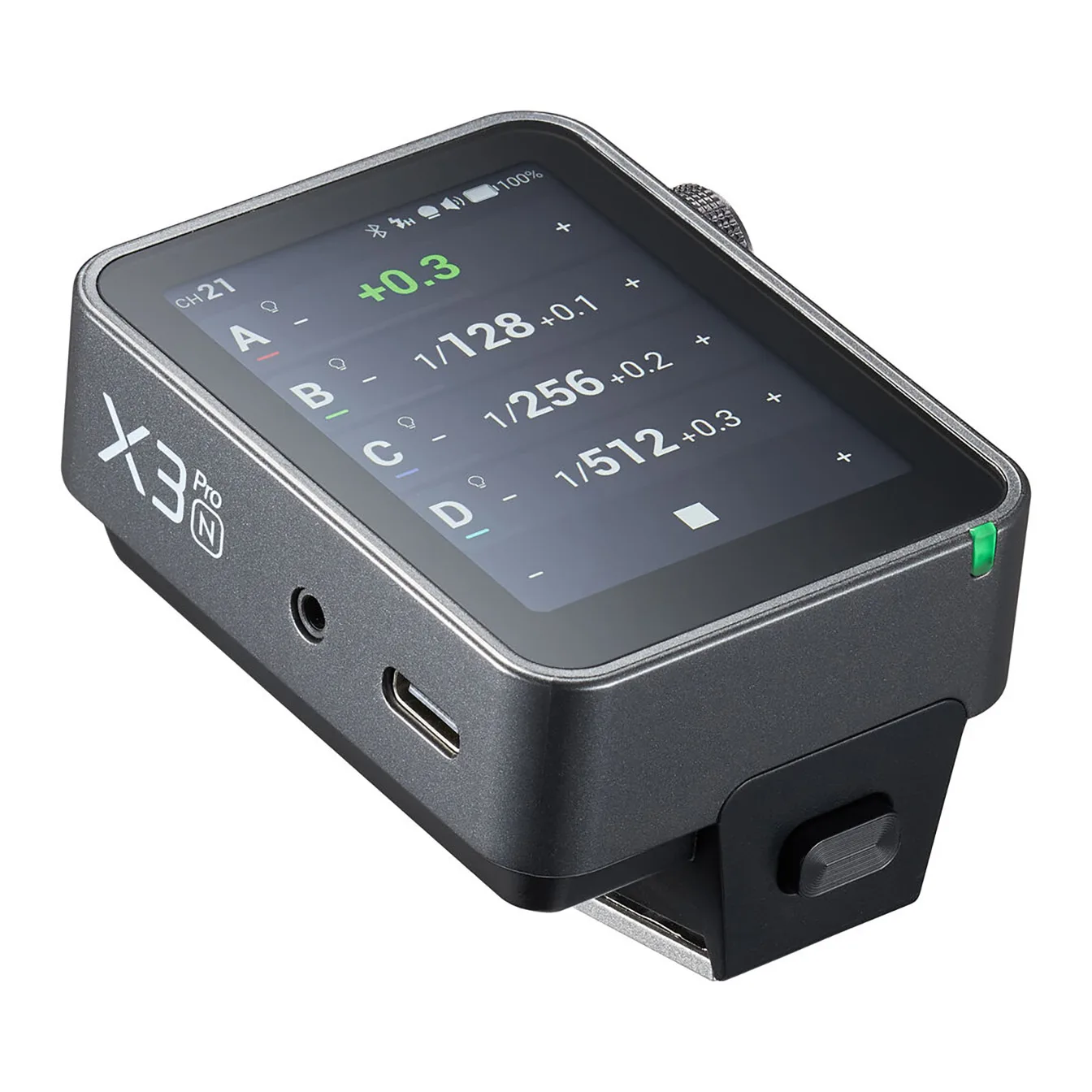
Godox X3Pro N Touchscreen TTL Wireless Flash Trigger for Nikon
-
Godox X3Pro S Touchscreen TTL Wireless Flash Trigger for Sony: Compatible with Sony's ADI / P-TTL system for fast, automatic exposure and metering. This is the version to buy if your camera body is Sony.
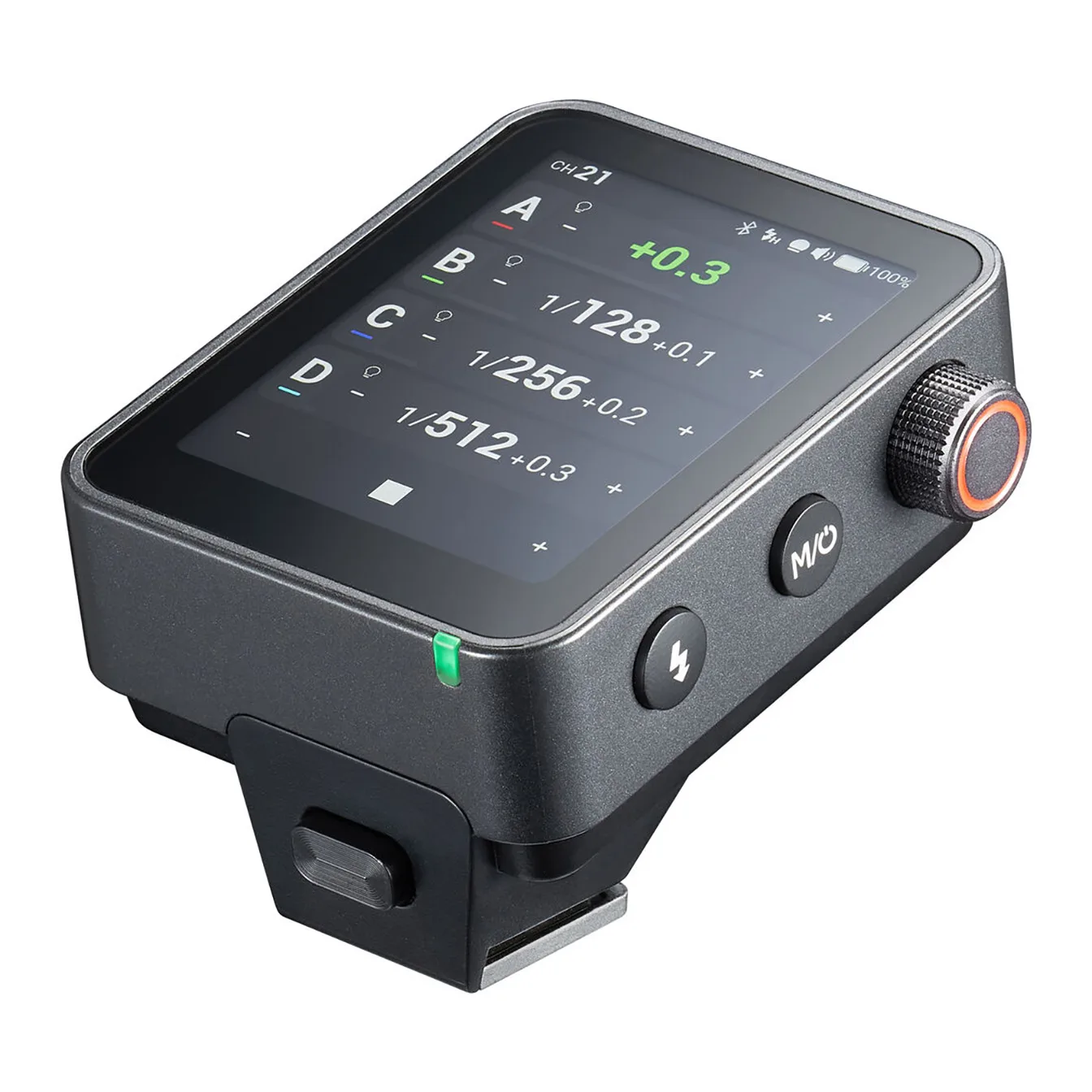
Godox X3Pro S Touchscreen TTL Wireless Flash Trigger for Sony
What both triggers share
Because the two models are otherwise the same, you can evaluate most of the trigger's workflow features without worrying about which version you need. Both have a large color touchscreen, a 2.4 GHz radio system with a transmission range of up to 328 feet, and Bluetooth control through the Godox Flash app. Both also use an internal rechargeable lithium battery that charges via USB-C in about two hours.
On set, both let you monitor up to four groups simultaneously and adjust power, zoom, and modeling light for each group independently. The TCM (TTL Convert Manual) function converts a TTL exposure value into a manual output value, giving you a starting point when you switch to manual. There are also One-shoot, All-shoot, and L-858 modes, plus remote shutter release and time-lapse options.
Shared features that affect your decision
- Godox X3Pro N Touchscreen TTL Wireless Flash Trigger for Nikon: Large color touchscreen with intuitive menu for quick adjustments; Bluetooth app control for remote power and group settings. These workflow features are identical on the Sony version, so they should not sway you between N and S.
- Godox X3Pro S Touchscreen TTL Wireless Flash Trigger for Sony: Operates on 2.4 GHz with a transmission range of up to 328 feet; internal rechargeable lithium battery charges via USB-C in about two hours. The same radio and power design applies to the Nikon version, so range and charging are not differentiators.
Price difference is small, so choose by system
At the time of writing, the catalog lists the X3Pro N at USD 62.37 and the X3Pro S at USD 63.36, both with a comparison price of USD 99.00. That roughly one-dollar gap is not a reason to switch camera systems or adapters. Pick the version that matches your camera's TTL system and ignore the small price difference.
If you shoot both Nikon and Sony, you will need one trigger per system if you want TTL automation on both. The supplied information does not confirm cross-system TTL operation, so do not assume the N will give you TTL on a Sony body or vice versa.
What the listings do not tell you
The supplied product records do not list every Godox flash or camera model that each trigger supports. They describe compatibility with the respective TTL systems and with a wide range of Godox flashes, but they do not provide a complete compatibility matrix. Before you buy, check that your specific camera body and flashes appear on Godox's official compatibility list, or ask the store to confirm.
The records also do not detail installation steps, firmware update procedures, or battery life beyond the two-hour charge time. Those details are worth confirming in the manufacturer's documentation if they matter to your workflow.
A practical way to decide
Start with your camera brand. If it is Nikon, the X3Pro N is the straightforward choice. If it is Sony, choose the X3Pro S. Then confirm that your flashes are compatible with the trigger's 2.4 GHz system, and decide whether the touchscreen and app control are worth the upgrade over your current trigger. If you already own a Godox trigger for your system, the main reasons to move to the X3Pro are the touchscreen interface, the built-in rechargeable battery, and the TCM workflow.
For most buyers, the N vs S question is settled by the camera body alone. The rest of the feature set is a shared package, so you can compare it against your current setup without worrying that one version is more capable than the other.