Quick answer
Most golf cart front end shimmy traces back to tire pressure, unevenly worn or unbalanced tires, loose front-end parts, or alignment that has drifted out of spec. Start with a cold pressure check and a road test, then work through the diagnosis below in order. If the wobble persists after pressure, balance, and a visual inspection, stop and have a shop check alignment and worn steering components before you replace parts.
Symptom: when the wobble shows up tells you a lot
A shimmy that appears only in a narrow speed band, often around 10-15 mph, usually points to a tire or wheel issue rather than worn steering hardware. A wobble that gets worse the faster you go, or that you feel through the steering wheel at all speeds, more often points to balance, alignment, or a bent wheel. A shake you feel in the seat and floor rather than the wheel is frequently a rear tire or drivetrain issue, not the front end at all.
- Wobble only at low speed: suspect tire pressure, a flat spot, or a deformed tire.
- Wobble that grows with speed: suspect wheel balance, a bent rim, or alignment.
- Wobble felt in the seat: check rear tires and rear wheel hardware first.
- Wobble after hitting a curb: inspect the wheel and tire on that corner before anything else.
Cause 1: tire pressure and tire condition
Low or uneven front tire pressure is the most common and cheapest cause of a golf cart vibration fix that actually holds. Check pressures cold, side to side, and set them to the cart or tire manufacturer's recommendation rather than a generic number. Also look for cupping, flat spots, or a bulge in the sidewall, since a tire with uneven wear will keep shaking no matter how carefully you balance it.
Cause 2: wheel balance and wheel damage
Golf cart tire balance matters more on low-profile street tires than on tall turf tires, because there is less sidewall to absorb imbalance. If a shop balances the wheel and the shimmy returns within a few rides, look for a bent rim, a missing wheel weight, or a tire that has slipped on the rim. A wheel that will not take or hold a balance is a replacement decision, not a repair decision.
Cause 3: alignment and worn front-end parts
Golf cart wheel alignment drift is common after curb strikes, lift kit installs, or years of use, and it shows up as uneven front tire wear plus a pull or wander. Worn tie rod ends, kingpin bushings, and wheel bearings let the front wheels move under load, which reads as a shimmy even when the tires are perfect. Grab each front tire at the top and bottom and rock it; noticeable play points to bearings or bushings, while play at the front and rear of the tire points to steering linkage.
Cause 4: lift kits, spacers, and wheel offset
A lift kit changes steering geometry and can amplify a small imbalance into a noticeable wobble. Wide offset wheels and spacers increase the load on wheel bearings and steering parts, so a cart that was fine on stock wheels may shimmy after a wheel change. If the wobble started immediately after a lift or wheel swap, revisit the installation torque and the alignment before you chase other causes.
Shimmy diagnosis checklist
- Step 1: Set cold tire pressures: Check all four tires cold and set them to the cart or tire manufacturer's spec. Test drive on a smooth road at the speed where the shimmy appears. If the shimmy is gone, you are done. If it is reduced but present, continue.
- Step 2: Inspect tires and wheels: Look for cupping, flat spots, bulges, missing wheel weights, and curb damage on each front wheel. Spin the wheel and watch for a wobble in the rim. A visibly bent or damaged wheel is a replacement, not a balance job.
- Step 3: Check front-end play: Rock each front tire top to bottom and front to back with the cart supported. Play at the top and bottom suggests bearings or bushings; play front to back suggests steering linkage. Any noticeable play means stop and have a shop inspect before you drive further.
- Step 4: Balance the front wheels: Have a shop balance the front wheels, especially on low-profile street tires. Re-test at the same speed and road as step 1. If the shimmy returns within a few rides, suspect a bent rim or a tire that will not hold balance.
- Step 5: Alignment and geometry: If balance and play checks pass, have the alignment checked, particularly after a lift kit or wheel change. Stop here and use a shop for alignment; this is the point where DIY diagnosis stops paying off.
Wheel and tire options that affect shimmy diagnosis
- 14" Vampire Machined/Black Aluminum Golf Cart Wheels and 205/30-14 Low-Profile DOT Street & Turf Tires Combo - Set of 4: 14-inch Vampire machined and black aluminum wheels paired with 205/30-14 low-profile DOT street and turf tires, sold as a set of four. Low-profile tires have less sidewall to absorb imbalance, so a set like this is a good candidate for a proper balance check if you feel a shimmy after installing new wheels.
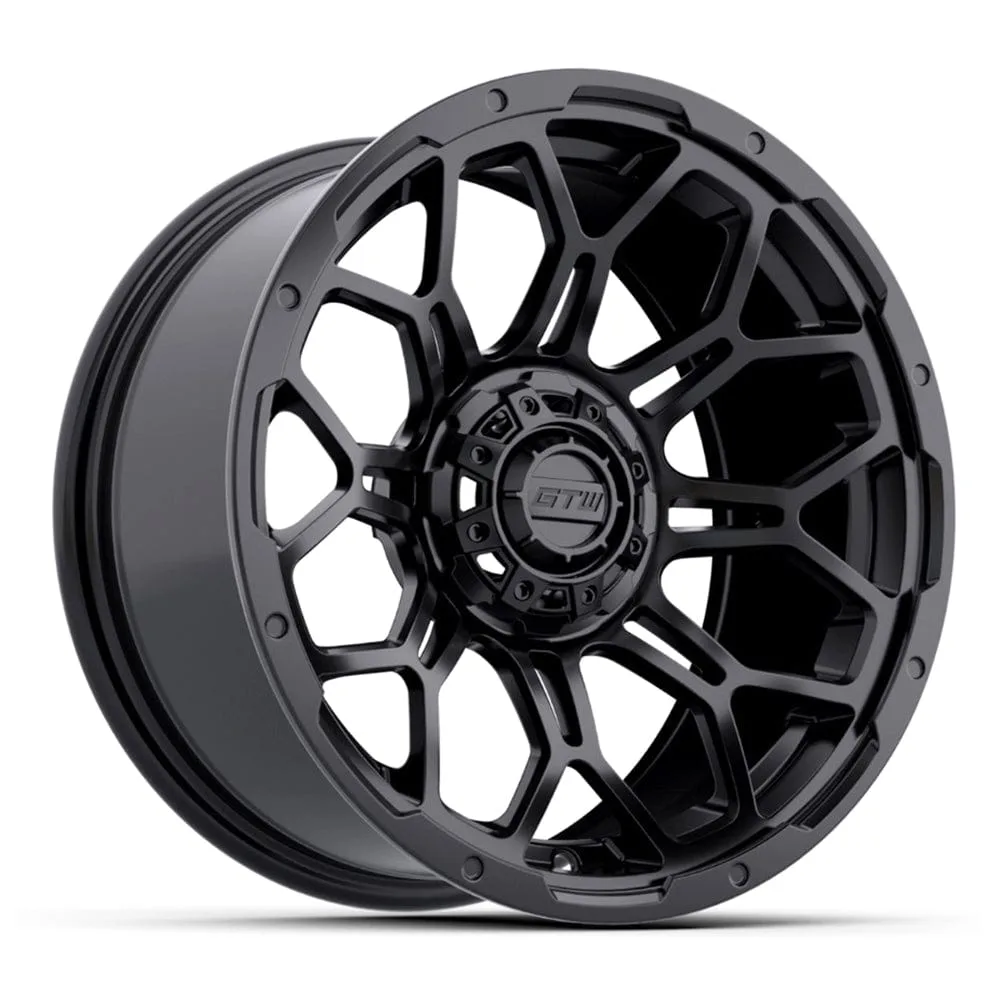
- 15" Spyder Black / Machined Golf Cart Wheel - 15"x7" ET-25 Offset⎮GTW®: 15x7 GTW Spyder wheel with an ET-25 offset and a deep concave, chamfered design. Offset and width change the load path to the front-end parts, so if a shimmy appeared after fitting wider or differently offset wheels, the wheel change itself belongs on your suspect list.
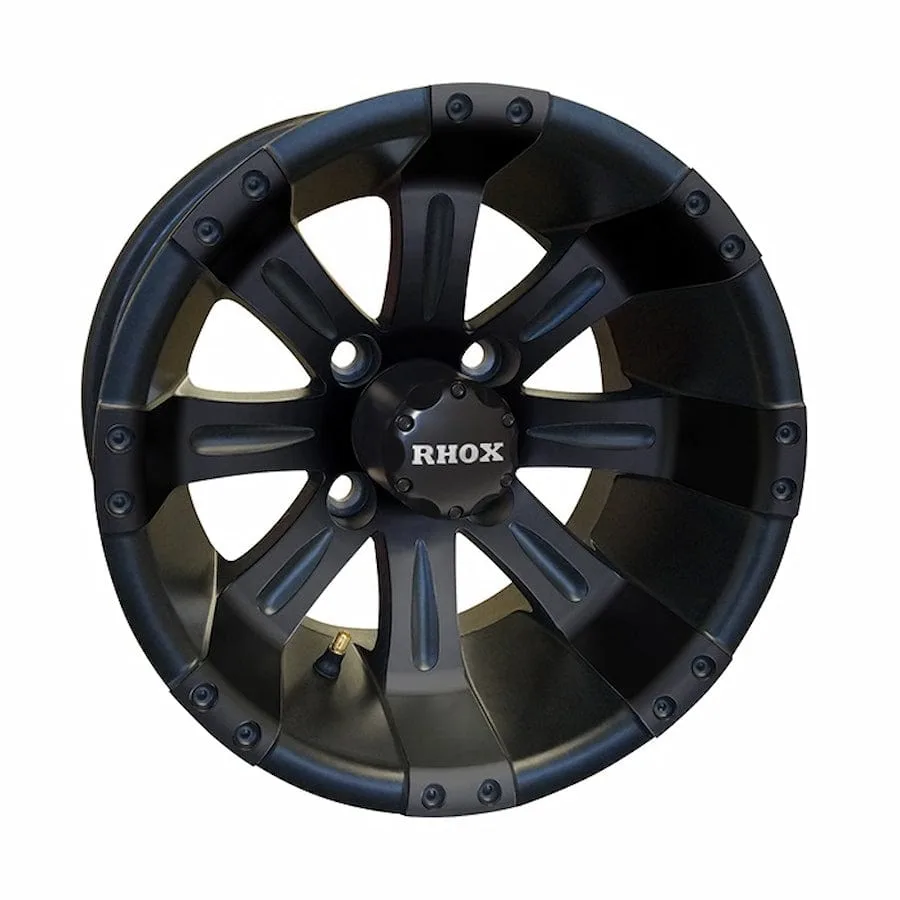
- 12" Vegas Matte Black Golf Cart Wheel | RHOX®: 12x7 RHOX Vegas matte black wheel with ET-25 offset, center cap, and valve stem; lug nuts are not included. Reusing or mismatching lug nuts on a wheel change can leave a wheel not fully seated, which mimics a balance or alignment problem, so confirm hardware before diagnosing further.