Quick answer
Check your golf cart tire sidewall for the load rating and maximum pressure, then set cold pressure to the vehicle manufacturer's recommendation—usually 20–22 psi for many all-terrain tires, but always confirm. Recheck monthly and before long trips. Replace tires when tread depth reaches 2/32 inch or you see cracking, bulges, or exposed cords.
What the numbers on your golf cart tire sidewall actually mean
A typical golf cart tire sidewall shows the size (e.g., 18x8.5-8 or 205/50-10), the load index or ply rating, and the maximum inflation pressure. The load index is a code that corresponds to a maximum weight the tire can carry at its rated pressure—not the pressure you should run daily. The maximum pressure is a ceiling, not a target. For example, a tire marked 'MAX LOAD 815 lbs AT 22 PSI' can carry 815 pounds per tire when inflated to 22 psi cold. Your cart's actual weight distribution and the manufacturer's sticker (often near the driver's seat or on the frame) tell you the recommended operating pressure, which is usually lower than the maximum.
Radial vs bias ply: why construction changes your pressure and wear pattern
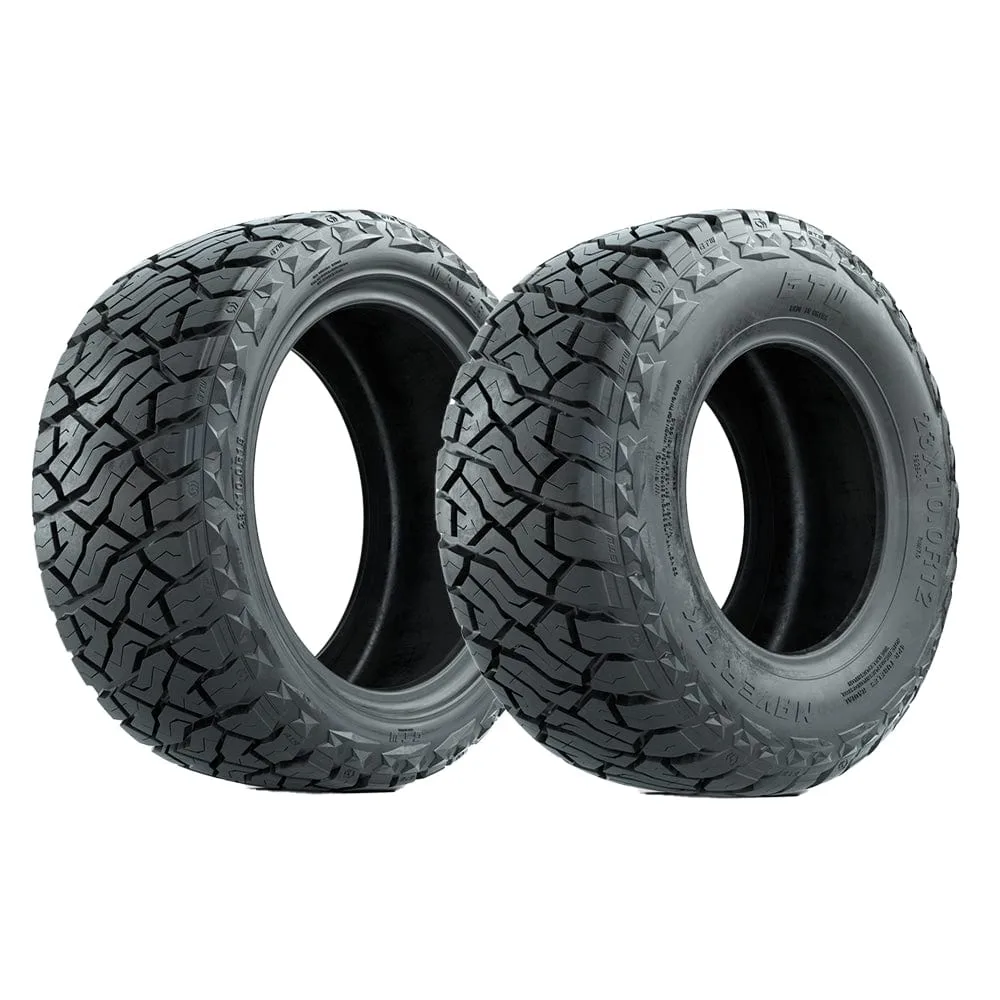
Radial tires have belts running around the circumference, which allows the sidewall to flex independently. They tend to run cooler, wear more evenly, and handle heavy loads better. Bias-ply tires have crisscrossing plies and a stiffer sidewall; they can flat-spot if parked for long periods and may wear faster in the center if overinflated. If you switch from bias to radial, expect a slightly different feel and recheck pressure more often until you find the sweet spot. For a radial option, the GTW Maverick Steel Belted Radial All-Terrain Golf Cart Tires are available in 12", 14", and 15" sizes and are designed for mixed surfaces.
How to set pressure for all-terrain and street tires
All-terrain tires often have a slightly higher recommended pressure than turf or street tires because their tread blocks need support to resist chunking on gravel. Start with the vehicle manufacturer's spec. If you don't have a manual, a common starting point for many 18–22 inch all-terrain golf cart tires is 20–22 psi cold. Street tires may run 18–20 psi. Never exceed the maximum printed on the sidewall. Use a quality gauge—pencil gauges can be inaccurate. Check pressure when tires are cold (before driving more than a mile).
Spotting and fixing uneven wear
Uneven wear is a symptom, not a cause. Center wear usually means overinflation; edge wear means underinflation or hard cornering. One-sided wear points to misalignment (toe or camber) or a bent spindle. Cupping or scalloped wear often indicates worn bushings, shocks, or unbalanced tires. If you see uneven wear, first check pressure with a gauge, then inspect suspension and alignment. Rotating tires front-to-back every 50–100 hours of use helps even out wear, especially on carts that mostly carry two passengers.
When to replace golf cart tires
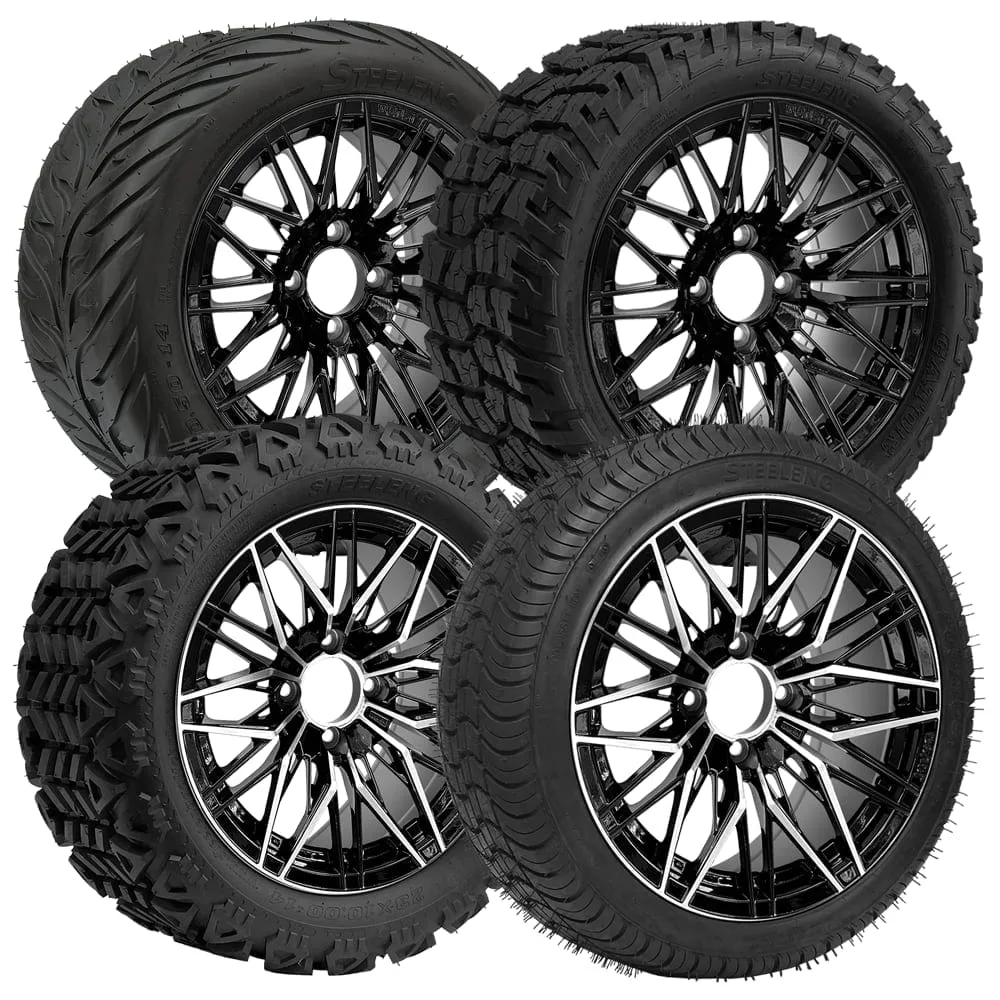
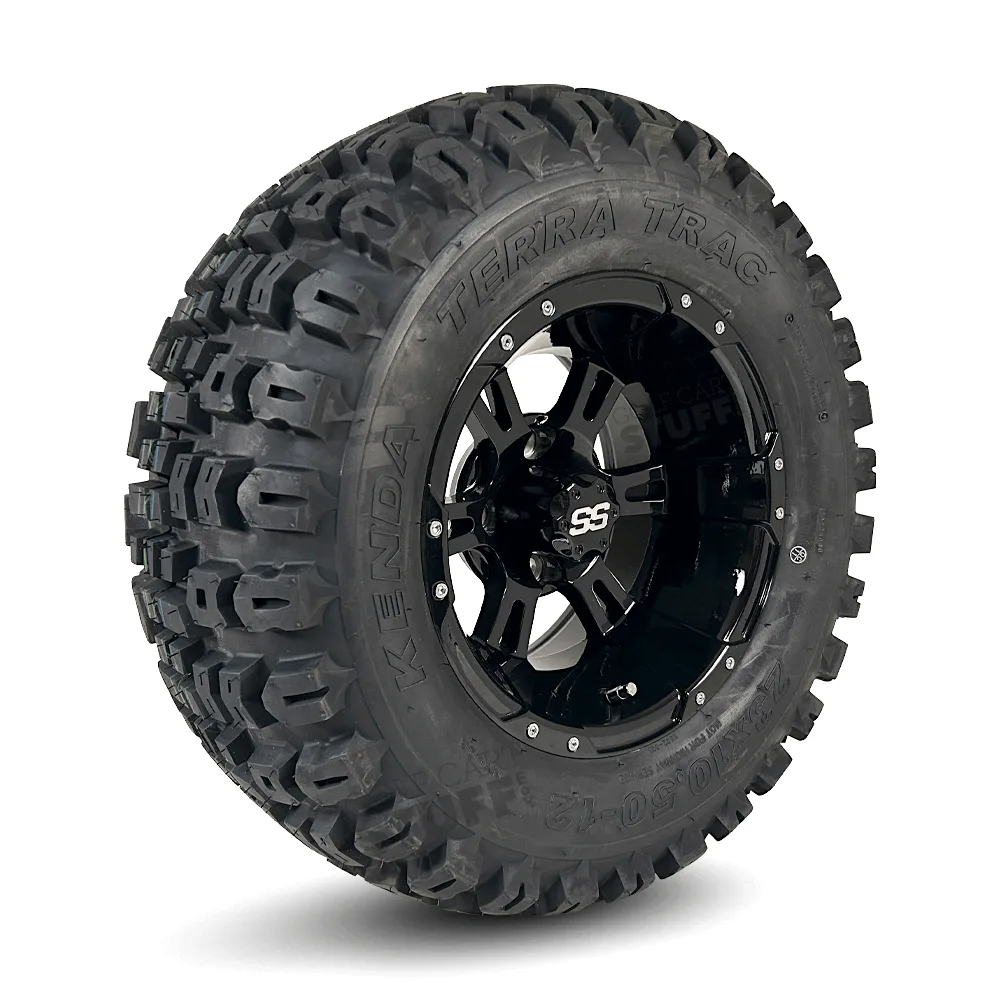
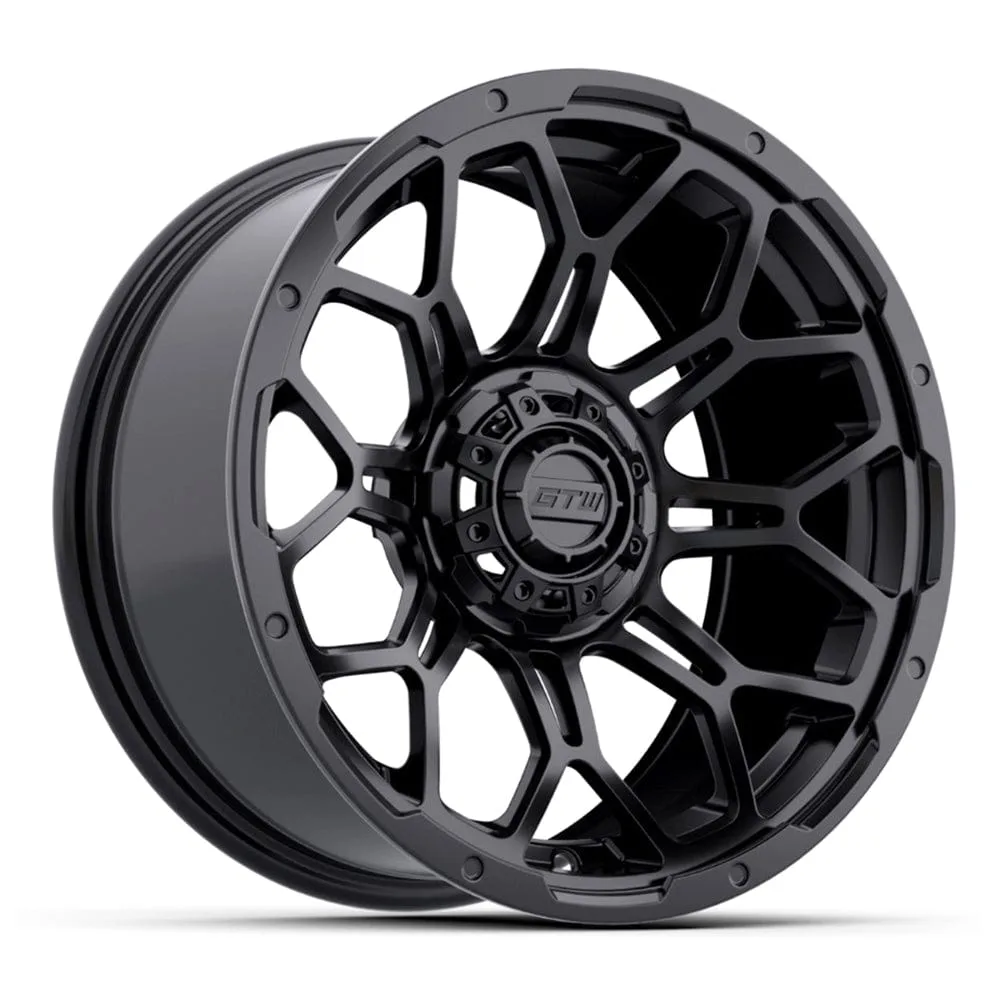
Replace tires when tread depth reaches 2/32 inch (about 1.6 mm), or sooner if you drive on wet grass or gravel. Also replace if you see sidewall cracks, bulges, exposed cords, or persistent vibration after balancing. Tires older than 6–8 years should be inspected annually even if tread looks fine, because rubber ages. If you're replacing a set, consider a complete wheel-and-tire combo to ensure matching sizes and offsets. The 10" Stallion Gloss Black Golf Cart Wheels and 18" All Terrain Golf Cart Tires Combo fits all Club Car, EZGO, and Yamaha carts without a lift kit, and the 14" Hornet Golf Cart Wheels and Golf Cart Tires Combo lets you choose street, all-terrain, or off-road tires—note that 22" tall and above requires a lift kit.
Step-by-step: check and maintain your golf cart tires
- Find the load rating and maximum pressure on the sidewall: Look for numbers like '815 lbs at 22 psi' or a load index. Write them down. Common mistake: assuming the maximum pressure is the correct daily pressure. Checkpoint: your target pressure will be at or below this maximum, based on your cart's sticker.
- Check your cart's recommended pressure: Look for a sticker on the frame, under the seat, or in the manual. If missing, start at 20–22 psi cold for all-terrain tires and adjust based on wear. Common mistake: using the same pressure for front and rear when the rear carries more load. Checkpoint: if you can't find a recommendation, inflate to 20 psi and monitor wear over a week.
- Measure pressure when tires are cold: Use a reliable gauge before driving more than a mile. Heat from driving raises pressure by 2–4 psi. Common mistake: checking after a long drive and letting air out, which leads to underinflation when cold. Checkpoint: recheck monthly and before long trips.
- Inspect tread depth and sidewalls: Use a tread depth gauge or the penny test. Look for cracks, bulges, or objects. Common mistake: ignoring small sidewall cracks that can grow into blowouts. Checkpoint: replace if tread is 2/32 inch or less, or if you see structural damage.
- Rotate tires front-to-back: Do this every 50–100 hours of use or if you notice uneven wear. Common mistake: skipping rotation because the cart 'feels fine'—uneven wear often starts silently. Checkpoint: after rotation, recheck pressure and test drive.
Product facts
- GTW Maverick Steel Belted Radial All-Terrain Golf Cart Tires for 12", 14" and 15" Golf Cart Wheels: GTW Maverick Steel Belted Radial All-Terrain Golf Cart Tires for 12", 14" and 15" Golf Cart Wheels. Radial construction can handle heavy loads and provides even pressure distribution, which helps reduce uneven wear on mixed surfaces.
- 10" Stallion Gloss Black Golf Cart Wheels and 18" All Terrain Golf Cart Tires Combo - Set of 4 - 18" Tall (Fits all Carts!): 10" Stallion Gloss Black Golf Cart Wheels and 18" All Terrain Golf Cart Tires Combo - Set of 4 - 18" Tall (Fits all Carts!). This combo fits all Club Car, EZGO, and Yamaha carts without a lift kit, simplifying replacement if you want a matched set.
- 14" Hornet Golf Cart Wheels and Golf Cart Tires Combo - Set of 4 (Choose your tire!): 14" Hornet Golf Cart Wheels and Golf Cart Tires Combo - Set of 4 (Choose your tire!). Tires measuring a total height of 22" tall and above will require a lift kit. You can select street, all-terrain, or off-road tires, but if you choose 22" or taller tires, you must also install a lift kit for clearance.