Quick answer
For a flawless purple manicure with Gotti #85F The Grape Escape Artist, apply it as a dip powder or acrylic overlay using thin, even layers and cap the free edge. The shade’s cool undertones and shimmer reward careful prep and a smooth base.
Why this grape shade behaves differently
Gotti #85F is a deep grape with cool purple undertones and a soft shimmering glow. The pearl finish is evenly packed, which means it can show surface texture if your base coat is uneven. Unlike flat creme powders, the shimmer reflects light and can highlight ridges, so a smooth base is critical. Also, because it is a fusion powder, it works for both dip and acrylic systems—but the application steps differ slightly in how you build layers.
When to choose dip vs. acrylic with #85F
Dip application is faster and easier for beginners, but the powder goes on thicker per layer, so you need to be careful not to build too much bulk. Acrylic application gives you more control over thinness and shape, but requires monomer and a brush. For evening events or dramatic accent nails, acrylic allows a more sculpted look; for quick at-home wear, dip is more forgiving. Neither method changes the color—the deep grape and shimmer remain consistent.
Step-by-step application for Gotti #85F
- Prep the nail plate: Push back cuticles, lightly buff the nail surface, and cleanse with a dehydrator. Common mistake: skipping cuticle work, which leads to lifting at the base. Check that the nail is completely dry and matte before proceeding.
- Apply a thin base coat: For dip: apply a thin layer of dip base, then dip into #85F at a 45-degree angle. For acrylic: apply a thin layer of monomer and acrylic powder. Common mistake: using too much base, which causes pooling and uneven powder pickup. Tap off excess powder and avoid pressing hard.
- Build layers evenly: Repeat base-and-dip (or acrylic application) for 2–3 layers, capping the free edge each time. Common mistake: applying thick layers, which can lead to curing issues or bulk. Keep each layer thin; you can always add more.
- Activate and shape: For dip: apply activator, then shape and buff. For acrylic: let it set, then file and buff. Common mistake: shaping before the product is fully set, causing cracks. Wait until the surface is hard before filing.
- Seal with top coat: Apply a high-quality top coat, cap the free edge, and cure if needed. Common mistake: missing the free edge, which leads to chipping. Two thin top coat layers are better than one thick layer.
Product facts
-
Gotti Nails #85F Fusion Powder - The Grape Escape Artist: Fusion system works as both a dip powder and acrylic. You can choose the method you’re most comfortable with without buying a separate product.
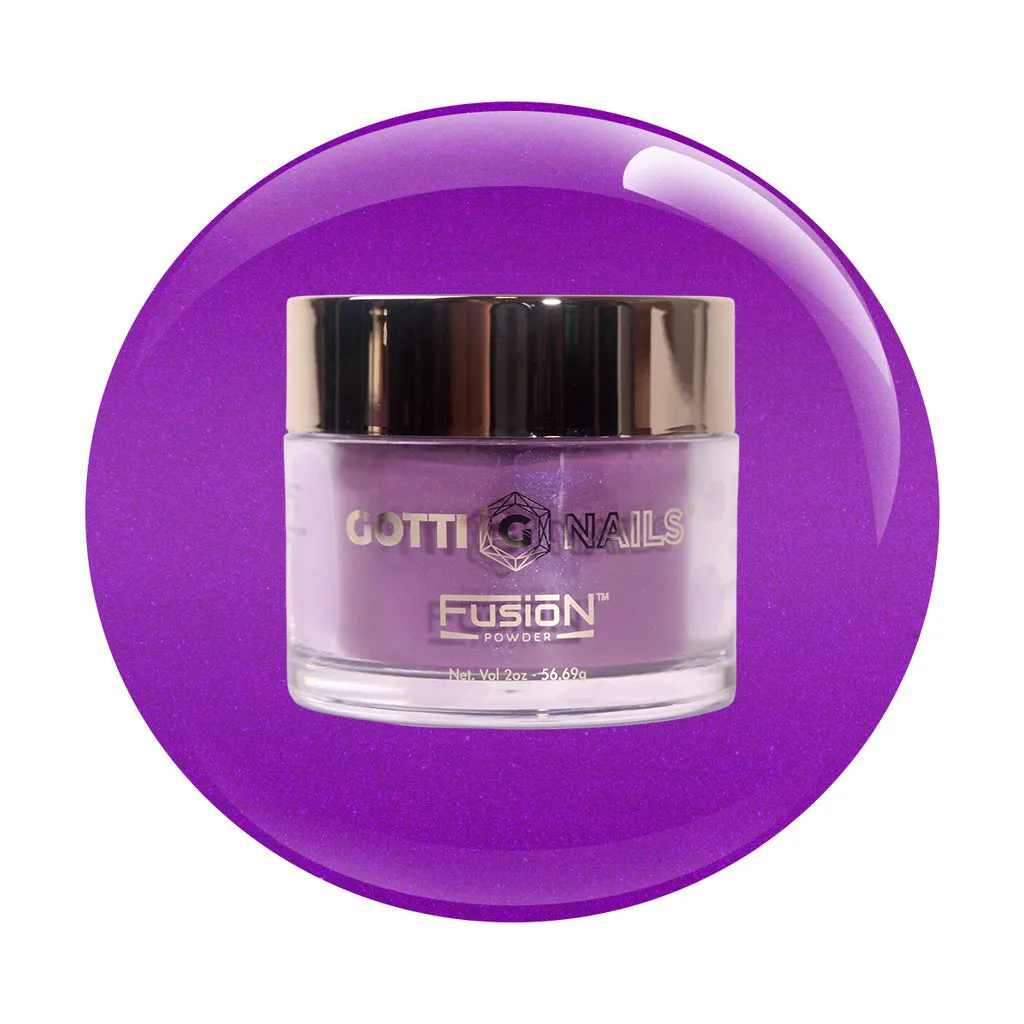
Gotti Nails #85F Fusion Powder - The Grape Escape Artist
-
Gotti Nails #85F Fusion Powder - The Grape Escape Artist: Luminous pearl finish, evenly packed. The shimmer distributes smoothly, but any base imperfections will still show, so prep carefully.
-
Gotti Nails #85F Fusion Powder - The Grape Escape Artist: Durable, long-lasting overlay that resists... With proper application, you can expect good wear time, making it suitable for special occasions.