Why grapeseed oil suits an oily scalp
If your roots turn slick by midday, the idea of adding oil can feel counterintuitive. The key is choosing a carrier oil that feels light and using it where it helps, not layering it on like a heavy treatment. Grapeseed oil is often reached for in this situation because it is a lightweight carrier oil for hair and skin.
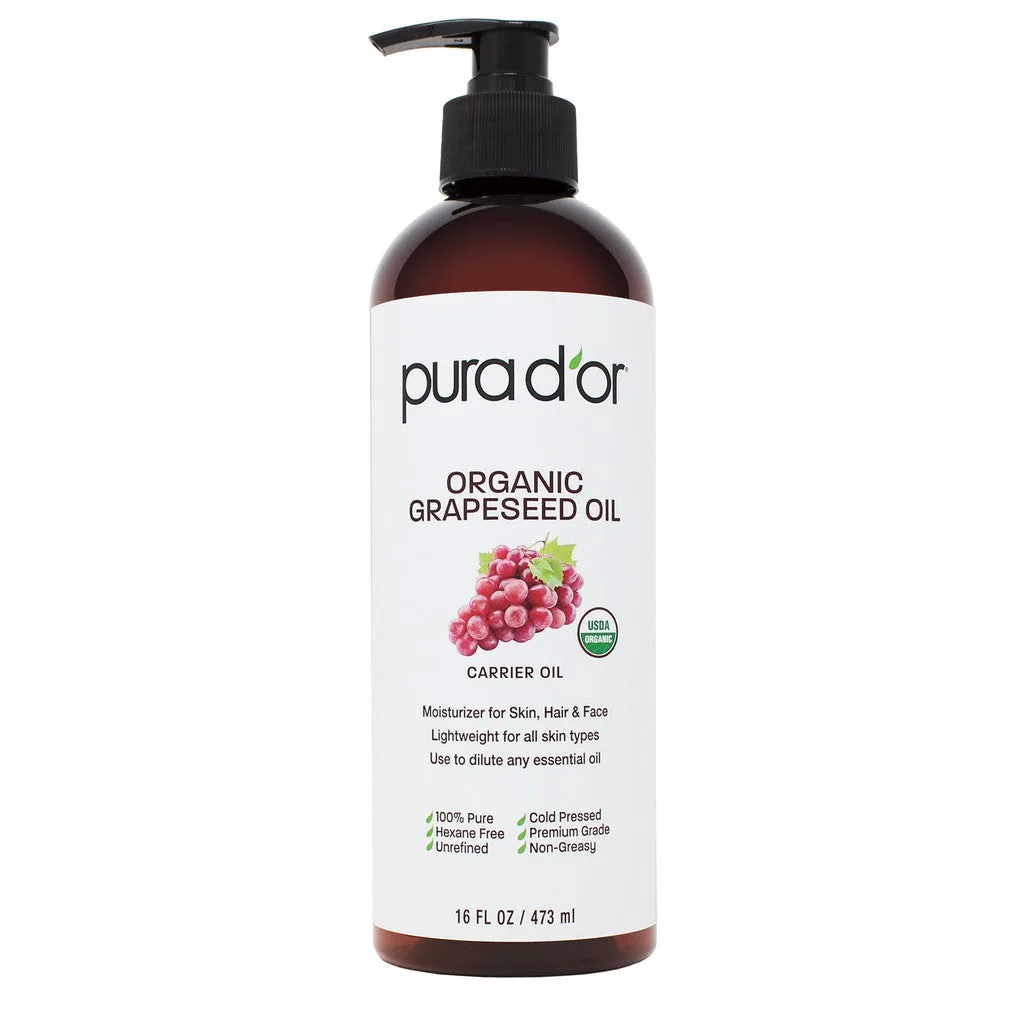
PURA D'OR Organic Grapeseed Oil is tagged for hair care, skin care, aromatherapy, and carrier oil use. That range matters here: it means the same 16 oz bottle can support a scalp massage, a pre-wash hair step, or a simple skin application, without needing a separate product for each job.
What the PURA D'OR bottle confirms
-
Organic Grapeseed Oil 16 oz: 16 oz bottle of organic grapeseed oil A single larger bottle covers repeated scalp massages and hair use, so you are not restocking a tiny bottle every few weeks.
Organic Grapeseed Oil 16 oz
-
Organic Grapeseed Oil 16 oz: Listed as a carrier oil Carrier oils are the base you can blend essential oils into, which is useful if you want a scented scalp massage oil rather than a plain oil.
-
Organic Grapeseed Oil 16 oz: Tagged for aromatherapy use This supports using it as the carrier in a diluted aromatherapy blend, not just as a standalone hair oil.
-
Organic Grapeseed Oil 16 oz: Tagged for hair care and skin care Confirms the oil is intended for both hair and skin, so a scalp massage that runs onto the forehead is not off-label use.
A simple grapeseed oil scalp massage routine
The goal with an oily scalp is to keep the application light and targeted. These steps use the grapeseed oil as a massage medium, not as a heavy mask.
- Start with a small amount: Pour a little grapeseed oil into your palm. Because it is a lightweight carrier oil, you can add more if needed, but starting small keeps the roots from feeling saturated.
- Massage the scalp, not the lengths: Use your fingertips to work the oil into the scalp in small circles. Keep the bulk of the oil on the scalp and avoid coating the mid-lengths and ends, which usually need less oil.
- Let it sit briefly, then wash: Leave the oil on for a short time, then shampoo as usual. The supplied information does not specify a leave-on time, so keep it brief and see how your scalp responds.
- Patch test first: Before a full scalp application, test a small amount on your inner arm or behind your ear. Stop using it if you notice irritation.
Grapeseed oil vs heavier oils for an oily scalp
Not all oils behave the same on an oily scalp. The comparison below is about how each type is typically used, not a claim that one is universally better.
- Grapeseed oil: A lightweight carrier oil tagged for hair, skin, and aromatherapy. It is a practical choice when you want a scalp massage oil that does not feel like a heavy treatment.
- Castor oil: Thick and viscous. It is often used in small amounts for targeted areas, but it can feel heavy on an already oily scalp.
- Coconut oil: Can be solid at room temperature and is often used as a deep conditioning mask. It may be too rich for roots that already get oily quickly.
- Jojoba oil: A liquid wax ester that is often used for scalp and hair. It sits between grapeseed and heavier oils in feel, so it can work for some oily scalps and feel too much for others.
How to use grapeseed oil on hair without greasy roots
The most common mistake with any hair oil is applying it to the roots and then adding more. With grapeseed oil, treat the scalp as the main target and keep the rest of your hair mostly oil-free. If you want to use it on the ends, apply a tiny amount to your palms first and smooth it over the last few inches only.
For a non-greasy hair oil for oily roots, timing matters too. Applying oil in the evening and washing it out the next morning gives it time to sit, but it also means the oil stays on your scalp longer. If your scalp is very oily, a shorter leave-on time before washing may feel more comfortable. The supplied product information does not include a specific recommended leave-on duration, so adjust based on how your scalp feels.
Where grapeseed oil fits in your routine
Think of grapeseed oil as a support product, not a replacement for shampoo or a medicated scalp treatment. It can be a good fit if you want a lightweight carrier oil for hair to use in a weekly scalp massage, or if you want to dilute essential oils for aromatherapy. It is not a treatment for a scalp condition, and it will not change how much oil your scalp naturally produces.
If you have a scalp condition such as seborrheic dermatitis, psoriasis, or an active infection, ask a healthcare professional before applying oils. The supplied information does not confirm suitability for those conditions, and a lightweight oil is not a substitute for medical care.