Quick answer
Choose a grass-fed whey protein isolate that states protein per serving, uses natural flavoring, and confirms gluten-free status on the label. If you want a specific benchmark, Transparent Labs Grass-Fed Whey Protein Isolate offers 28g of protein and 9 amino acids per serving in French Vanilla.
Protein per serving tells you how much powder you actually need
A higher protein number per scoop means you can hit your target with fewer scoops, which matters if you mix shakes in a shaker cup or blend. Check the serving size alongside the protein figure: a powder with 28g of protein per serving may use a larger scoop than one with 24g, so compare the cost per gram of protein rather than the tub price alone.
Natural flavoring narrows the ingredient list, but read the full panel
Naturally flavored whey protein typically avoids artificial sweeteners and flavors, which suits people who want a shorter ingredient list. However, natural flavors can still include ingredients you may want to avoid, and the taste may be less intense than artificially flavored powders. Look at the full ingredient panel, not just the front label.
Gluten-free claims matter only if you have a medical need
Most whey protein isolates are naturally gluten-free because they come from dairy, but cross-contamination can occur during processing. If you have celiac disease or gluten sensitivity, choose a powder that explicitly states gluten-free on the package. If you do not have a medical reason to avoid gluten, this claim is a nice-to-have rather than a must.
Amino acid content is built into whey, but the count can vary
Whey protein is a complete protein, meaning it contains all nine essential amino acids. Some labels highlight the number of amino acids or specific amounts, which can help you compare products. A powder that lists 9 amino acids is simply confirming the full profile, not adding extra aminos beyond what whey naturally provides.
Decision rules for buying grass-fed whey isolate
- Set a protein-per-serving floor: Decide on a minimum protein per serving before you shop—24g or higher is a common target for isolate powders. Compare the serving size to avoid paying more for a powder that requires two scoops to reach your goal.
- Choose natural flavoring only if you accept the trade-off: Naturally flavored powders often have shorter ingredient lists, but they may taste less sweet. If you prioritize a clean label over a dessert-like flavor, natural flavoring is the right call.
- Confirm gluten-free status if you need it: Check the packaging for an explicit gluten-free claim. If you have celiac disease, look for a certified gluten-free seal; otherwise, a gluten-free statement is sufficient.
- Use amino acid count as a tiebreaker: Since all whey contains the nine essential amino acids, a label that lists 9 amino acids is confirming completeness. Use this as a secondary check, not the main reason to buy.
Product facts
-
Transparent Labs Grass-Fed Whey Protein Isolate - Naturally Flavored, Gluten Free Whey Protein Powder with 28g of Protein per Serving & 9 Amino Acids - 30 Servings, French Vanilla: Transparent Labs Grass-Fed Whey Protein Isolate provides 28g of protein and 9 amino acids per serving in French Vanilla flavor. That protein level can help you meet recovery goals with fewer scoops, and the French Vanilla option suits those who want a classic flavor.
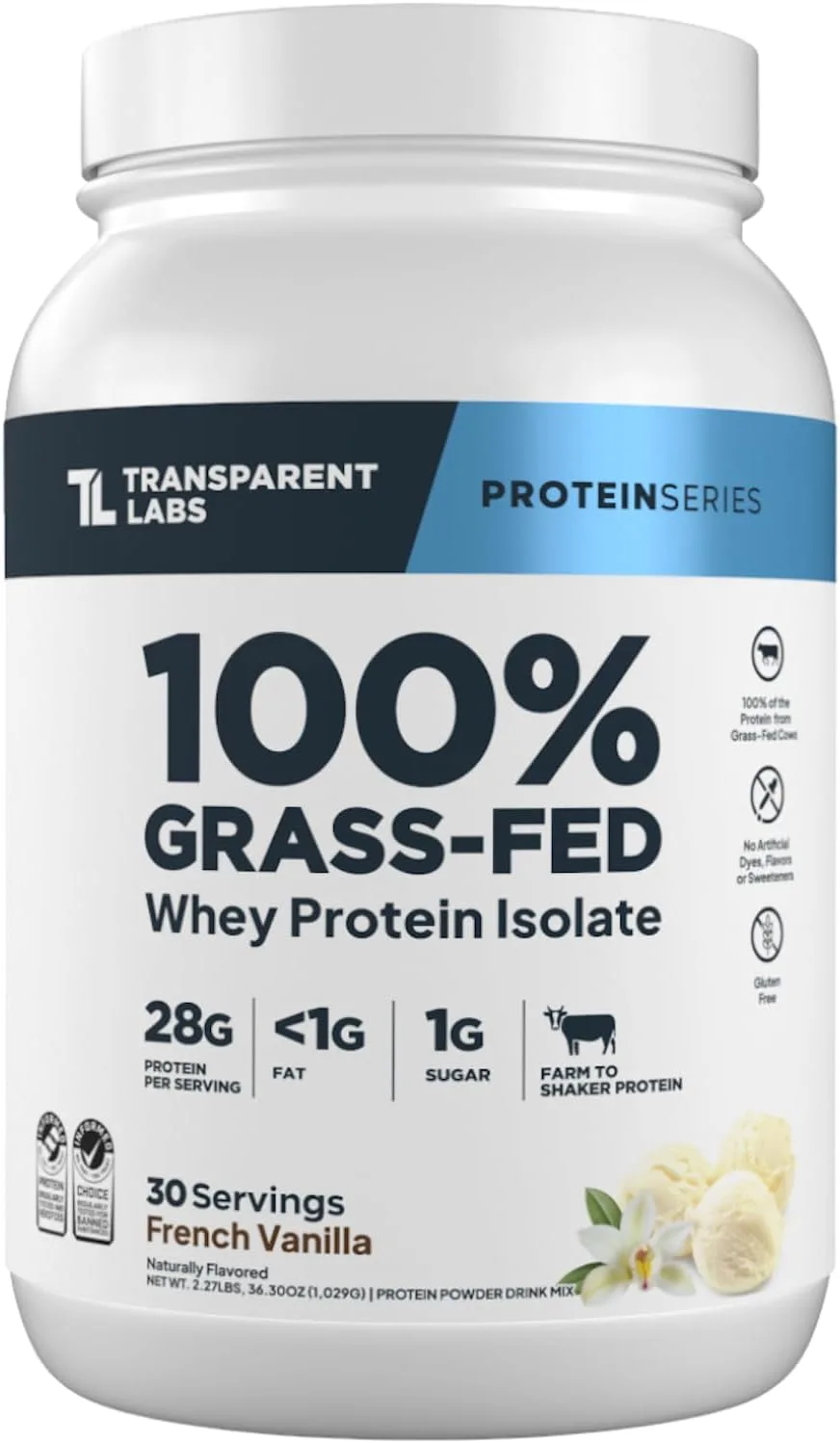
Transparent Labs Grass-Fed Whey Protein Isolate - Naturally Flavored, Gluten Free Whey Protein Powder with 28g of Protein per Serving & 9 Amino Acids - 30 Servings, French Vanilla
Who should buy this type of powder
Best for
- People who want a grass-fed whey isolate with a clear protein-per-serving number
- Shoppers who prefer naturally flavored protein powders
- Anyone who needs a gluten-free whey isolate
Not for
- People who want an artificially sweetened protein powder with a stronger flavor
- Those who need a plant-based or dairy-free protein
- Shoppers who prioritize the lowest cost per gram of protein over sourcing