What Grasscloth Key Lime Actually Is
Grasscloth Key Lime is a 100% cotton print from Heather Peterson’s Grasscloth Cottons collection for Riley Blake Designs. The pattern uses dimensional color to mimic the look of woven grasscloth wallpaper, but the fabric itself is a standard quilting cotton. That means you get the visual texture of a natural fiber wall covering without the stiffness or shedding of actual grasscloth. The base color is a fresh lime green that reads as neutral enough to pair with other brights or softer pastels.
Fabric Details That Affect Your Project
-
Grasscloth Key Lime by Heather Peterson for Riley Blake Designs: Fiber Content: 100% Cotton; Width: 43"/44" Standard quilting cotton width means most patterns designed for 44" fabric work without adjustment. The 100% cotton content also means predictable shrinkage and a soft hand after washing.
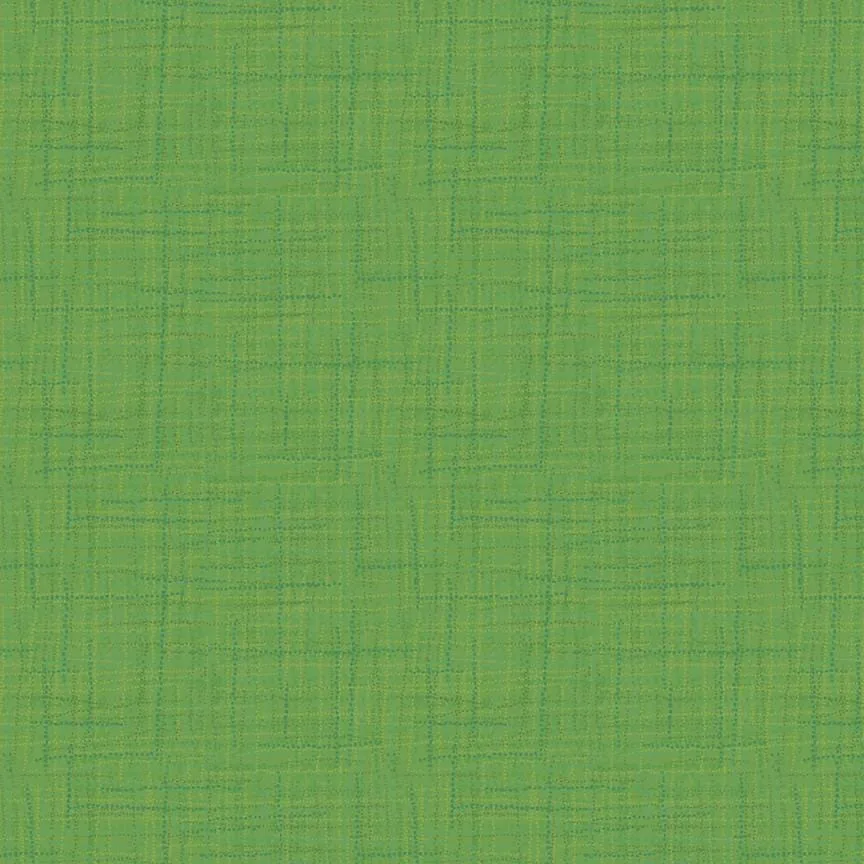
Grasscloth Key Lime by Heather Peterson for Riley Blake Designs
-
Grasscloth Key Lime by Heather Peterson for Riley Blake Designs: Washing Instructions: Machine Wash Cold / Tumble Dry Low Prewashing is recommended to account for shrinkage and to set the dye. Cold water and low heat help preserve the dimensional color effect of the print.
-
Grasscloth Key Lime by Heather Peterson for Riley Blake Designs: Designer: Heather Peterson; Collection: Grasscloth Cottons Knowing the designer and collection helps if you want to coordinate with other prints in the same line or find complementary fabrics from the same designer.
Quilting with a Grasscloth Print
The woven-look pattern acts like a blender print—it reads as a solid from a distance but adds subtle texture up close. This makes Grasscloth Key Lime a strong choice for background squares, sashing, or borders where you want a lime green that isn’t flat. It also works well as an accent in a quilt block where the dimensional color can mimic a woven basket or natural element. Because the print is tonal rather than directional, you don’t need to worry about matching repeats across seams.
For a modern quilt, pair it with solid white or low-volume prints to let the lime green stand out. For a scrappier look, combine it with other Grasscloth Cottons from the same collection or with coordinating Riley Blake basics.
Home Decor Projects That Suit the Texture
The grasscloth effect is especially convincing in home decor items where a woven texture would be expected. Consider using Grasscloth Key Lime for throw pillow covers, table runners, or simple curtain panels. The 43/44" width gives you enough yardage for standard pillow forms and small window treatments without piecing. Because the fabric is 100% cotton, it takes starch well for crisp edges on napkins or placemats.
One caveat: the dimensional color effect is printed, not woven, so heavy abrasion (like on a frequently used chair seat) may show wear faster than a true woven texture. For light-use decor items, it performs beautifully.
A Practical Sewing Sequence for Grasscloth Key Lime
- Prewash in cold water, tumble dry low: This removes any residual dye and allows for shrinkage before you cut. The dimensional print may soften slightly, which is normal.
- Press with a medium-hot iron: Use steam to flatten any creases from washing. The cotton responds well to pressing, and a crisp fabric makes cutting more accurate.
- Cut with a rotary cutter or shears: Standard quilting cotton cuts cleanly. If you’re using a directional pattern in your project, note that the grasscloth print is non-directional, so you can cut freely.
- Sew with a 1/4" seam allowance: This is the standard for quilting and most home decor patterns. The fabric holds seams well and does not fray excessively.
- Finish seams with a zigzag or serger: Because it’s a plain-weave cotton, raw edges will fray in the wash. Finishing seams extends the life of your project.
Care and Longevity
The supplied washing instructions are straightforward: machine wash cold and tumble dry low. This care regimen is standard for quilting cottons and helps preserve the dimensional print. Avoid bleach and high heat, which could fade or distort the color. After multiple washes, the fabric will soften but the grasscloth effect should remain visible. If you’re making a quilt that will be washed frequently, prewashing is especially important to avoid uneven shrinkage.