Quick answer
Match the blade to the texture you want: use the coarse side for cheese and carrots, the fine side for chocolate and zest, and the peeler for skins and ribbons. Grate over a board with the safety guard fitted, and peel away from your hand.
Why blade choice changes the result
The same block of cheese can turn out fluffy and light or dense and paste-like depending on the blade. Coarse openings produce short, airy strands that melt evenly; fine openings shave thin pieces that clump together. That is why a cheese grater blade guide matters more than how hard you press.
The Grater and Peeler Set gives you four grating blades and two handheld graters that clip together for storage, with a safety guard included. Treat the blade as the decision and your pressure as the variable you control.
When the peeler is the better tool
Reach for the peeler when you want a clean skin removal or a thin, even ribbon rather than shredded pieces. It is the right choice for carrots, cucumbers and potatoes where the shape should stay intact. For chocolate, nuts or hard cheese, the grater gives you control that a peeler cannot.
The trade-off is speed: peeling one carrot takes longer than grating it, but the result is neater and easier to portion.
Step-by-step: match the blade, then use it safely
- Set up your station: Place a board under the grater and fit the safety guard before you start. Keep the food dry so it does not slip. A damp board or missing guard is the most common cause of scraped knuckles.
- Choose the coarse blade for cheese and carrots: Use the wide openings for cheddar, mozzarella, carrots and cucumber. Grate in short strokes and stop before the piece gets too small to hold. If the cheese smears instead of shredding, it is too warm; chill it for ten minutes.
- Choose the fine blade for chocolate and zest: Use the narrow openings for chocolate, citrus zest and hard cheese. Press lightly and let the blade do the work. Heavy pressure on chocolate creates heat and clumps, so keep the strokes quick and light.
- Use the peeler away from your body: Hold the peeler in your dominant hand and the food in the other, then peel in a direction that moves the blade away from your fingers. Peel on a board, not over the sink. A peeler that skips or catches usually means the blade is dull or the food is wet.
- Clean and store as a set: Rinse and dry each blade before clipping the two graters together. Store the peeler with the set so the guard and blades stay together. Clipping the graters together protects the blades and keeps the next job faster.
Product facts
-
Grater and Peeler Set: Includes four different grating blades and two handheld graters that clip together, plus a safety guard. You can switch between coarse and fine textures without buying separate tools, and the guard reduces knuckle contact when the piece gets small.
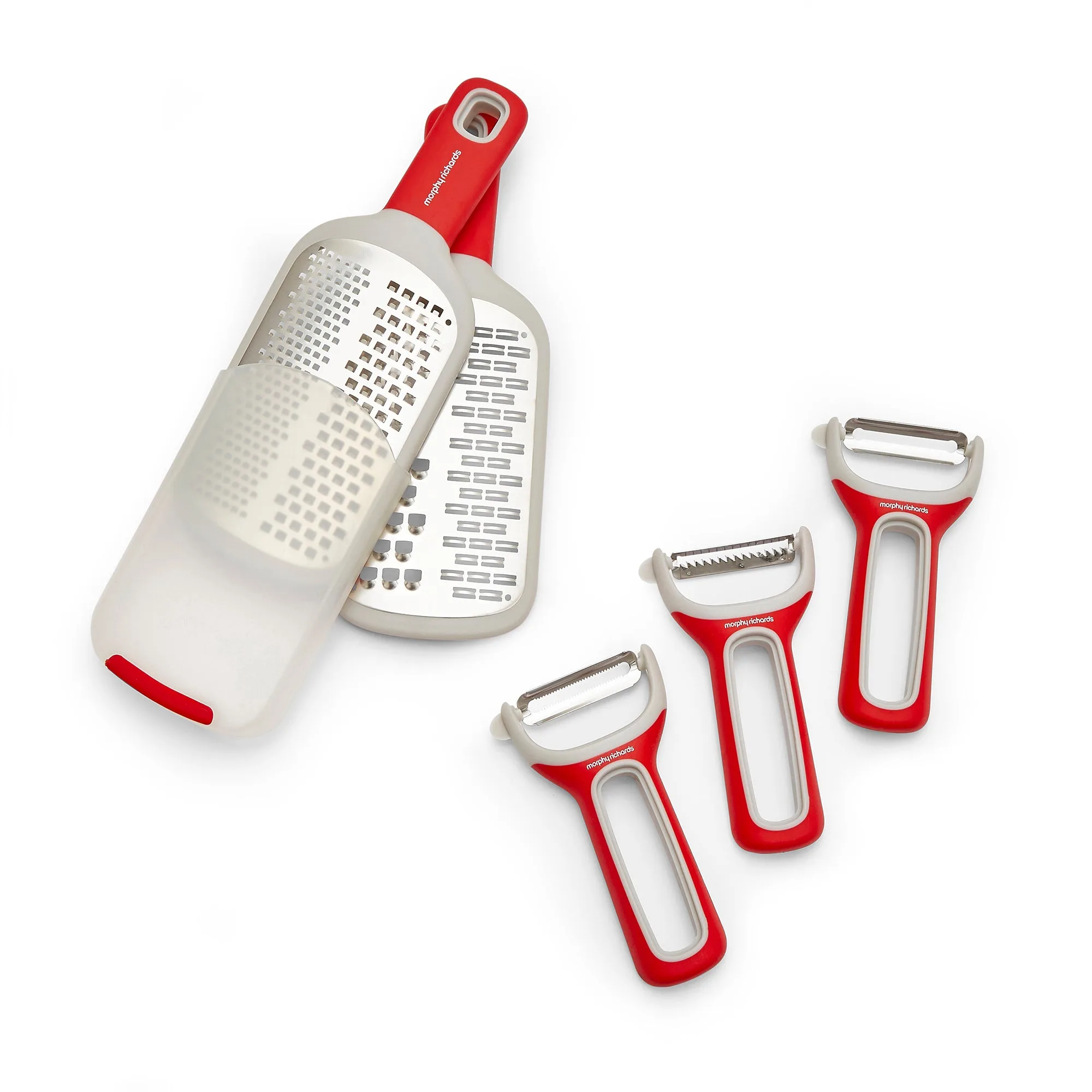
Grater and Peeler Set