Quick answer
Start with the Gratitude Unit Plan's lesson sequence, then add a short daily gratitude check-in and one hands-on activity per lesson. Keep each session to 15–20 minutes and review the lesson's checkpoint before moving on.
Why a structured gratitude routine works better than one-off lessons
Gratitude lessons for kids stick when they are predictable and repeated. The Gratitude Unit Plan is built around Honey Bear's lessons, which support students in identifying and enjoying feelings of gratitude. That focus on noticing—rather than just saying thank you—is what makes the practice usable outside the lesson.
A common mistake is treating gratitude as a seasonal craft. Instead, schedule it like any other SEL block: same time, same opening question, same closing reflection. The consistency is the curriculum.
What to prepare before the first lesson
Read through the full unit before you teach it so you know where each lesson's checkpoint falls. Decide how you will record student responses—a simple journal, a shared chart, or a quick verbal round—and gather any drawing or writing supplies the activities call for.
If your class has limited time, plan to split one lesson across two short sessions rather than skipping the reflection. The reflection is where students connect the activity to their own experience.
Step-by-step: Teaching the Gratitude Unit Plan
- Set a fixed gratitude slot: Choose a 15–20 minute window that repeats at the same time each day or week, and open every session with the same question, such as 'What is one thing you noticed today?' Checkpoint: if the slot keeps getting skipped, shorten it to 10 minutes rather than moving it.
- Introduce Honey Bear's lesson focus: Before each activity, name the lesson's focus in one sentence—gratitude, connection, or mindfulness—so students know what they are practicing. Common mistake: explaining the whole unit at once; introduce only the current lesson.
- Run one hands-on gratitude activity: Pair the lesson with a simple classroom activity, such as a gratitude journal entry, a 'thank you' note to a helper, or a shared list of things the class is grateful for. Checkpoint: the activity should take less time than the reflection that follows it.
- Close with a reflection round: Ask two or three students to share what they noticed, then model one gratitude statement of your own. Common mistake: correcting or judging students' answers; accept all responses and look for noticing, not performance.
- Review the lesson checkpoint before moving on: Use the unit's checkpoint to confirm students can identify a grateful feeling in their own words. If not, repeat the activity with a different example before starting the next lesson. Checkpoint: repeating one lesson is better than rushing through the unit.
Product facts
-
Gratitude Unit Plan: The Gratitude Unit Plan includes Honey Bear's lessons supporting gratitude, connection, and mindfulness. That combination means you can use one unit to cover noticing positive feelings and staying present, rather than planning separate gratitude and mindfulness lessons.
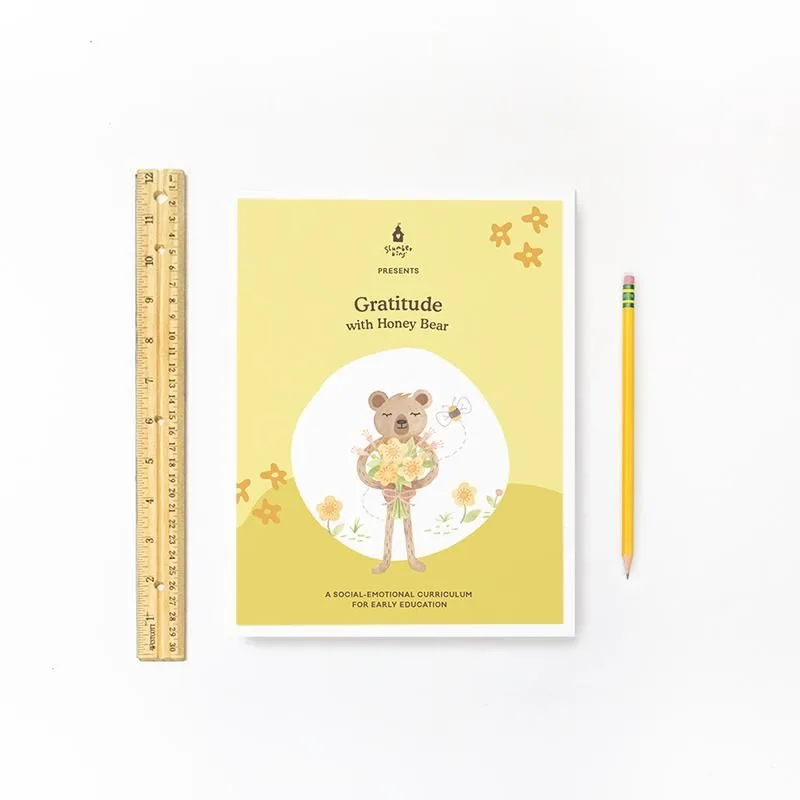
Gratitude Unit Plan