Quick answer
Choose a green dot sight for faster target acquisition in bright daylight; pick a red dot sight for longer battery life and lower cost. For a pistol or rifle, a rechargeable model like the Sniper GL01G combines the green dot advantage with USB recharging convenience.
Visibility and eye sensitivity
The human eye is most sensitive to green light (around 555 nm), making green dot sights appear brighter and easier to pick up in daylight or against complex backgrounds. Red dots (typically 620–650 nm) can be less visible in very bright conditions but are often sufficient for indoor or shaded environments. This difference matters most for shooters who transition between bright and low-light settings.
Battery life and power management
Green dot sights generally consume more power than red dot sights because green LEDs require higher current to produce a comparable brightness. This means a green dot sight may need more frequent battery changes or recharging. A rechargeable green dot sight, such as the Sniper GL01G, mitigates this drawback by allowing you to top up the battery via USB instead of replacing disposable cells.
Cost and value
Red dot sights are typically less expensive than green dot sights of similar quality, making them a budget-friendly choice for casual shooters or multiple firearms. Green dot sights often carry a premium due to the more complex LED and power management. However, a competitively priced green dot like the Sniper GL01G (catalog price USD 50.15) narrows the gap, offering green visibility at a red-dot-like price point.
Green dot vs red dot trade-offs
- Daylight visibility: Green dot sights are easier to see in bright sunlight or against green foliage. Red dots can wash out in very bright conditions.
- Battery runtime: Red dot sights typically run longer on a single battery. Green dot sights drain faster but rechargeable models like the Sniper GL01G offset this with USB recharging.
- Cost: Red dot sights are generally more affordable. Green dot sights cost more, but some models like the Sniper GL01G offer green visibility at a competitive price.
- Eye strain and low light: Green dots cause less eye strain over long sessions and remain visible in twilight. Red dots can be harder to see in dim conditions without illumination. If you shoot frequently in low light, a green dot may reduce fatigue.
Product facts
-
Sniper GL01G Green Dot Sight with USB Rechargeable Battery Pistols & Handguns Rail Mount: The Sniper GL01G Green Dot Sight has a wavelength range of 510-650 nm and a laser range of 100-300 m. Its green dot wavelength sits in the eye-sensitive range for bright daylight use, while the 300 m range suits both pistol and rifle shooting distances.
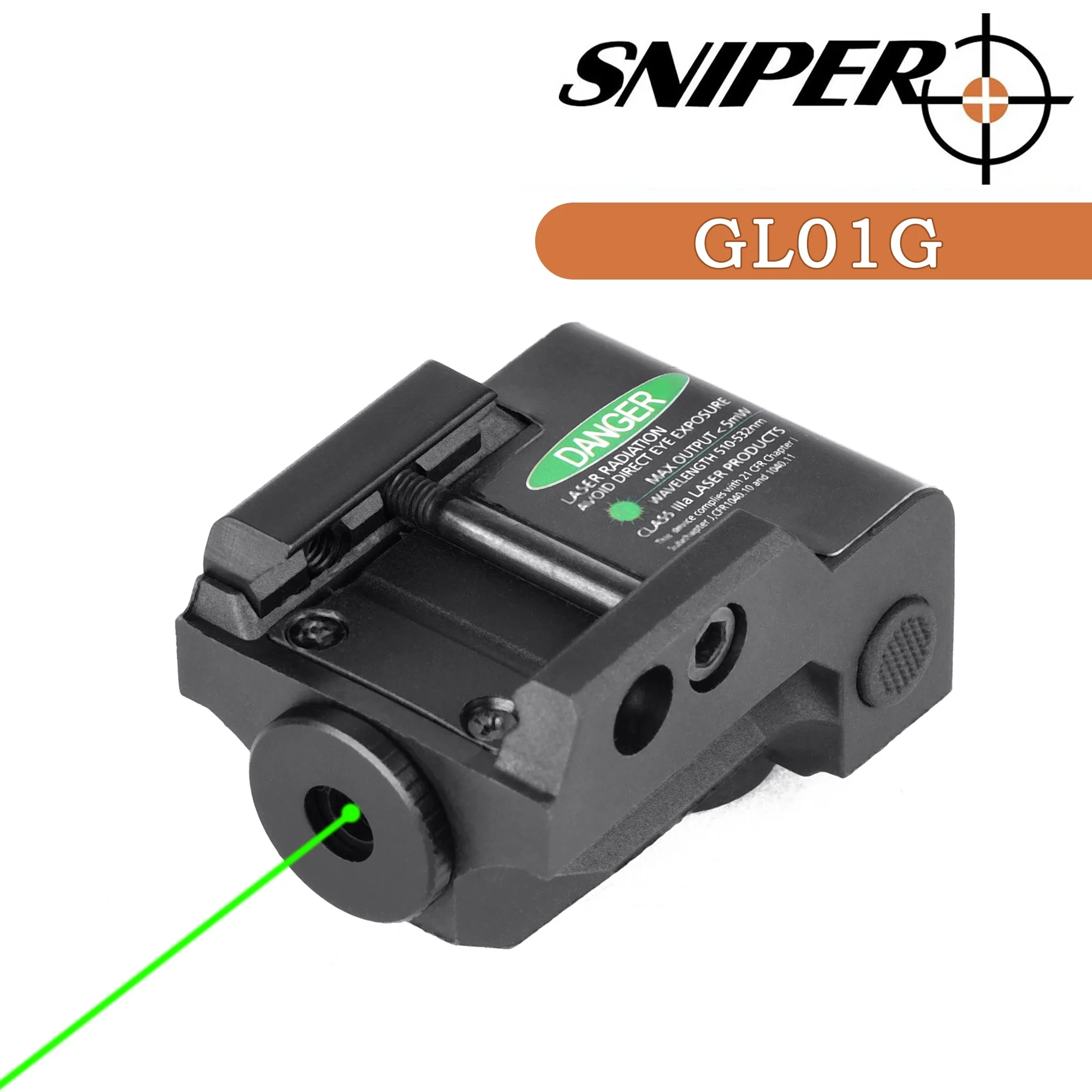
Sniper GL01G Green Dot Sight with USB Rechargeable Battery Pistols & Handguns Rail Mount
Which optic fits your shooting?
Best for
- Shooters who prioritize daylight visibility and fast target acquisition
- Those who want a rechargeable optic to avoid battery waste
Not ideal for
- Budget-focused shooters who need maximum battery life between charges
- Users who prefer a traditional red dot for indoor range or low-light-only use