The label numbers behind every answer
-
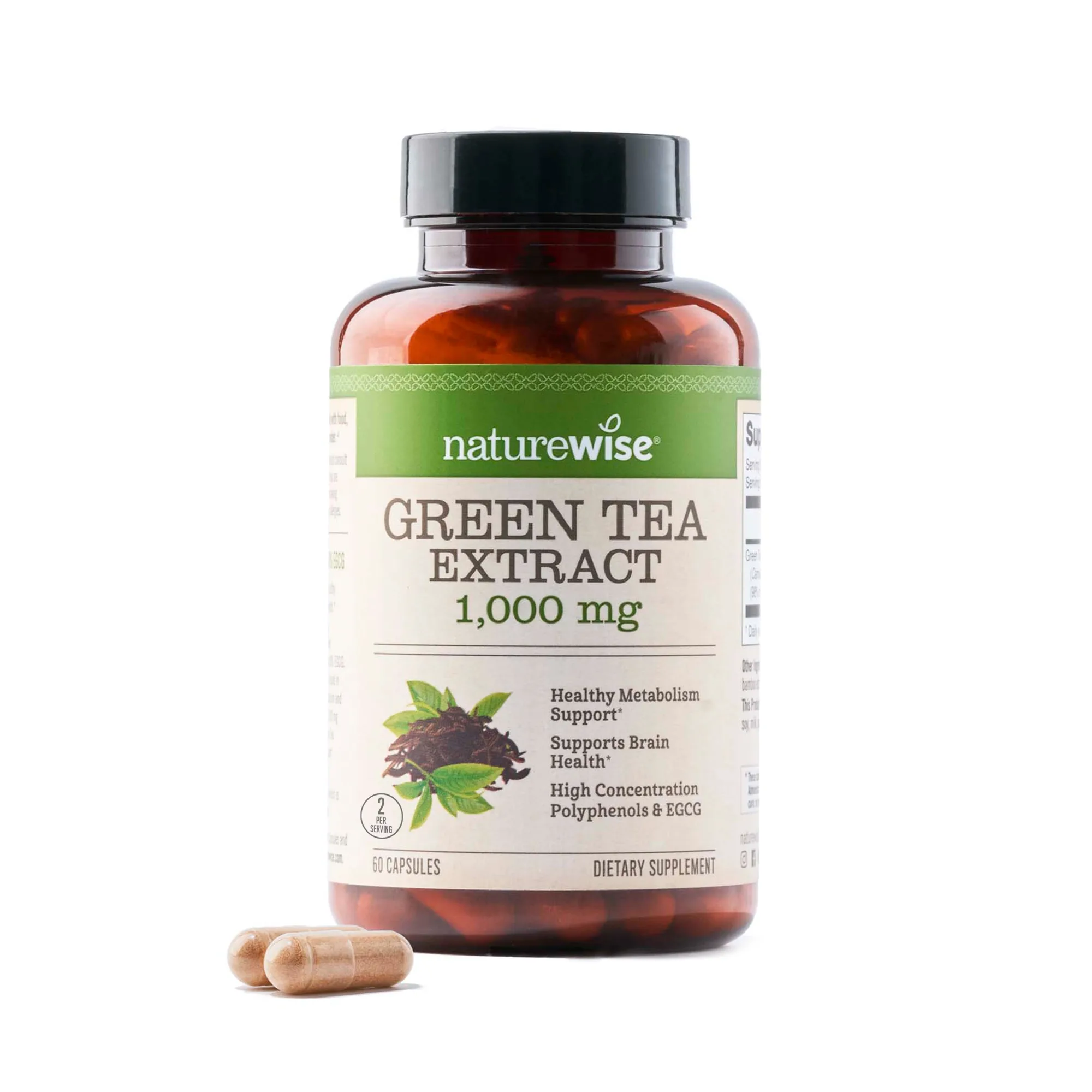
Green Tea Extract: Serving size is 2 capsules, delivering 1000 mg green tea extract standardized to 98% polyphenols and 50% EGCG. Every caffeine and EGCG question below is calculated from this one serving, not from a single capsule.
Green Tea Extract
-
Green Tea Extract: Each serving contains around 30 mg of caffeine, described as about a third of an 8-ounce cup of coffee. This is the number to compare against your coffee, tea, and soda intake when you decide whether to stack supplements.
-
Green Tea Extract: Available in 60, 90, and 120 count bottles. At 2 capsules per serving, bottle size sets how many servings you get and how often you reorder.
Caffeine and EGCG questions, answered from the label
How much caffeine is in a serving of green tea extract?
About 30 mg per 2-capsule serving, which the label equates to roughly a third of an 8-ounce coffee. That is a small dose, but it is not zero. If you are sensitive to caffeine or tracking total intake, count it alongside your coffee and tea rather than treating it as a free add-on.
What does 50% EGCG actually mean for my dose?
The extract is standardized to 98% polyphenols, with EGCG making up 50% of that standardized content. EGCG is the most studied catechin in green tea, and the label calls out its role in supporting heart health, cellular health, and brain function.* The standardization is what makes the dose predictable from bottle to bottle.
When should I take green tea extract?
The supplied label does not specify a time of day. What it does tell you is that each serving carries about 30 mg of caffeine and is positioned to support energy levels and mental clarity throughout the day.* If you are caffeine-sensitive, taking it earlier rather than close to bedtime is a reasonable personal rule, but treat that as your own preference, not a manufacturer instruction.
Can I take green tea extract with coffee?
Nothing in the supplied label prohibits it, but the caffeine adds up. One serving of this extract plus one 8-ounce coffee lands near 125 mg of caffeine; two coffees push it past 200 mg. If you already drink coffee through the day, consider whether you need the extra 30 mg or whether you are taking the extract for its polyphenols and EGCG instead.
What side effects should I watch for?
The supplied information does not list side effects, so this article cannot tell you what to expect. The one concrete thing the label gives you is the caffeine content: about 30 mg per serving. If you know how caffeine affects you, use that as your guide and check with a healthcare professional if you are unsure whether green tea extract fits your routine.
Is it vegan and free of common allergens?
Yes. The product is vegan, gluten-free, and does not contain wheat, eggs, soy, dairy, tree nuts, peanuts, fish, shellfish, or sesame. That covers the major allergen categories the label addresses; it does not guarantee the absence of every possible allergen, so read the full label if you have a specific concern.
How to fit it around your coffee without overdoing caffeine
Start with your total, not the supplement alone. Write down how many caffeinated drinks you have on a typical day, then add 30 mg for each serving of green tea extract. If the total is already high, the extract is the easiest place to trim because it contributes the least caffeine.
If you take it for the EGCG and polyphenols rather than the lift, you can separate it from your coffee by a few hours. The label does not require this, but it makes it easier to tell which product is doing what and keeps your caffeine intake from clustering in the morning.
Bottle size matters more than it seems. A 60-count bottle gives 30 servings at 2 capsules each; 90 count gives 45; 120 count gives 60. If you are still experimenting with timing, the smaller bottle limits how much you commit to before you know whether the routine sticks.
Quick checks before you open the bottle
- Count your caffeine: 30 mg per serving is roughly a third of a coffee. Add it to your daily total before deciding whether to take it alongside another caffeinated drink.
- Read the standardization: 98% polyphenols and 50% EGCG tell you the extract is concentrated and consistent. That is the number to compare if you switch brands.
- Check the allergen statement: The label confirms vegan, gluten-free, and free from wheat, eggs, soy, dairy, tree nuts, peanuts, fish, shellfish, and sesame.
- Pick a bottle size that matches your trial: 60, 90, or 120 count. Start smaller if you are still working out when to take it.