Quick answer
Send a card instead of a text when the message carries weight: sympathy, a milestone birthday, a formal thank-you, or a long-distance check-in. Texts are for logistics and quick confirmations; cards are for moments the recipient may keep. If you're unsure, send the card — it rarely feels like too much.
When a text is actually the right call
Texting wins when speed or coordination matters: confirming plans, checking an address, or sending a quick congratulations the moment you hear news. A text also works as a holdover — send it now, then follow with a card that arrives in a few days. The mistake isn't texting; it's letting the text replace the card entirely for a milestone or a loss.
- Use a text for logistics, quick thanks, and same-day reactions.
- Use a card when the recipient might keep the message, reread it, or display it.
- If you text first, say what the card will cover: 'A proper note is on its way.'
Sympathy card timing: sooner matters more than perfect wording
Send a sympathy card as soon as you learn the news — ideally within a week, and no later than two. If you miss that window, send it anyway; a late card is far better than silence. Keep the message short: acknowledge the loss, share one specific memory if you have one, and offer a concrete help like a meal or a ride. Avoid 'at least' phrasing and long explanations of why you didn't write sooner.
- Within 7 days: ideal for a sympathy card.
- Within 2 weeks: still appropriate and appreciated.
- Weeks or months later: send it — grief doesn't run on a calendar.
Thank-you card etiquette: who actually expects paper
Paper thank-you cards are expected for gifts, hospitality, and professional kindnesses like interviews or referrals. For casual favors between close friends, a text is usually enough. The rule of thumb: the more formal the relationship or the more effort the giver put in, the more a card matters. Send within two weeks when you can; if you're late, skip the apology and just write the note.
- Always paper: wedding gifts, shower gifts, interview follow-ups, referrals.
- Usually fine by text: quick favors, casual dinner among close friends.
- Name the gift or gesture specifically so the note doesn't read as generic.
Birthday card timing and the 'thinking of you' card
Birthday cards should arrive on or before the day — mail early enough to account for delivery. A card that lands a week late still counts; a text that arrives on time is fine but rarely kept. The thinking of you card is the most flexible category: it has no occasion attached, which is exactly why it lands well. Use it for a friend going through a hard season, someone who just moved, or a person you've been meaning to reach for months.
- Mail birthday cards 5–7 days before the date for domestic delivery.
- A belated birthday card is better than none, especially with a short honest note.
- Thinking of you cards work any time — no occasion required, no deadline missed.
How to choose a card that fits the moment
Match the tone of the card to the weight of the occasion. Soft, hand-drawn designs suit sympathy, thinking of you, and quiet milestones; brighter, playful designs fit birthdays and celebrations. A blank interior gives you room to write something specific, which is what makes a card feel personal rather than store-bought. If you keep a small stash of blank cards on hand, you remove the excuse to text instead.
- Keep 2–3 blank cards at home for sympathy and thinking of you moments.
- Choose a card size that fits standard envelopes if you plan to mail it.
- Write the recipient's name and one specific detail — that's what makes it a keepsake.
Quick etiquette checkpoints
Sympathy card timing
Send within a week of learning the news; two weeks is still appropriate. If more time has passed, send it anyway without over-apologizing. Sooner beats perfect wording.
Thank-you card etiquette
Paper for gifts, hospitality, interviews, and referrals. Text is usually fine for casual favors among close friends. Match formality to the effort the giver made.
Birthday card timing
Mail 5–7 days ahead for domestic delivery. A late card still counts; a belated text is the weaker option. Arriving on or before the day is the goal.
Thinking of you card meaning
No occasion required. Use it for hard seasons, moves, or long gaps in contact — the lack of a reason is the point. Send it when you think of someone, not when a calendar says so.
Cards that fit these etiquette moments
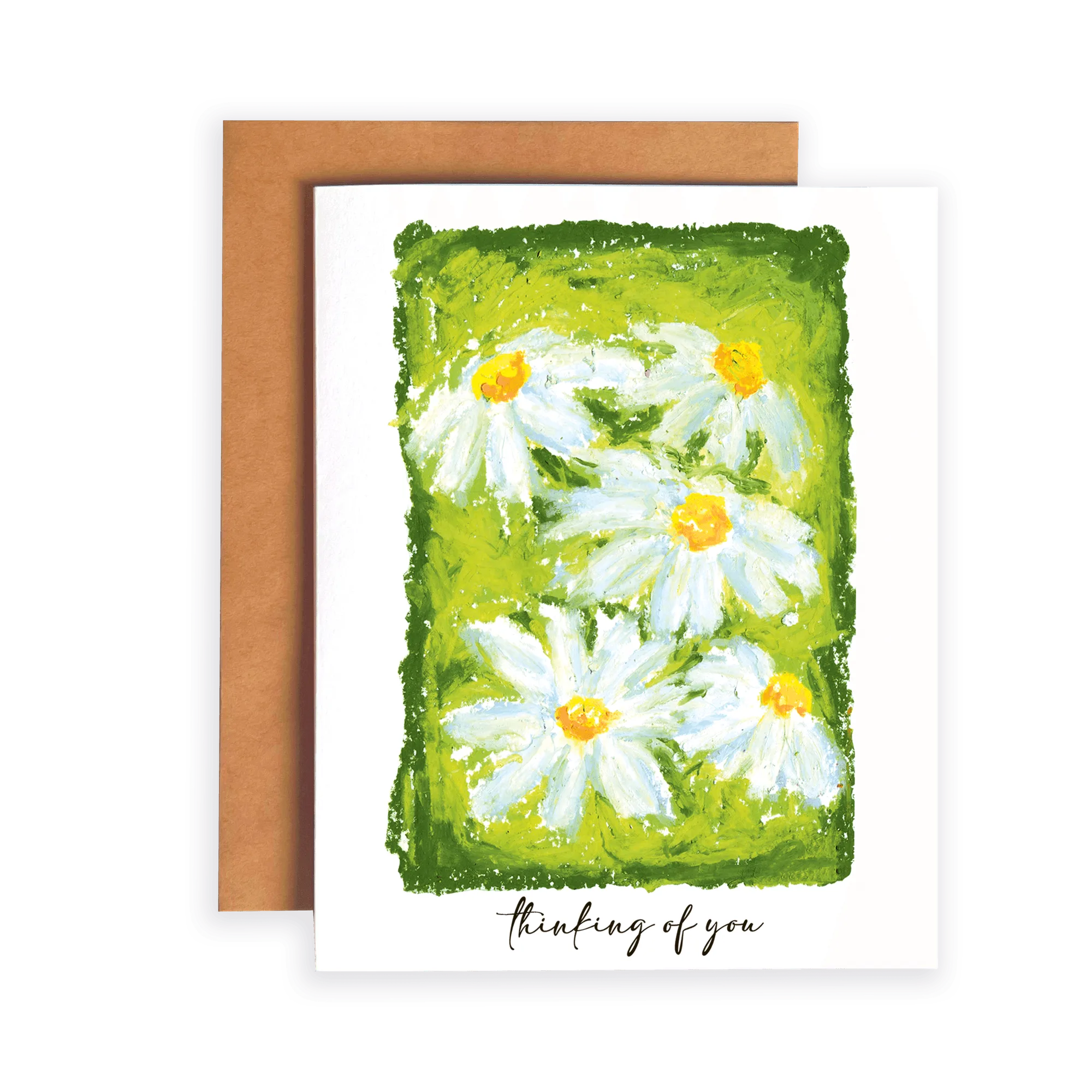
- Thinking of You | Greeting Card: Thinking of You greeting card, A2 size (4.25" x 5.5"), blank interior, printed on sturdy matte cardstock with soft oil pastel textures. The blank interior and quiet design make it a natural fit for sympathy notes and no-occasion check-ins where you need room to write something specific.
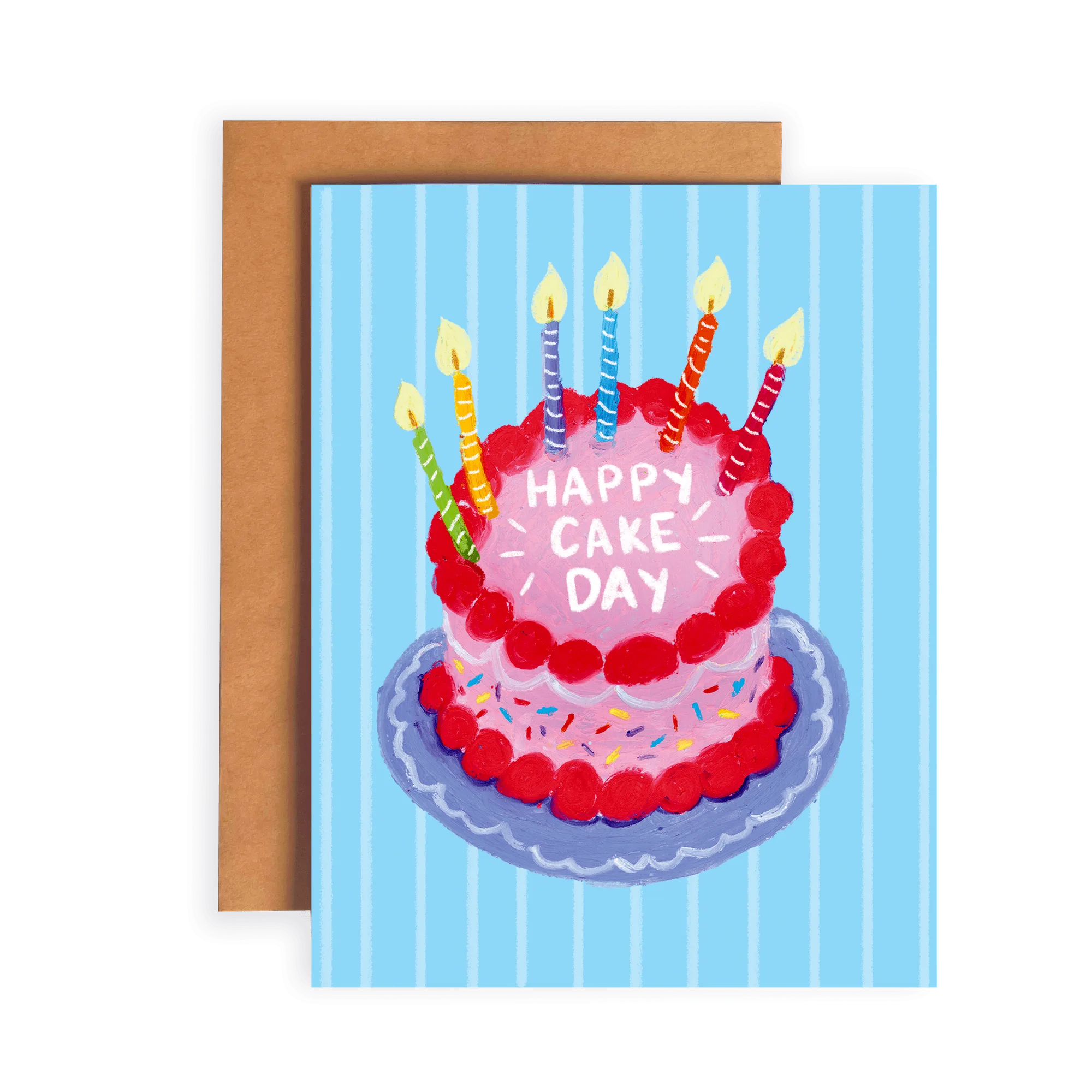
- Happy Cake Day | Birthday Greeting Card: Happy Cake Day birthday greeting card, A2 size (4.25" x 5.5"), blank interior, designed, printed, and packaged by Janine in her home studio. A blank interior lets you add a personal birthday message rather than just signing a pre-printed line.
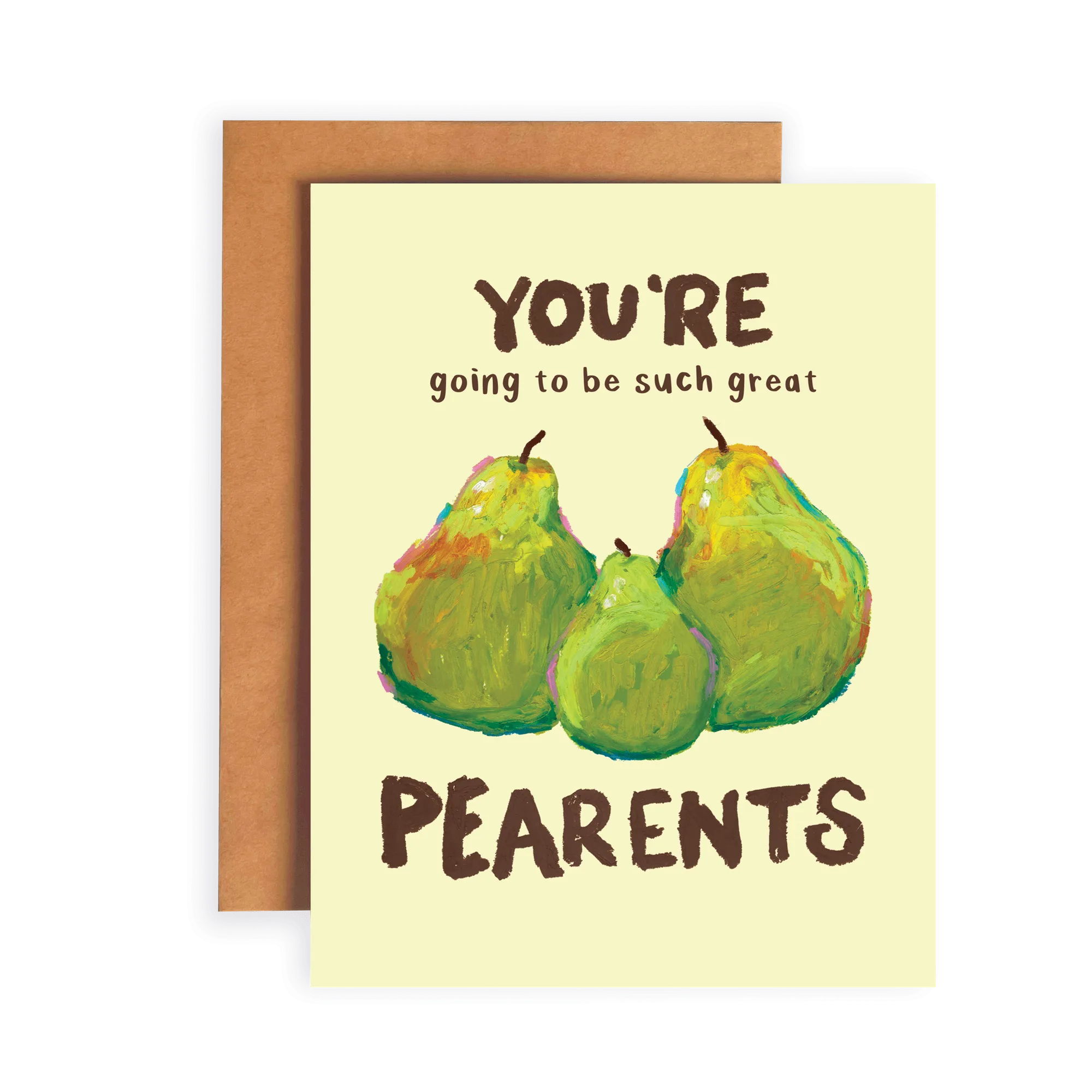
- You're Going To Be Such Great Pearents | Greeting Card: You're Going To Be Such Great Pearents greeting card, A2 size (4.25" x 5.5"), blank interior, printed on matte cardstock and comes with a kraft envelope. The kraft envelope means it's ready to mail as-is, which helps when you want to send a card promptly after hearing big news.