Quick Answer
Most 2026 card trends are not new materials or machines; they are buyers paying closer attention to paper stock, foil, envelope colour and where a card was made. Read the specification line before you trust a trend claim. A card that lists its format, stock, foil and origin tells you more than any marketing headline about sustainable greeting cards or eco friendly card printing.
Every year brings a fresh wave of card trend talk, and 2026 is no different. Some of it is useful: paper stock, foil stamping and print origin genuinely affect how a card feels in the hand and how long it survives a fridge door. Some of it is noise dressed up as industry news.
The problem is that most trend claims are written for retailers, not for the person standing in a shop or scrolling a product page. So here are five claims worth checking, each with a clear verdict and the reasoning behind it.
Myth 1: "Trend-led cards are made from new, experimental paper"
Verdict: mostly false. The paper doing the work in 2026 is uncoated card stock, which has been a standard for years. Uncoated stock takes full-colour print and foil stamping cleanly, and it has a soft, matte surface rather than a glossy plastic feel. That combination is why it keeps showing up across birthday, thank-you and everyday designs.
What actually changes year to year is the artwork and the foil placement, not the substrate. If a product page names its material, treat that as the useful signal. If it only says "premium" or "luxury" without naming the stock, you have no way to compare it against anything else.
- Look for a named material such as uncoated card stock rather than an adjective.
- A blank interior is a design decision, not a paper quality signal.
Myth 2: "Gold foil is a 2026 novelty"
Verdict: false. Foil stamping is a long-established print process, and gold metallic foil in particular has been a staple of greeting cards for years. It is applied as a separate pass after the full-colour print, which is why foil cards tend to sit at a slightly higher price point than plain printed ones.
That price difference is worth understanding rather than resenting. You are paying for an extra production step and for the visual lift the foil gives a design, especially on a card that will be displayed on a mantel or desk rather than tucked straight into a drawer.
- Foil is a process, not a trend cycle, so a foil card will not date the way a novelty shape might.
- Check that the listing states the foil colour; gold metallic is the common default.
Myth 3: "Sustainable greeting cards means recycled everything"
Verdict: overstated. Sustainability in cards is rarely a single material swap. It shows up in smaller, more concrete choices: uncoated stock instead of heavily coated finishes, cream or kraft envelopes instead of bleached brights, and local manufacturing that shortens the distance a card travels before it reaches you.
Made in Australia is one of the few origin claims a card can actually state on its specification line, and it is a meaningful one for buyers weighing shipping footprint. What you should not do is assume a card is recycled, FSC-certified or plastic-free unless the listing says so. If the specification is silent, treat that as an unknown rather than a yes.
- Origin and material are the two sustainability facts most cards will actually give you.
- Absence of a certification claim is not evidence of a bad product; it is simply missing information.
Myth 4: "Personalised card printing has replaced off-the-shelf cards"
Verdict: no. Personalised printing is a real and growing option, but it solves a different problem. A printed-to-order card is best when the message itself is the point, such as a milestone, a long thank-you or a photo-led announcement. A designed card with a blank interior is faster, cheaper per card and easier to keep in a drawer for the moment you need it.
The practical answer for most people is a small stock of blank-inside cards in designs that cover the occasions they actually send for, plus one personalised option for the handful of cards a year that deserve more effort.
- Blank interior cards suit handwriting, which many recipients still prefer to printed text.
- Keep two or three designs on hand so a forgotten birthday does not become a shop trip.
Myth 5: "Card sizes are drifting larger"
Verdict: false in the formats that matter most. The 108 x 140mm size, which is 4.25 x 5.5 inches, remains the common everyday card format and matches the standard A2 envelope. That consistency is genuinely useful: it means a card bought this year fits the envelope and the storage box you already own.
Oversized and shaped cards exist, and they have their place for a statement occasion, but they are the exception rather than a direction the whole category is moving in. If you are buying in bulk or building a gift bundle, sticking to the standard format keeps everything interchangeable.
bundle
- 108 x 140mm is the same as 4.25 x 5.5 inches, so the two listings are describing one size.
- Standard sizing matters most if you mail cards or store them in a box.
Verdicts at a Glance
- New experimental paper: Uncoated card stock is the workhorse stock behind most current designs, not a 2026 invention. It takes full-colour print and foil cleanly and has a matte finish. Verdict: false. Judge the named material, not the trend wording.
- Gold foil as a novelty: Foil stamping is an established process applied in a separate pass after printing, which is why foil cards typically cost more than plain printed ones. Verdict: false. The extra cost buys a real production step.
- Sustainability equals recycled content: Origin and material are the sustainability facts a card usually states. Recycling, certification and plastic-free claims appear only when the listing says so. Verdict: overstated. Treat missing claims as unknown, not as a yes.
- Personalised printing replaced off-the-shelf: Personalised printing suits message-led occasions; blank-inside designed cards are faster and cheaper for everyday sending. Verdict: no. Most people need both, in different proportions.
- Cards are getting bigger: The 108 x 140mm format, equivalent to 4.25 x 5.5 inches and matching the A2 envelope, remains the everyday standard. Verdict: false. Standard sizing keeps cards, envelopes and storage interchangeable.
What the Specification Line Actually Tells You
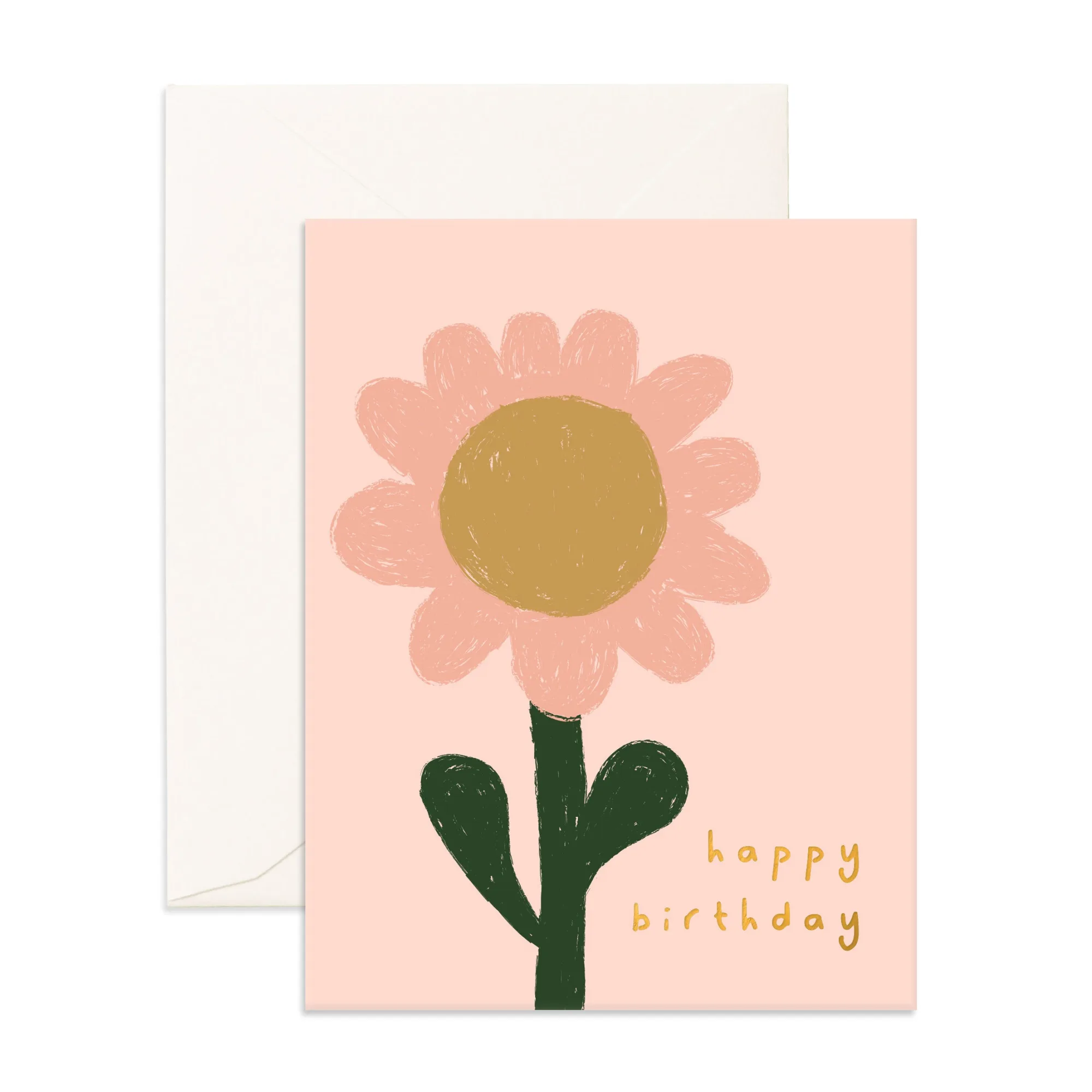
- Birthday Sunflower Greeting Card: Foil birthday card at 108 x 140mm / 4.25 x 5.5 inches, printed on uncoated card stock with gold metallic foil, a blank interior and a cream envelope, designed and made in Australia. This is a fully specified card: format, material, process, foil colour, envelope and origin are all stated, so you can compare it directly against any other card rather than guessing.
- Thank You So Much Ribbons Greeting Card: Foil greeting card at 108 x 140mm / 4.25 x 5.5 inches, uncoated card stock, full-colour print with gold metallic foil, blank interior, cream envelope, made in Australia. A thank-you card with a blank interior lets you write something specific, which matters more for gratitude notes than for quick birthday signatures.
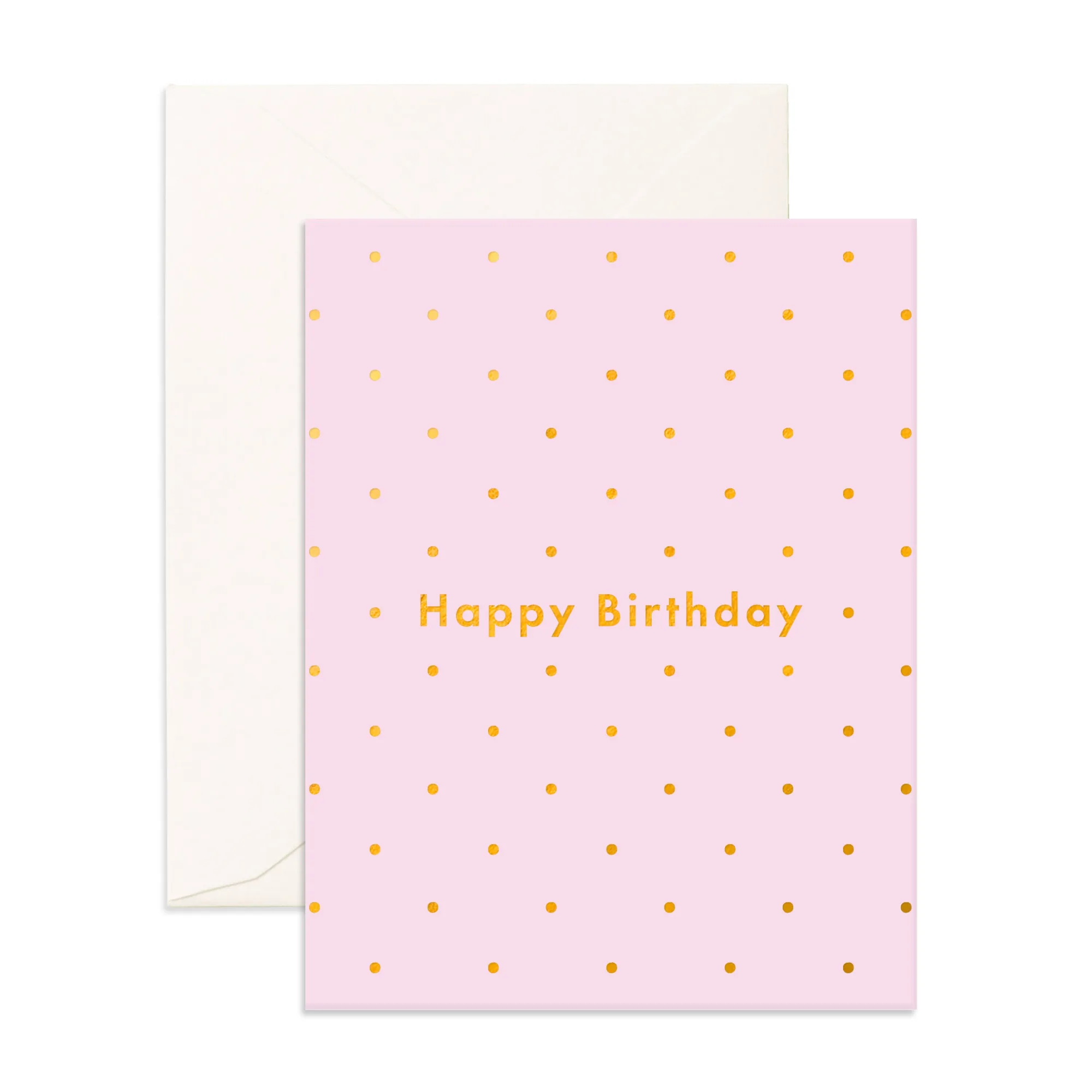
- Birthday Lilac Dots Greeting Card: Foil greeting card at 108 x 140mm / 4.25 x 5.5 inches on uncoated card stock with gold metallic foil and a blank interior, described as suited to birthdays for teens, mums, sisters, wives, girlfriends, aunties and grandmas. The stated audience helps you decide quickly whether the design fits the recipient, which is the part of card buying that actually takes time.
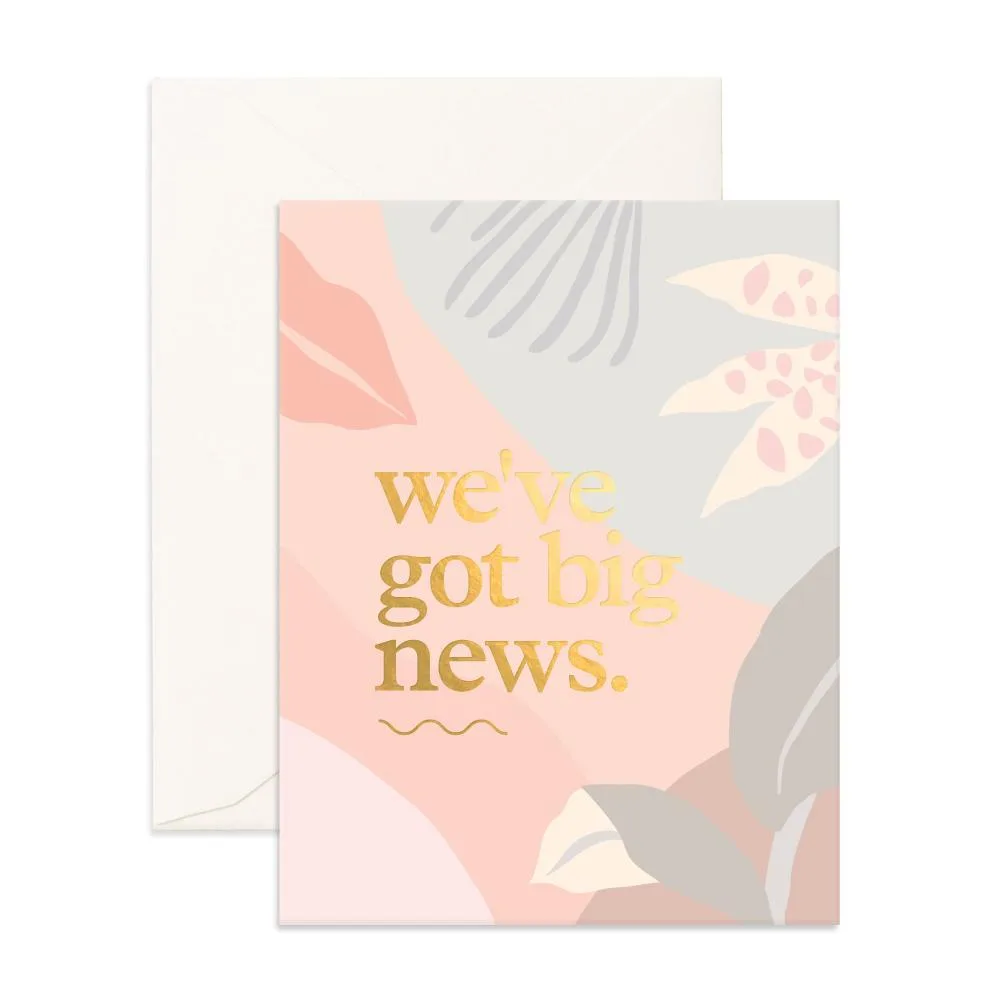
- Big News Collage Greeting Card: Foil greeting card at A2 4.25 x 5.5 inches / 108 x 140mm, warm white uncoated card stock, full-colour print with gold metallic foil, blank interior, cream envelope, made in Australia. The warm white stock is a specific tone rather than a generic white, which changes how the printed colours read and how the card looks next to a bright white envelope.
Trend headlines are a poor substitute for a specification line. Read the format, stock, foil, envelope and origin, and you will know more about a card than any roundup can tell you.