Quick answer
For most people, an A6 card (about 4.5 x 6.25 inches folded) is the safest everyday choice because it gives you room to write without needing extra postage. A7 cards (about 5 x 7 inches folded) suit photos, group signatures, and gift enclosures, while square cards look distinctive but often cost more to mail. If you want a single format that handles birthdays, thank-yous, and holidays, start with A6 and add A7 only when you need the extra space.
Card size affects more than how a card looks on a shelf. It decides how much you can write, whether a standard envelope fits, and whether the card can go through the mail at a first-class rate. Most confusing of all, the same card can be called A6, A7, or 4-bar depending on who is selling it.
This comparison covers the formats you will actually see in stores and online: A6, A7, square, and the smaller enclosure sizes. It uses real dimensions, envelope pairings, and mailing trade-offs, with examples from MangoIllustrated cards that are listed at 4.25 x 5.5 inches folded. By the end you should know which size to buy for the way you actually send cards.
The formats you will actually encounter
Greeting cards are usually named by the folded size, not the flat sheet. A6 folds to roughly 4.5 x 6.25 inches, A7 to roughly 5 x 7 inches, and a square card is typically 5.5 x 5.5 inches or 6 x 6 inches. Smaller enclosure cards, often called 4-bar or gift enclosures, fold to about 3.5 x 5 inches and are meant for a quick note rather than a long letter.
The MangoIllustrated greeting cards in this comparison are listed at a folded size of 4.25 x 5.5 inches. That sits between a classic A6 and a 4-bar, so it is a compact card that still has room for a real message. Each one comes with an A2 kraft envelope and is packaged in a cello sleeve, which matters because A2 envelopes are sized for a 4.25 x 5.5 inch card — not for an A7.
If you are shopping by name alone, check the folded dimensions rather than trusting the label. A card sold as A6 in one shop can be listed as 4.5 x 6.25 inches in another, and a card sold as 5 x 7 may be called A7 or simply large.
- A6: about 4.5 x 6.25 inches folded, pairs with an A6 envelope.
- A7: about 5 x 7 inches folded, pairs with an A7 envelope.
- Square: usually 5.5 x 5.5 or 6 x 6 inches folded, needs its own envelope size.
- 4.25 x 5.5 inches: a compact format that pairs with an A2 envelope.
A6 vs A7: the real trade-off
A6 is the workhorse. It is large enough for a handwritten paragraph, small enough to fit in a standard envelope, and usually light enough to mail at a first-class rate without extra postage. The downside is that it can feel cramped if you want to include a photo, a long letter, or signatures from a group.
A7 gives you noticeably more space. It is a better fit for a family photo, a baby announcement, or a card that several people will sign. The trade-off is cost and handling: A7 envelopes are larger, cards can cross into a higher postage tier depending on weight and stiffness, and they take up more room in a drawer or gift bag.
For everyday birthdays and thank-yous, A6 is the more practical default. Reach for A7 when the card itself is part of the gift — a keepsake, a photo card, or something a group will sign.
- Choose A6 when you write a short note and mail it often.
- Choose A7 when the card needs to hold a photo, a long message, or multiple signatures.
- Check the envelope pairing before buying: A6 cards need A6 envelopes, A7 cards need A7 envelopes.
Square and mini formats: when they are worth it
Square cards stand out because they do not look like a standard bill or letter. That makes them memorable for weddings, announcements, and holiday cards. The trade-off is practical: square envelopes often require extra postage because they are non-machinable, and they are harder to store flat if you keep a card box.
Mini and enclosure cards are the opposite. They are inexpensive, easy to tuck into a gift bag or a package, and perfect for a two-line note. What they are not good for is a long message. If you tend to write more than a few sentences, a mini card will run out of room fast.
The MangoIllustrated cards at 4.25 x 5.5 inches are a middle ground. They are smaller than A7 and slightly more compact than a standard A6, so they work well for a focused note without feeling like a tiny tag. If you want a card that fits a gift bag without folding, this size is easier to place than a 5 x 7.
- Square cards: distinctive look, often higher postage.
- Mini and enclosure cards: best for short notes and gift tags, not long letters.
- Compact cards around 4.25 x 5.5 inches: a good middle ground for everyday sending.
Envelope fit and mailing checks
The envelope matters as much as the card. A card that is even a quarter inch too large for its envelope will bow, and a card that is too small will slide around and get dog-eared in transit. Match the card to the envelope size listed by the seller rather than assuming a standard envelope will work.
For mailing, weight and stiffness drive postage more than size alone. A single flat card usually mails at a first-class rate, but a rigid card, a square envelope, or a card with a pin or magnet attached can push it into a higher tier. If you are mailing a batch, take one assembled card to the post office and ask them to weigh it before you buy stamps.
If you are including a small extra like an enamel pin, keep the card flat and consider a padded envelope. The Corgi Sploot enamel pin measures 1.5 in x 1 in and ships on a backing card, so it can travel alongside a greeting card, but it adds thickness that may change the postage.
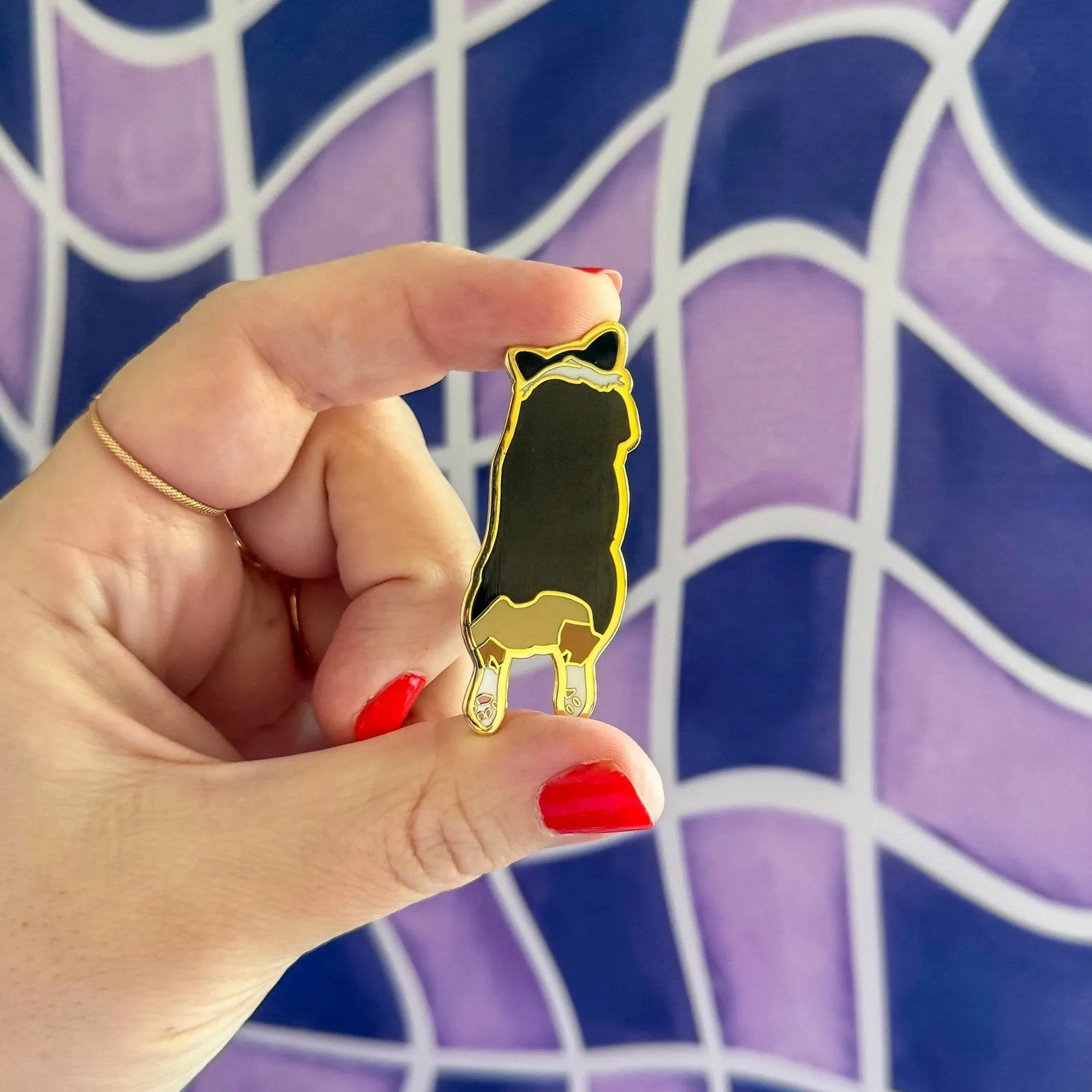
Corgi Sploot enamel pin
- Match card size to envelope size exactly.
- Weigh one assembled card before buying postage for a batch.
- Add-ons like pins or magnets can change the postage tier.
Trade-offs at a glance
- A6 (about 4.5 x 6.25 inches): Enough room for a real note and usually mails at a first-class rate. Pairs with an A6 envelope. Best default for everyday cards.
- A7 (about 5 x 7 inches): More space for photos, long messages, or group signatures, but larger envelopes and potentially higher postage. Choose when the card is part of the gift.
- 4.25 x 5.5 inches (MangoIllustrated cards): A compact format that pairs with an A2 kraft envelope and stays easy to store and mail. Good middle ground when A7 feels too large.
- Square cards: Distinctive shape, but non-machinable envelopes often cost more to mail and are harder to store flat. Pick for style, budget for postage.
MangoIllustrated cards in this comparison
- I'd Share My Fries Funny Love Card: Folded size of 4.25 x 5.5 inches, blank inside, comes with an A2 kraft envelope, packaged in a cello sleeve. The A2 envelope is sized for this compact card, so it arrives ready to write and mail without hunting for a matching envelope.
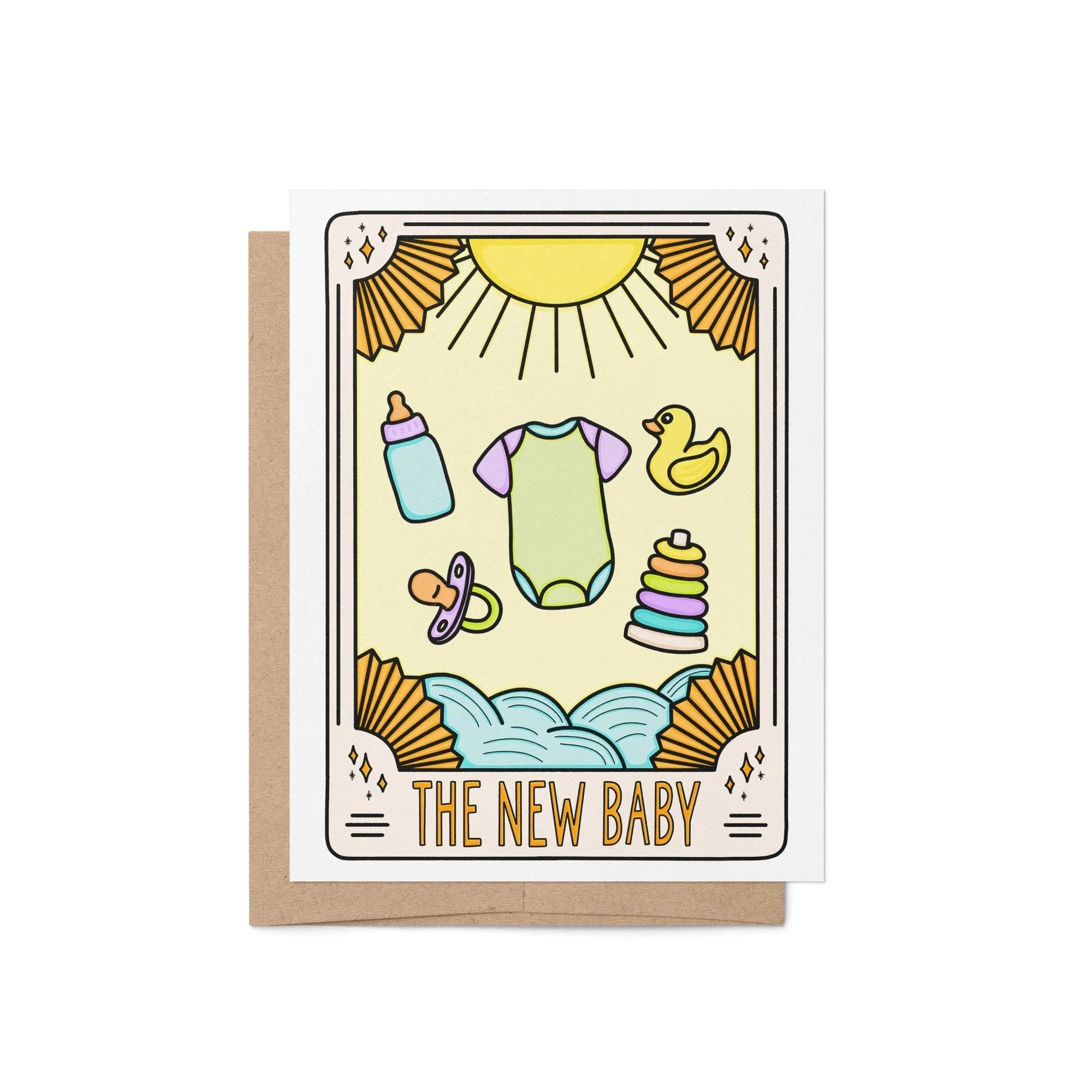
- The New Baby Tarot Card Congratulations Card: Folded size of 4.25 x 5.5 inches, blank inside, comes with an A2 kraft envelope, packaged in a cello sleeve. A compact format works for a short congratulations note, and the blank inside lets you write a message that fits the recipient rather than a printed one.
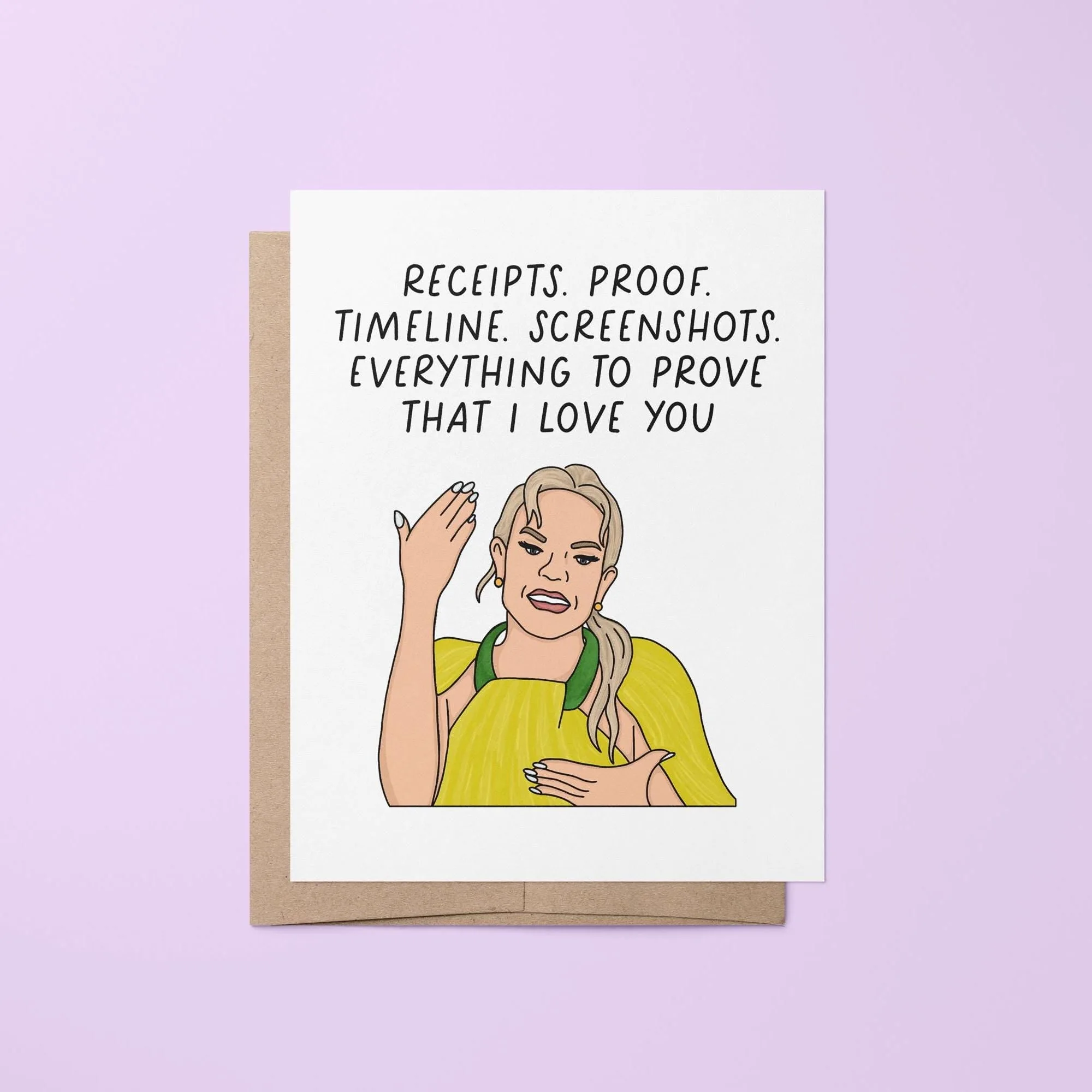
- Receipts proof timeline screenshots card: Folded size of 4.25 x 5.5 inches, blank inside, comes with an A2 kraft envelope, packaged in a cello sleeve. The same 4.25 x 5.5 inch format means you can buy several MangoIllustrated cards and use one envelope size for all of them.
- Corgi Sploot enamel pin: Measures 1.5 in x 1 in, hard enamel with a polished metal finish, two posts and a black rubber clutch back, ships on a backing card. If you tuck this pin in with a card, expect extra thickness that can affect postage; the backing card keeps the gift wrap handled.
Which card size should you choose?
Best for
- People who send birthday, thank-you, and holiday cards regularly and want one reliable size.
- Anyone mailing cards often and wanting to avoid extra postage.
- Buyers who want a compact card that pairs with an A2 kraft envelope, like the MangoIllustrated 4.25 x 5.5 inch cards.
Not for
- Sending a long letter or a full-page photo, where an A7 or 5 x 7 card gives more room.
- Group signatures, where a larger card is easier to pass around.
- Anyone who needs a square or oversized statement card and is willing to pay higher postage.
Pick the format that matches how you actually send cards: A6 or a compact 4.25 x 5.5 inch card for everyday notes, A7 when you need space, and square only when the look is worth the extra postage. Check the folded size and envelope pairing before you buy a stack, and you will avoid the two most common card-buying regrets.