Why a hose path guide solves the lawn problem
When you pull a hose around the garden, it tends to drag over beds and cut across the lawn. That is the exact problem the Ground Hose Guide Set is designed for: push a guide into the ground at the edge of a garden bed, and the swivel lets the hose move around the bed instead of through it.
The set includes three Ground Hose Guides, so you can treat it as a small system rather than a single fixed point. Place them where the hose actually causes trouble, and the hose follows a predictable path instead of taking the shortest line through your plants.
Garden hose guide installation: choose trouble spots first
The supplied instruction is to install multiple Ground Hose Guides along your garden edges where trouble spots occur. Work from the places you already know the hose catches, not from an even spacing across the whole yard.
- Walk the hose route: Pull the hose as you normally would and note where it drags over a bed, catches at a corner, or cuts across the lawn.
- Mark the bed edges: Push a guide into the ground at the edge of a garden bed where the hose tends to cross. The guide keeps the hose running where you need it rather than over the bed.
- Cover the corners: Corners of the house or deck are also ideal positions for a guide, because that is where a pulled hose tends to swing wide.
- Use all three where they earn their place: With three guides in the set, you can cover a bed edge, a corner and one more recurring trouble spot instead of spreading them thinly.
What the Ground Hose Guide Set includes
-
Ground Hose Guide Set: Includes 3x Ground Hose Guides. Three guides let you address several trouble spots along one hose route rather than a single point.
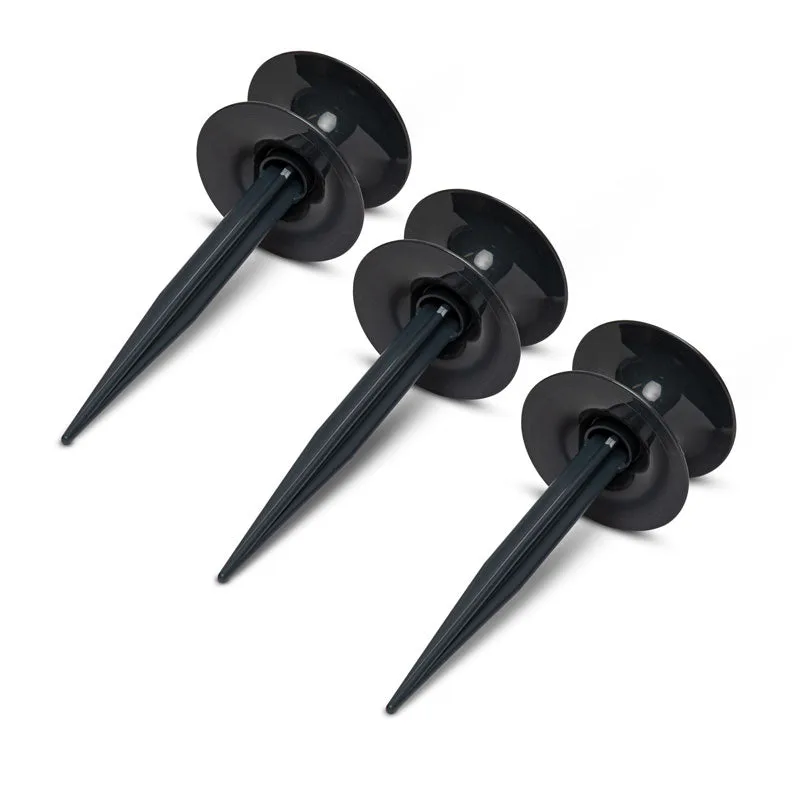
Ground Hose Guide Set
-
Ground Hose Guide Set: Push the Ground Hose Guide into the ground at the edge of your garden bed. The edge is the placement point, so the guide steers the hose before it reaches the plants.
-
Ground Hose Guide Set: As you pull the hose around the garden, the swivel will ensure the hose easily moves around the bed, protecting your plants. The swivel is the reason a guide can redirect a moving hose instead of acting as a rigid post.
Protect garden beds from hose drag at the edge
The guide works by changing where the hose runs, not by lifting it off the ground. That makes edge placement the key decision: a guide set at the bed edge intercepts the hose before it crosses the planting area.
If your hose currently cuts a diagonal across a bed, one guide at the point where it enters the bed is more useful than several guides spread along a straight run. Add the next guide where the hose leaves the bed or meets a hard edge such as the house or deck.
Hose guide for mowing: plan the path, not just the plants
A hose left lying across the lawn is both a mowing obstacle and a trip hazard. The guides give the hose a repeatable line along bed edges and corners, which makes it easier to see where the hose should be before you mow.
- Keep the route along edges: Guides placed at bed edges and building corners keep the hose close to boundaries rather than across open lawn.
- Check the path before mowing: Because the guides define a route, you can pull the hose back to that line before mowing instead of hunting for it in long grass.
- Do not treat guides as a substitute for clearing the lawn: The supplied information describes guiding the hose around beds and corners; it does not state that the guides remove the need to move the hose before mowing.
What the supplied information does not cover
The supplied product record does not include dimensions, materials, or ground-type guidance for the Ground Hose Guide Set. It also does not include care instructions. Those details are not confirmed by the information available here, so check the product listing or packaging if you need them before buying.
What the record does confirm is the intended placement: bed edges and corners of the house or deck, with multiple guides used along garden edges where trouble spots occur.