Quick answer
Start your goal journal by choosing three goals that fit the next 90 days, then give each one a dedicated page block: a goal statement, a simple tracking layout, and a short weekly check-in. The Grow Girl Floral Notebook's 75 lined pages are enough for a focused setup if you plan the page order before you write.
Why 75 lined pages rewards a lean setup
A goal journal gets messy when every idea gets its own page. With 75 lined single pages, the Grow Girl Floral Notebook works best when you reserve most of the space for tracking and reflection rather than long planning notes. A lean setup also makes it easier to keep the journal with you, which matters more than a beautiful first page.
When a lined page is the right choice for goal tracking
Lined pages suit written check-ins, habit notes, and weekly reflections. They are less ideal for freehand mind maps or large visual trackers. If you want a grid or dot layout for charts, use the lined page for the written review and keep any drawing small or on a separate sheet. The notebook's casewrap binding and matte cover make it sturdy enough for daily handling, but the fixed lined format is the real constraint to plan around.
Goal journal setup steps for the Grow Girl Floral Notebook
- Reserve the first two pages for a goal map: Write your three 90-day goals at the top of the first page, then list one measurable marker for each goal underneath. Leave the second page for a simple index that notes which page block belongs to each goal. Common mistake: filling the opening pages with long journal entries before the goal map exists, which leaves no clear place to track progress later. Checkpoint: every goal on the map has a page number next to it before you move on.
- Assign a page block to each goal: Give each goal a block of pages based on how often you will check in. A daily habit goal might need more pages than a monthly milestone goal. Write the goal name at the top of the first page in each block so you can flip to it quickly. Common mistake: splitting one goal across several scattered pages, which makes weekly review harder.
- Design a simple tracking layout on the first page of each block: Use the lined format to create a compact tracker: a column for the date, a column for the action you completed, and a short note column. Keep the tracker to one page per goal so you can see a week or a month at a glance. Common mistake: building an elaborate chart that takes more time to draw than to use. Checkpoint: the tracker fits on one lined page and takes under a minute to fill in.
- Add a weekly check-in page at the end of each block: Reserve one page per goal for weekly reflections. Write three prompts at the top: what worked, what got in the way, and what you will adjust next week. Fill it in on the same day each week. Common mistake: skipping the check-in when a week goes badly, which turns the journal into a record of wins instead of a working tool.
- Use the remaining pages for a running log, not a diary: After the goal blocks and check-in pages, use what is left for a short running log of ideas, resources, or notes that support your goals. Date each entry so you can trace it back to a goal. Common mistake: letting the running log take over the journal and push goal tracking to the back. Checkpoint: count your remaining pages before you start the log and set a limit for it.
Product facts that shape your setup
-
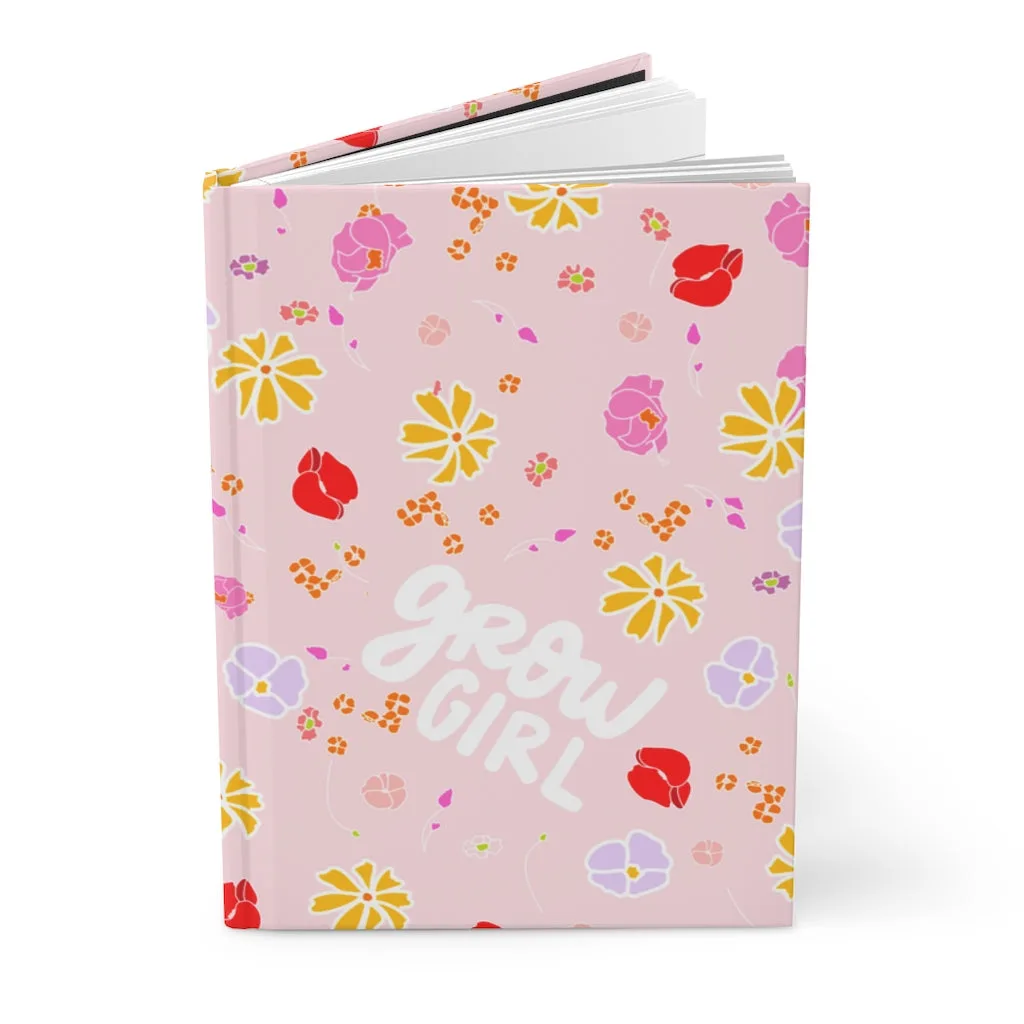
Grow Girl Floral Notebook: 75 lined single pages in a 5.75" x 8" casewrap hardcover with a matte laminate cover. The compact page count means you should decide your goal sections before writing, and the hardcover holds up to being carried in a bag for weekly check-ins.
Grow Girl Floral Notebook