Quick answer
For sensitive skin, choose a smooth, non-porous tool that glides without tugging, and start with light pressure. Stainless steel is often the easiest to keep clean and feels naturally cool; amethyst and black obsidian offer a traditional stone feel but need gentle handling and thorough drying. If your skin reacts easily, the best gua sha tool for sensitive skin is the one you can use consistently without redness or stinging.
Why sensitive skin needs a different gua sha approach
Sensitive skin is not a single condition; it can mean reactive redness, stinging, or a compromised barrier. Gua sha itself is a form of facial massage, and the tool is only part of the equation. The pressure you use, the slip you create with skincare, and how clean your tool is all affect whether your skin feels calm or irritated afterward. If you have rosacea, eczema, or active acne, check with a dermatologist before adding any facial massage tool.
Stone type and temperature: what matters for reactive skin
The material affects glide, temperature, and how easy the tool is to clean. Non-porous stainless steel is the most straightforward for sensitive or acne-prone skin because it does not absorb product and can be washed thoroughly. Amethyst and black obsidian are natural stones with different temperature feels: amethyst is naturally cool, while black obsidian feels naturally warming. Jade is balancing and naturally cooling. None of these materials is inherently irritating, but a chipped edge or rough surface can drag on the skin, so inspect your tool before each use.
Pressure, angle, and slip: technique rules for reactive skin
Use the flat edge of the tool, not the comb teeth, and keep the angle low so the surface glides rather than scrapes. Apply a facial oil or a rich moisturizer first; without enough slip, even a smooth tool can tug. Start with three to five passes per area, using feather-light pressure. If your skin turns pink and stays pink for more than a few minutes, you used too much pressure or too many passes. Always move from the center of the face outward and upward, following the direction of your massage routine.
Cleaning and storage: the step sensitive skin cannot skip
Residue from oils, creams, and skin cells can build up on any tool, and that is a common trigger for congestion or irritation. Wash your gua sha tool after every use with mild soap and warm water, then dry it completely with a soft cloth. Store it in a clean pouch or on a dedicated tray, not loose in a drawer where edges can chip. Stainless steel is the easiest to sanitize; natural stones need the same care but should be dried thoroughly because they are porous.
When to skip gua sha entirely
Do not use gua sha over sunburn, open breakouts, active cold sores, or any area where the skin is broken or inflamed. If you are mid-flare with eczema or rosacea, pause facial massage until your barrier feels stable. And if a tool feels sharp or has a rough spot, stop using it; a damaged edge is not worth the risk on sensitive skin.
Decision rules for sensitive skin
- If your skin flushes or stings easily: Choose non-porous stainless steel and use feather-light pressure with a rich oil or moisturizer for slip. Checkpoint: your skin should look calm, not pink, five minutes after you finish.
- If you want a cooling, traditional stone feel: Amethyst or jade gives a naturally cool glide; inspect the edges before each use and dry the stone completely after washing. Verdict: a good fit if you enjoy the ritual and will care for the stone properly.
- If cold tools feel uncomfortable: Black obsidian has a naturally warming feel, so it can be easier to use in winter or if you dislike cold sensations. Next step: try it with light pressure for one week before adding more passes.
- If you have active breakouts or a flare: Pause gua sha on the affected areas and keep the tool clean; resume only when your barrier feels stable. Rule: never massage over broken, sunburned, or inflamed skin.
Tools that fit sensitive-skin routines
- The Stainless Steel Gua Sha Facial Lifting Tool: Crafted from high-quality, non-porous stainless steel, this tool delivers a naturally cooling touch and is easy to clean and suitable for sensitive or acne-prone skin. If you want the lowest-maintenance option that resists product buildup, stainless steel is the most practical choice for reactive skin.
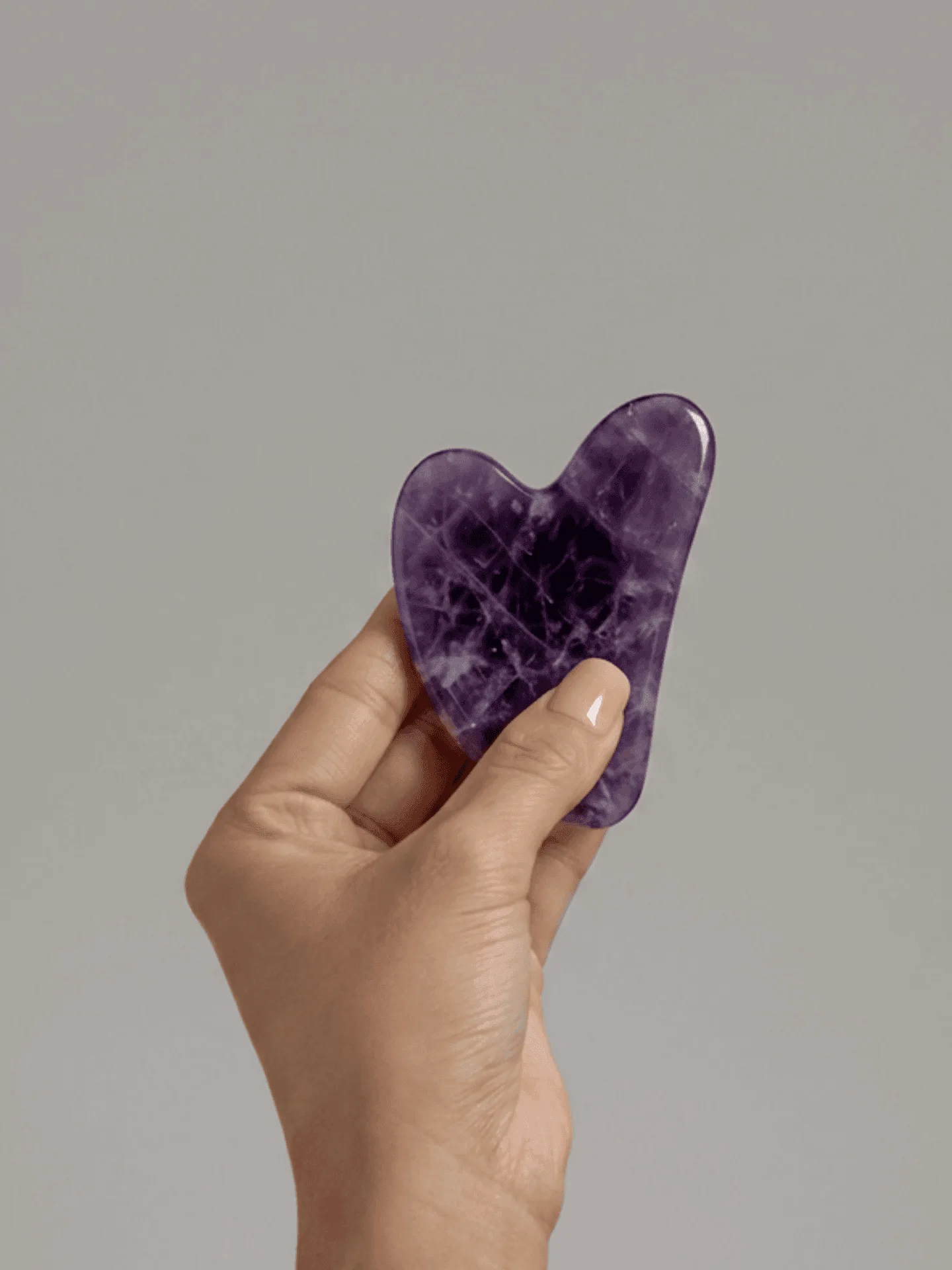
- The Amethyst Gua Sha Facial Lifting Tool: Crafted from 100% amethyst, this tool offers a naturally cool, smooth glide across the skin and is rooted in Traditional Chinese Medicine for facial massage. Amethyst stays cool without refrigeration, which can feel soothing on flushed skin, but it needs careful drying and storage to avoid chips.
- The Black Obsidian Gua Sha Facial Lifting Tool: Crafted from black obsidian, this tool offers a smooth glide with a naturally warming feel and supports a more sculpted-looking appearance with regular use. If cool stones feel too intense on your skin, black obsidian's warming feel may be more comfortable, especially in cold weather.
Who should choose which tool
Best for
- Sensitive or acne-prone skin that needs a non-porous, easy-to-clean tool
- Anyone who wants a naturally cooling stone for a calming facial massage
- People who prefer a warming feel and a traditional stone tool
Not for
- Anyone with active eczema, rosacea flare, or broken skin until cleared by a dermatologist
- People who want deep, firm pressure or aggressive contouring
- Those who will not clean and dry the tool after every use