Start with your guinea pigs' space needs
Choosing between the GUINNY 120 and the GUINEA 70 comes down to how much room your guinea pigs need and how you plan to use the cage. The GUINNY 120 is the larger, more flexible option, designed for several animals or extra freedom of movement. The GUINEA 70 is a more compact, traditional cage with a plastic base and wire mesh top. Both are genuine Ferplast guinea pig cages, but they suit different situations.
Two Ferplast guinea pig cages at a glance
-
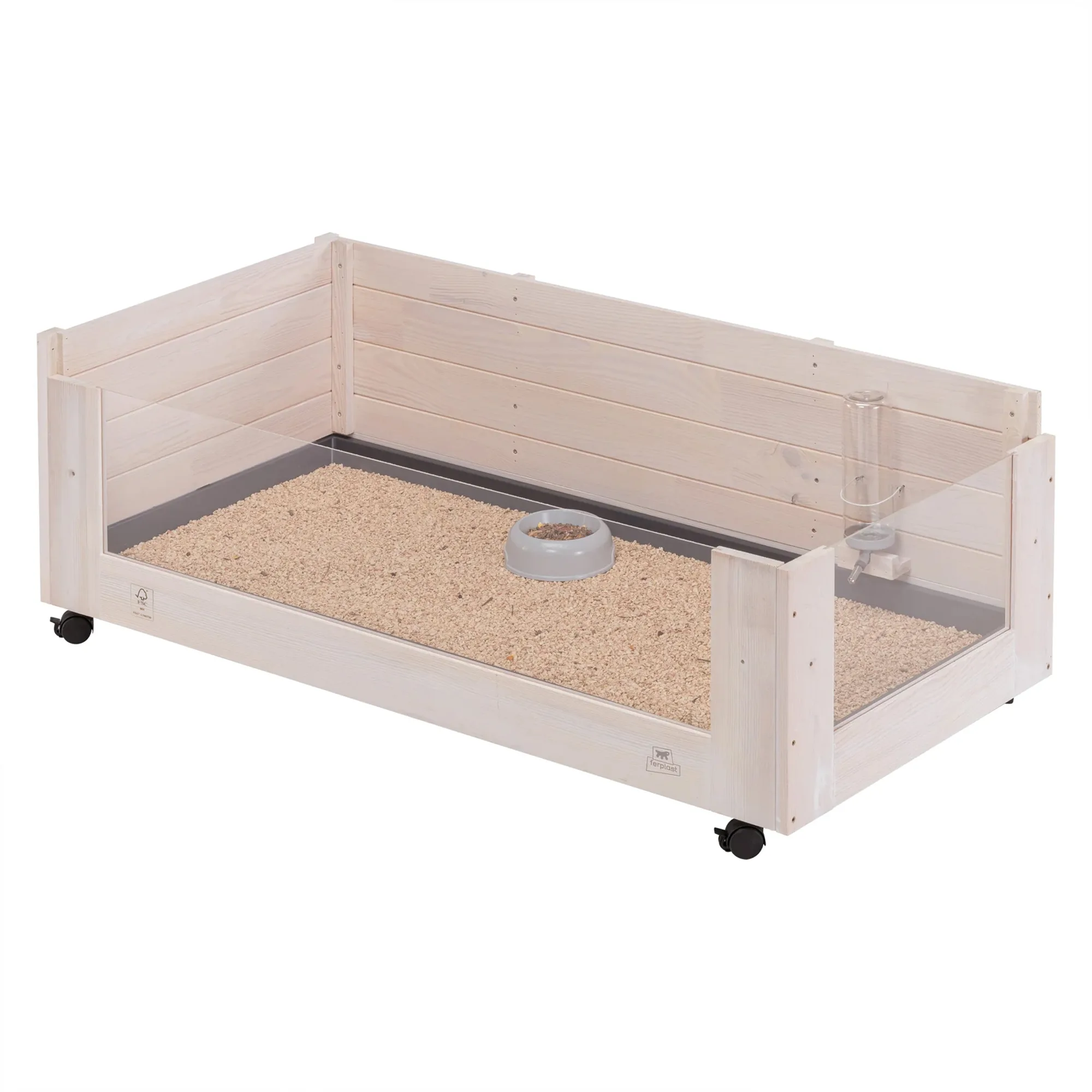
GUINNY 120: The GUINNY 120 is made of FSC™ certified Nordic pine wood and features a fully open top, a large removable plastic tray, and transparent plastic walls for full visibility. The open top makes daily interaction and cleaning easier, while the removable tray simplifies maintenance—key factors for a larger cage.
GUINNY 120
-
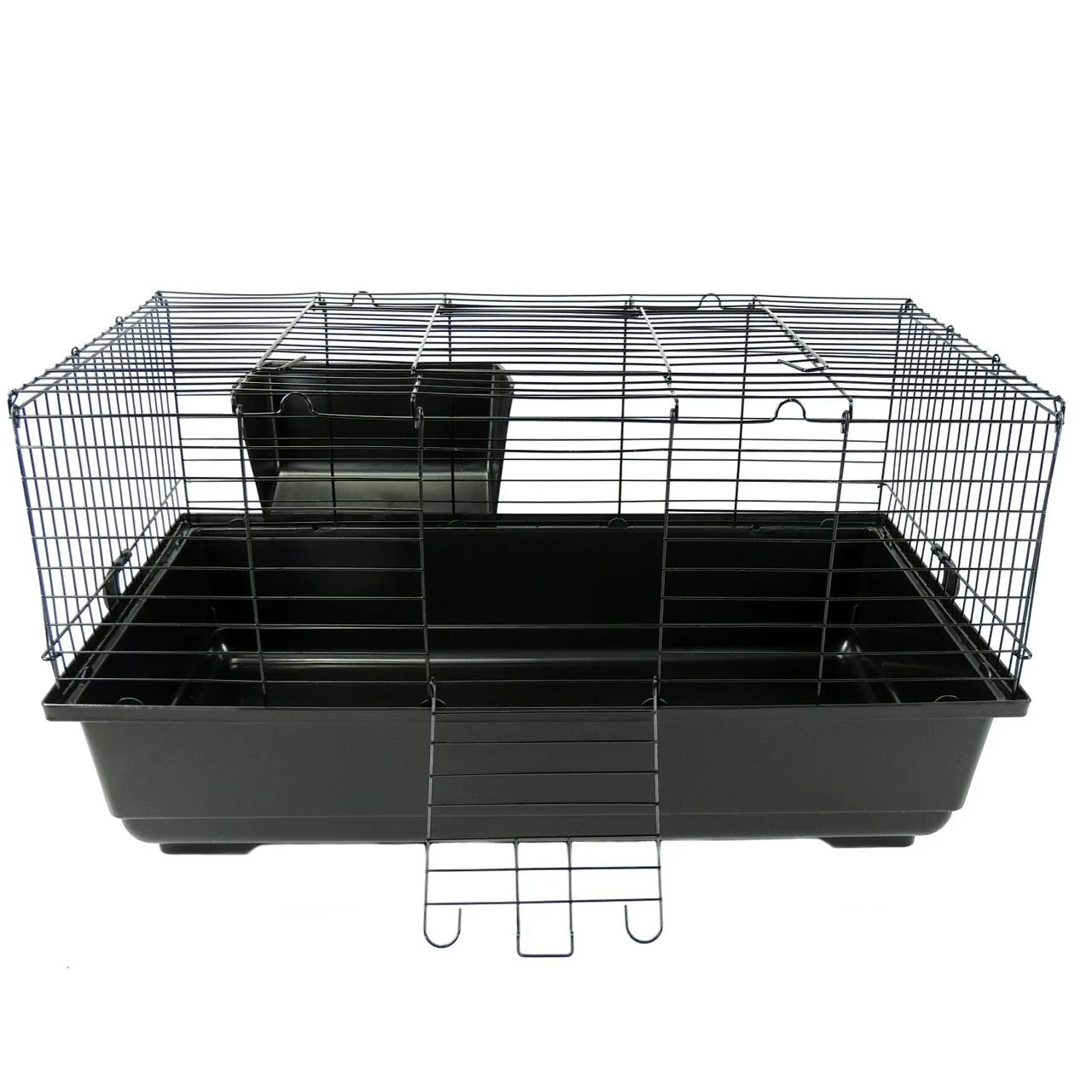
GUINEA 70: The GUINEA 70 has a traditional structure with a plastic base and varnished wire mesh, plus a front door that opens completely for easier cleaning. The classic design is straightforward and familiar, and the full-opening door helps you reach inside without hassle.
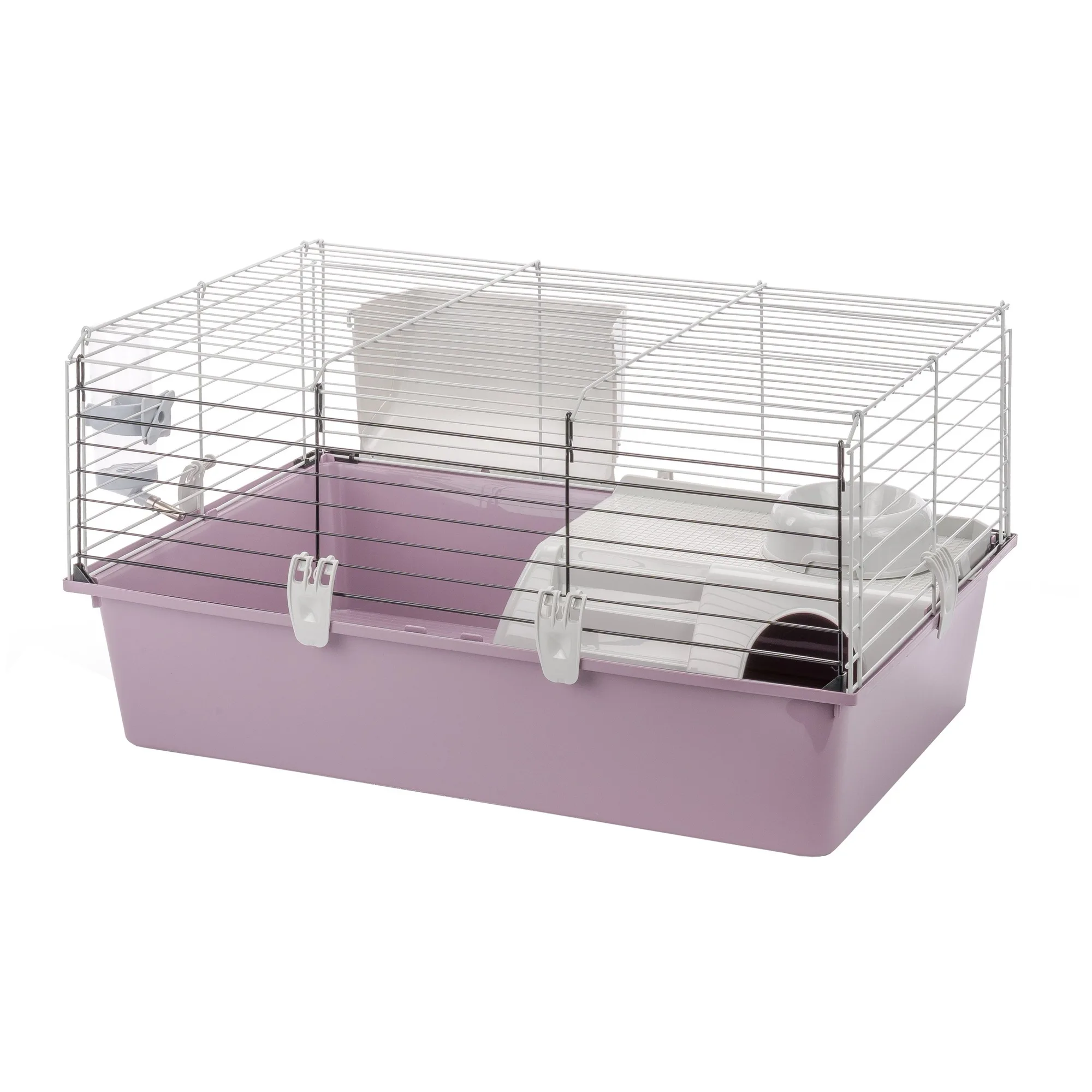
GUINEA 70
Size and expandability: the biggest difference
The GUINNY 120 is the larger of the two, and its name hints at its length. It is designed to house several guinea pigs or give a single pair more room to roam. It can also be connected to the front or sides of other cages of the same model, so you can expand the habitat as your pets grow or if you add more animals. That flexibility is a major advantage if you want a setup that can change over time.
The GUINEA 70 is more compact and fixed. It doesn't offer the same expansion options, but it takes up less floor space and is easier to place in a smaller room. If you have one or two guinea pigs and a limited area, the GUINEA 70 might be all you need.
Materials and daily life
Material affects both looks and upkeep. The GUINNY 120 uses FSC™ certified Nordic pine wood, which gives it a warmer, more natural appearance. It also has transparent plastic walls, so you can watch your pets easily. The wood frame means you should avoid soaking it; the removable plastic tray handles the mess.
The GUINEA 70 is built with a plastic base and a varnished wire mesh top. This is a classic combination that is easy to wipe down and generally more resistant to moisture. The wire mesh provides good ventilation and lets your guinea pigs climb a little, though they mostly stay on the floor.
Accessories and extras
Both cages come with useful accessories, so you don't have to buy everything separately. The GUINNY 120 includes a drinking bottle with a stainless steel spout, a wooden ladder, and a food bowl. The wooden ladder can be used to create an opening when you remove the transparent front, letting your guinea pigs come and go freely if you allow supervised exploration.
The GUINEA 70 comes with a drinking bottle, a hay feeder, a food bowl, and a plastic house where your pet can rest. That's a complete starter setup for a single guinea pig or a pair.
Mobility and placement
If you think you'll need to move the cage, the GUINNY 120 has pivoting wheels with brakes. You can roll it to a new spot for cleaning or to follow the sun, then lock the wheels to keep it steady. The wheels are removable, so you can set the cage on a stand or the floor if you prefer.
The GUINEA 70 doesn't have wheels, so you'll need to lift it to move it. That's fine for a smaller cage, but consider whether you'll want to reposition it often.
Making the choice
Choose the GUINNY 120 if you have multiple guinea pigs, want room to expand, or value the open-top design and mobility. It's a bigger investment, but it offers more flexibility and a more natural wood look.
Choose the GUINEA 70 if you have one or two guinea pigs, limited space, or prefer a classic wire-and-plastic cage that is easy to clean and move by hand. It's also the more budget-friendly option.
Both are solid Ferplast guinea pig cages; the right one depends on your pets' needs and your home.