Quick answer
Habit patches and nicotine gum serve different approaches to quitting smoking. Habit patches are nicotine-free and focus on sensory and balance support, while nicotine gum delivers controlled doses of nicotine to manage withdrawal. Your choice depends on whether you want to avoid nicotine entirely or taper off gradually.
How They Work: Different Mechanisms
Nicotine gum works by releasing small, measured amounts of nicotine through the lining of your mouth. This helps curb cravings and withdrawal symptoms by keeping a low level of nicotine in your system. It's a form of nicotine replacement therapy (NRT) and is meant to be used on a schedule or as needed.
Habit patches, like the TOLEVITA Habit Patch, use a transdermal system to deliver botanical extracts and essential oils. They do not contain nicotine. Instead, the blend of Siberian ginseng, peppermint, and other essential oils aims to provide a refreshing sensory experience that supports balance and clarity, helping you manage the behavioral and emotional aspects of the quitting process.
Convenience and Discretion
Nicotine gum requires you to chew it slowly and park it between your cheek and gum to release the nicotine. This process can be noticeable and requires some attention. You also need to dispose of the used gum properly.
Habit patches are applied to clean, dry skin and left in place for hours. Once on, they work continuously without any further action. They are discreet under clothing and don't interrupt your daily activities. The TOLEVITA Habit Patch, for example, comes in a pack of 30 patches, each designed for extended wear.
Potential Side Effects and Considerations
Nicotine gum can cause side effects like jaw soreness, hiccups, nausea, and mouth irritation. It also requires careful timing and dosage to avoid overuse or underuse. Some people find the taste or texture unpleasant.
Habit patches are generally well-tolerated since they use plant-based ingredients. However, because they don't supply nicotine, they may not be enough for heavy smokers who experience intense physical withdrawal. The sensory and balance support is designed to help with the mental and emotional side of quitting, not the physical nicotine dependence.
Habit Patches vs Nicotine Gum: Trade-Offs at a Glance
- Nicotine delivery: Nicotine gum provides a controlled dose of nicotine to manage physical withdrawal. Habit patches deliver no nicotine, relying on botanical extracts for sensory and balance support. If you need to manage strong physical cravings, nicotine gum may help. If you want to avoid nicotine entirely, habit patches are the choice.
- Usage routine: Nicotine gum requires active chewing and parking every 1-2 hours as needed. Habit patches are applied once and work passively for hours. For a set-and-forget approach, habit patches are more convenient. For on-demand craving control, nicotine gum offers flexibility.
- Side effect profile: Nicotine gum can cause jaw discomfort, hiccups, and nausea. Habit patches are generally gentle but may not address severe withdrawal symptoms. Choose habit patches if you want a low-side-effect option. Choose nicotine gum if you are willing to tolerate possible discomfort for nicotine replacement.
Product facts
-
Habit Patch Anti-Smoke Wellness Patches, Daily Sensory & Balance Support with Siberian Ginseng, Peppermint & Essential Oils, 30 Patches: TOLEVITA Habit Patch contains Siberian ginseng, peppermint, and essential oils in a transdermal patch system designed for daily sensory and balance support. This means you get a nicotine-free option that targets the habit and mood aspects of smoking, not the chemical addiction.
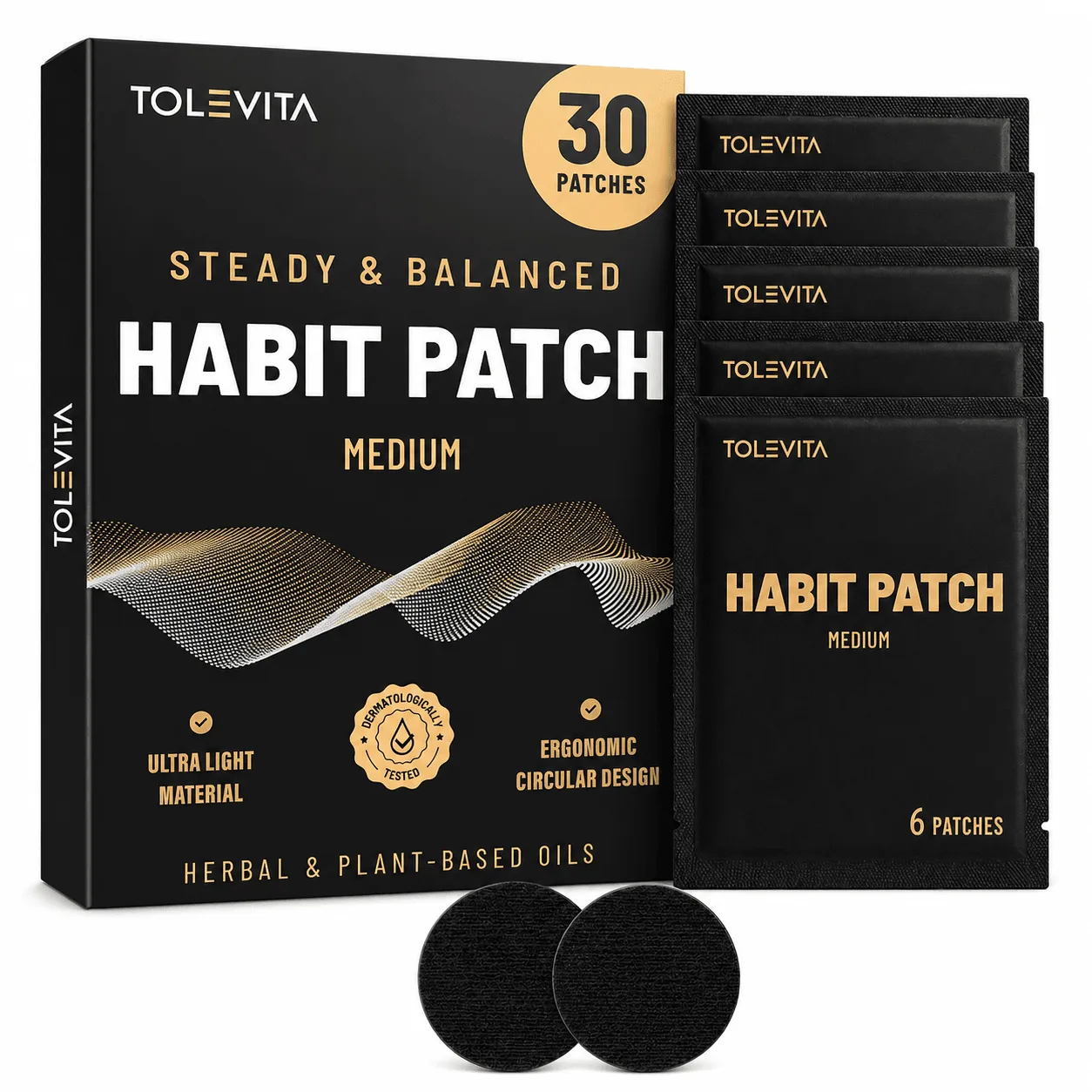
Habit Patch Anti-Smoke Wellness Patches, Daily Sensory & Balance Support with Siberian Ginseng, Peppermint & Essential Oils, 30 Patches
Which is right for you?
Habit patches are best for
- Smokers who want a nicotine-free smoking cessation aid
- People who prefer a discreet, once-daily application
- Those looking for sensory and balance support to manage the habit and emotional triggers
Nicotine gum may be a better fit for
- Heavy smokers who experience strong physical withdrawal symptoms
- Individuals who need controlled nicotine dosing to taper off
- Those who want on-demand craving relief rather than continuous support