Quick answer
Yes, a hairy rabbit foot dog chew is safe for most dogs when you match the chew to your dog's size, supervise the first few sessions, and serve it as an occasional treat rather than a daily staple. The fur is there for a reason, but it is not a substitute for regular parasite prevention.
Why the fur matters — and what it does not do
The hair on a rabbit foot is a natural part of the chew, not a gimmick. As your dog gnaws, the fur passes through the digestive tract and can help move along small amounts of debris. That said, no chew replaces a vet-recommended worming schedule. Think of it as a traditional, fiber-rich bonus, not a treatment.
Because the foot is air-dried rather than cooked, it keeps more of its natural texture and nutrients. That also means it can be harder and chewier than a soft treat, so it suits dogs that already enjoy working on a chew.
The real safety limits: size, supervision, and choking risk
Any small, bony chew carries some risk. Rabbit feet contain small bones that soften as they are chewed, but a dog that gulps or tries to swallow a whole foot is at risk of choking or intestinal irritation. Always supervise, and take the foot away once it becomes a small, loose piece.
Small dogs can enjoy a rabbit foot chew, but they need a size-appropriate approach. If your dog is a gulper, hold one end of the foot while they chew, or choose a larger single-ingredient chew instead. Never give a rabbit foot to a dog that has had pancreatitis or reacts badly to rich, fatty treats without checking with your vet first.
How often is too often?
A rabbit foot is a rich treat — the supplied nutritional analysis lists 40% protein and 30% fat — so it should not be a daily habit for most dogs. Once or twice a week is a sensible starting point for an average adult dog. For small dogs or dogs prone to weight gain, one foot per week is plenty.
Watch how your dog handles the first few. If you see loose stools or vomiting, skip the next serving and mention it to your vet. The goal is a happy chew session, not a upset stomach.
Hairy rabbit foot chew FAQ
Are rabbit feet safe for dogs?
For most healthy dogs, yes — with supervision. The main risks are choking on small pieces and digestive upset from the rich fat content. Avoid giving them to dogs with pancreatitis or those who swallow chews whole. Supervise every chew and remove small leftover pieces.
How often can I give a rabbit foot chew?
Treat it as an occasional reward: once or twice a week for a medium or large dog, and no more than once a week for a small dog. Adjust based on your dog's weight and reaction. Start with one per week and increase only if stools stay firm.
Is a rabbit foot chew suitable for small dogs?
Yes, but size matters. A whole foot can be too much for a toy breed to manage safely. Hold one end while your dog chews, or break off a smaller portion if the foot is large. Never leave a small dog alone with any bone-in chew. For tiny dogs, hold the chew or choose a softer, larger single-ingredient option.
What does the hair actually do?
The fur acts as a natural source of fiber and may help move minor debris through the gut. It is not a dewormer and does not replace veterinary parasite prevention. Keep your regular worming schedule even if you feed hair chews.
Can puppies have rabbit foot chews?
Wait until your puppy has finished teething and can handle harder chews — usually around 6 months or older. Puppies are more likely to gulp, so supervision is even more important. Check with your vet before giving any bone-in chew to a puppy.
Product facts
-
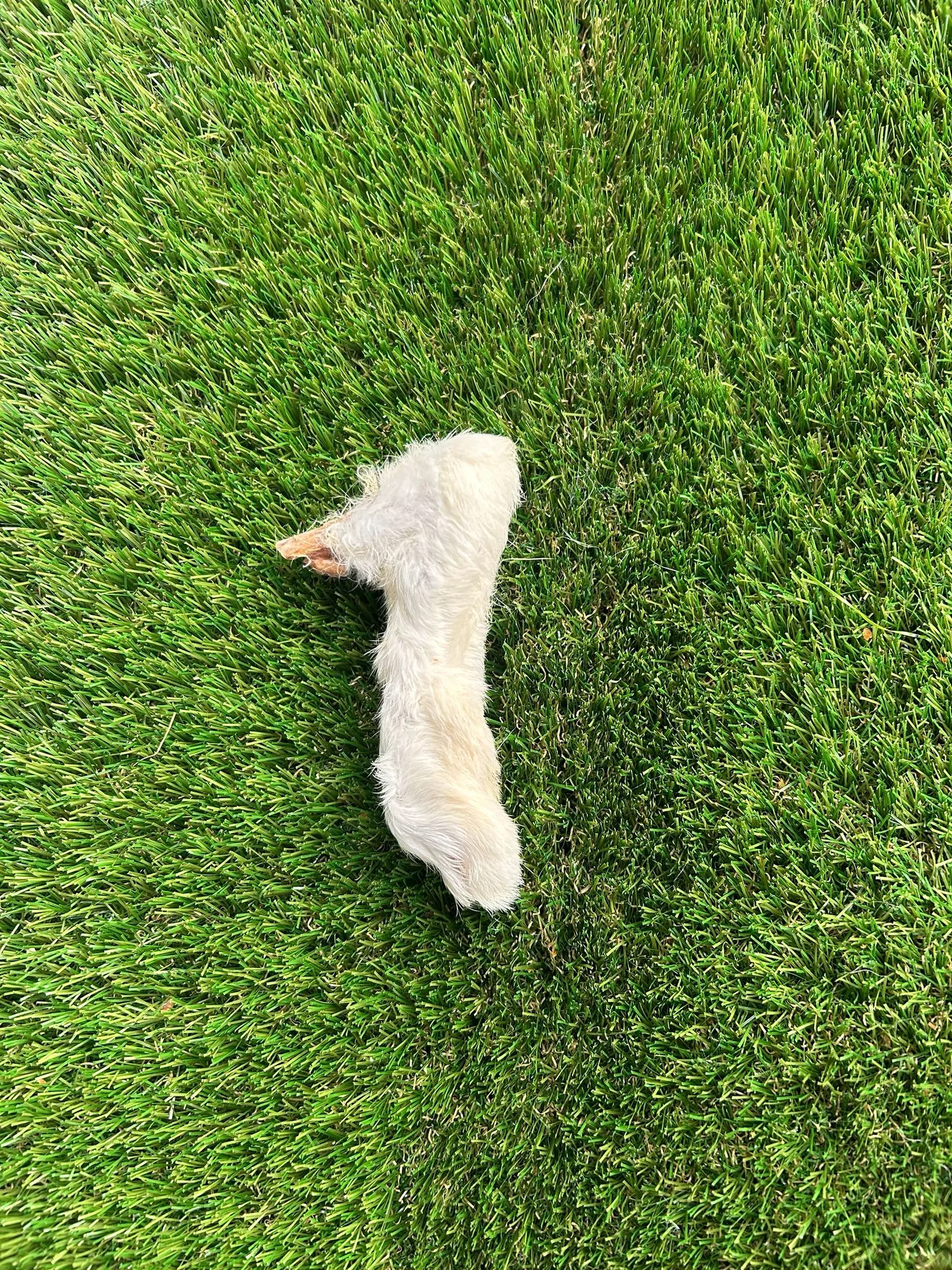
Anco Naturals - Hairy Rabbit Foot (Single): Air-dried to preserve nutrients; single-source rabbit protein; naturally gluten- and grain-free; no artificial additives. A simple ingredient list makes it easier to judge whether the chew fits a dog with food sensitivities.
Anco Naturals - Hairy Rabbit Foot (Single)