Quick answer
If you already own a hammock and just need dependable rain protection, a dedicated rain fly or tarp is the lighter, simpler choice. If you want one integrated shelter that also handles bugs and weather, the Air Bivy All Weather Shelter & Hammock combines a hammock with a rain shelter. Match the shelter to how much coverage and setup you are willing to carry.
What a rain fly actually does
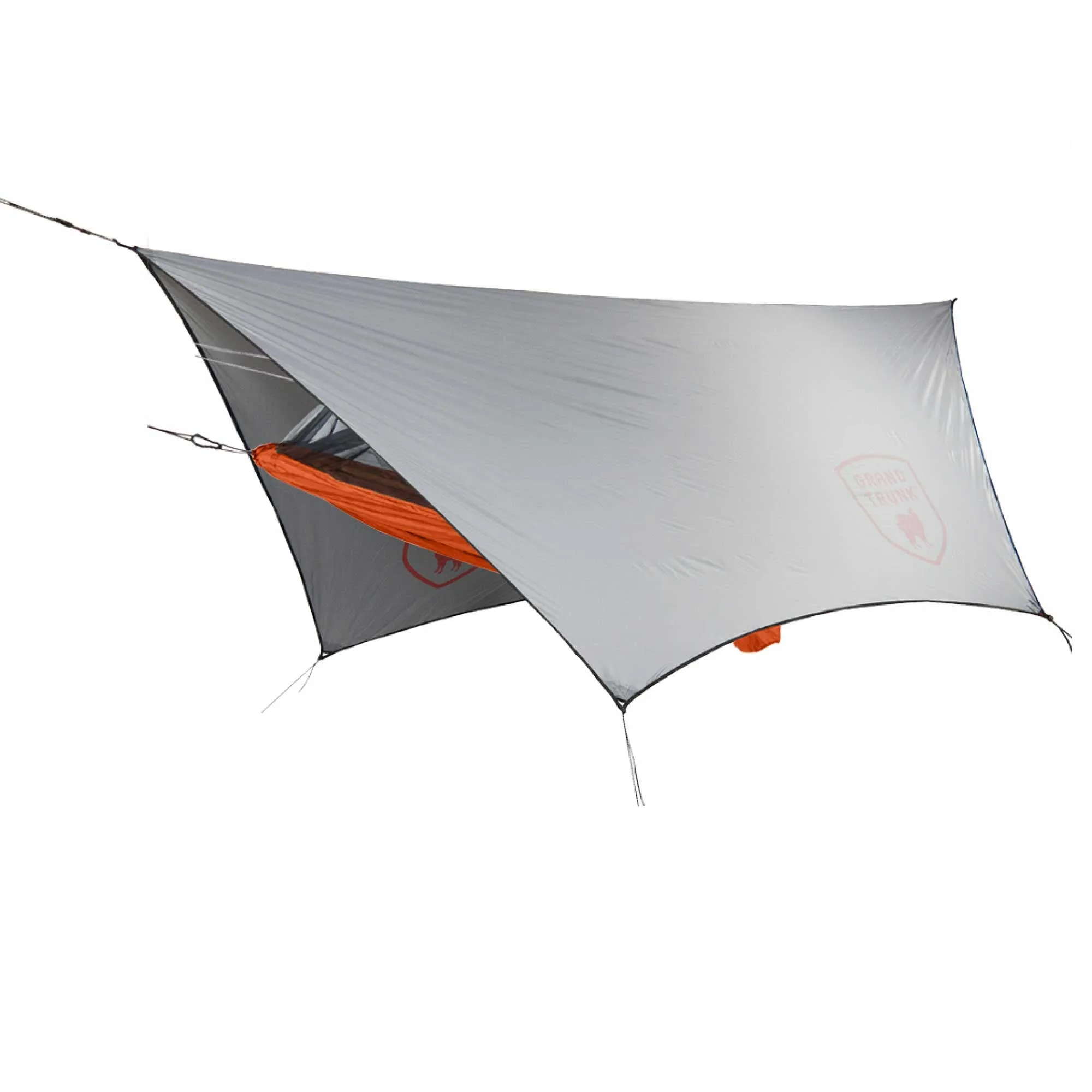
A rain fly is a shaped canopy pitched over your hammock to shed rain and block wind. It is not a full enclosure, so it works best when you already have a hammock you like and only need overhead protection. The trade-off is that a fly alone will not keep mosquitoes off you, and it does not replace a bug net or an insulated sleeping system. If you camp in buggy or cold conditions, plan those pieces separately.
What a camping tarp adds and costs
A camping tarp is a flat or minimally shaped sheet you pitch with stakes, poles, or trees. It can be configured many ways, which makes it flexible for shade, windbreaks, and group shelters. The cost of that flexibility is fiddle time: more tie-out points, more knots, and more decisions in bad weather. A dedicated fly is usually faster to pitch because its shape already matches a hammock ridgeline.
Integrated shelter vs separate pieces
An integrated shelter solves the rain and bug problem in one product, which reduces what you pack and what you can forget. The Air Bivy All Weather Shelter & Hammock includes the updated Skeeter Beeter XT and Hexfly Rain Shelter, so the hammock and rain coverage are designed to work together. The trade-off is that you are committing to one hammock body rather than mixing and matching. If you already own a hammock you love, a standalone fly or tarp keeps your options open.
Suspension is a separate decision
Neither the Skeeter Beeter Pro Mosquito Net Hammock nor the Air Bivy includes a hanging kit or straps. That is a deliberate parts decision, not an oversight, and it means you should budget for suspension before your first trip. Check the suspension options your hammock accepts and confirm the tree-friendly straps you need. Skipping this step is the most common reason a new shelter sits unused.
Trade-offs to weigh before you buy
- Weight and pack size: A standalone fly or tarp packs smaller than an integrated shelter because it is one layer, not a hammock plus canopy. Choose a fly if you count grams and already own a hammock.
- Setup time in rain: A shaped fly pitches fast because its geometry matches a hammock ridgeline. A flat tarp needs more stakes, lines, and decisions when you are wet. Choose a fly for quick shelter; choose a tarp if you enjoy configuring.
- Bug and weather coverage in one: The Air Bivy pairs the Skeeter Beeter XT with the Hexfly Rain Shelter, so bugs and rain are handled together. A fly alone adds no bug protection. Choose integrated coverage if you want fewer separate parts.
Two shelter options compared
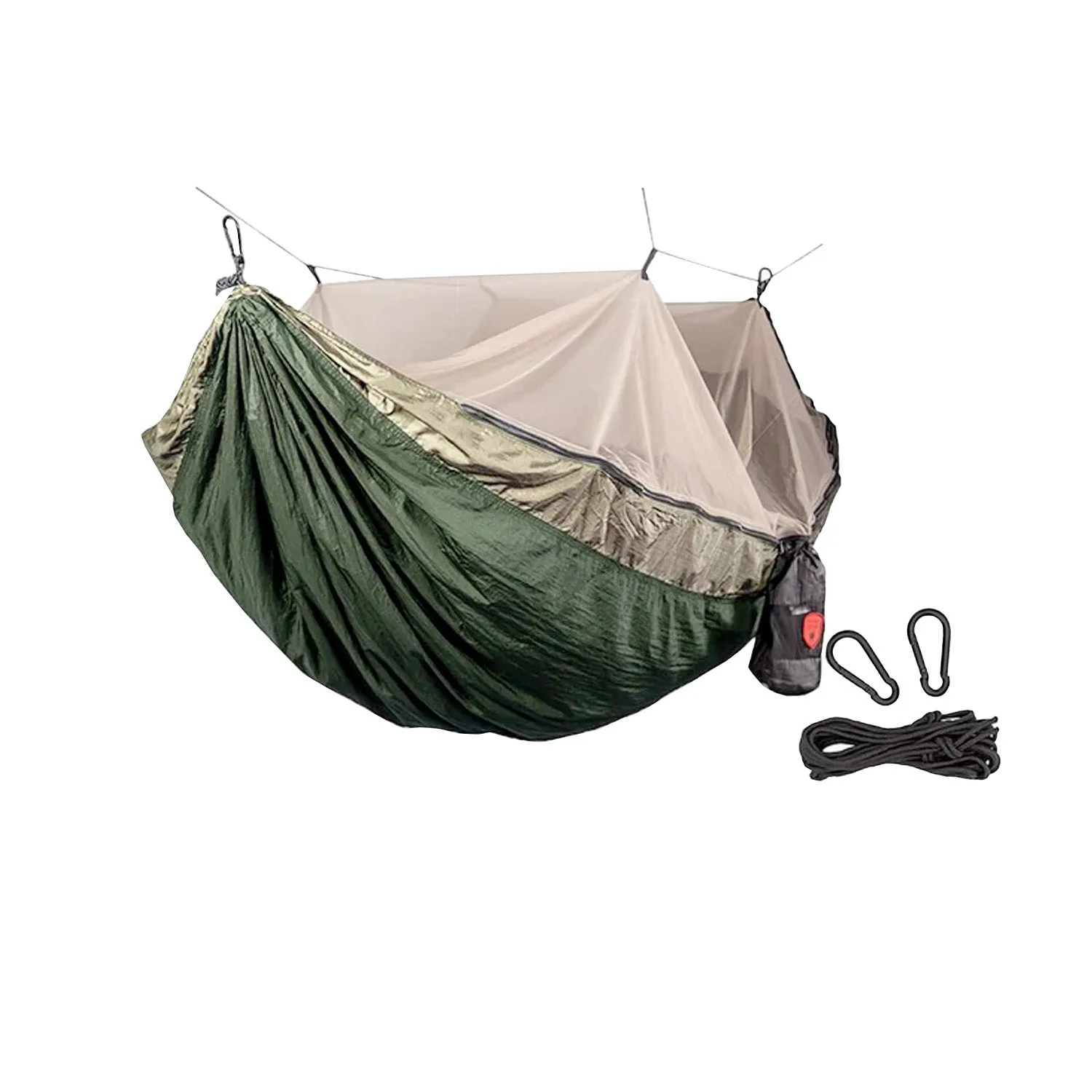
- Skeeter Beeter Pro Mosquito Net Hammock: Mosquito-proof hammock with triple-lock stitched seams and a double-sided zipper for easy entry and exit. The double-sided zipper means you can get in and out from either side, which matters when you pitch between trees at an angle. The bug protection is built into the hammock, so you only need to add a fly or tarp for rain.
- Air Bivy All Weather Shelter & Hammock: Includes the updated Skeeter Beeter XT and Hexfly Rain Shelter, positioned as a tent replacement. This is the one-purchase route to a hammock plus rain coverage. It suits campers who want to skip flat-ground tent sites and do not want to source a separate fly.
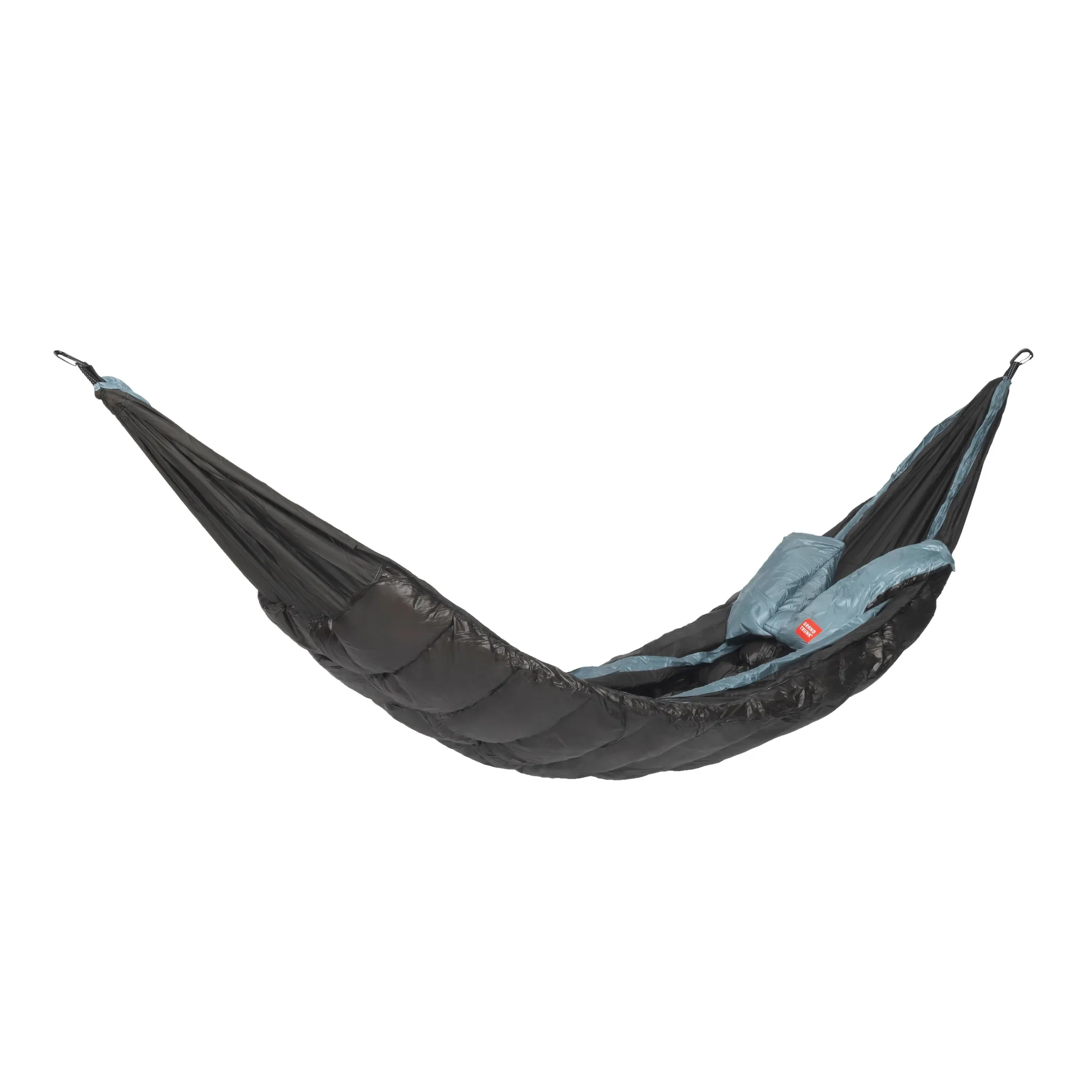
- Evolution 20 Down Sleeping Bag Hammock: Integrates a down sleeping bag with a hammock so the bag does not bunch up and no under or over quilt is needed. If your shelter decision is really about cold-weather comfort, this replaces the quilt question entirely, but it is a warmth system rather than a rain fly, so pair it with the coverage you choose.
Which shelter fits your trip
Best for
- Hammock campers who already own a hammock and only need rain protection
- Trips where pack weight and fast pitching matter more than flexibility
- Campers who want an integrated hammock and rain shelter in one purchase
Not for
- Campers who need a full enclosed tent with a floor and poles
- Anyone who has not yet chosen a suspension system, since straps are not included
- Cold-weather sleepers who still need an insulated underquilt or integrated bag