Quick answer
Choose a hammock stand when you have a permanent spot with no suitable trees, want a consistent hang every time, or need to protect tree bark. Choose tree straps when you are traveling, camping, or hanging in different locations and want a lighter, more packable suspension. Many people own both and switch based on the trip.
You have a hammock. Now you need to decide how to hang it. The two main options are a freestanding hammock stand and a set of tree straps. Each solves a different problem, and the right choice depends on where you hang, how often you move, and what you are willing to carry.
This comparison looks at how stands and straps differ in setup, site flexibility, cost, and care. It also points out which hammocks work with each system so you can avoid buying gear that does not fit.
How hammock stands and tree straps work
A hammock stand is a freestanding frame that holds your hammock above the ground. It does not need trees, posts, or any other anchor. You assemble the stand, attach your hammock, and hang. Stands are common in backyards, on decks, and at rental properties where you cannot modify the landscape.
Tree straps are webbing straps that wrap around a tree trunk or another anchor point. They connect to your hammock through carabiners or a suspension system. Straps are lightweight and packable, which makes them the standard choice for camping, backpacking, and travel. They require suitable trees or anchors at your destination.
- A stand gives you a repeatable hang height and distance every time.
- Straps let you hang almost anywhere you find two solid anchor points.
Setup and site flexibility
Stands take longer to set up the first time, especially if you are assembling a metal frame. After that, setup is usually a few minutes. The trade-off is that a stand stays in one place unless you disassemble and move it. That is fine for a backyard but impractical for a hike.
Tree straps set up in under a minute once you know your anchor points. They work on trees, large posts, or even rock anchors with the right protection. The catch is that you need anchors that are the right distance apart and strong enough to hold you. If your site lacks trees, straps are useless.
- Measure your stand footprint before buying to confirm it fits your space.
- Check local rules about hanging from trees in parks and campgrounds.
Cost and what you need to buy
A stand is a larger upfront purchase, but it often includes everything you need to hang. Tree straps are cheaper on their own, but you may also need carabiners or a suspension kit if your hammock does not include them. Some hammocks come as all-in-one kits with straps and carabiners, which lowers the total cost.
For example, the Double Deluxe Hammock w/Straps includes carabiners and five-foot hammock straps, so it is ready to hang without extra purchases. If you already own a hammock with no suspension, buying straps separately is usually the fastest path to hanging.
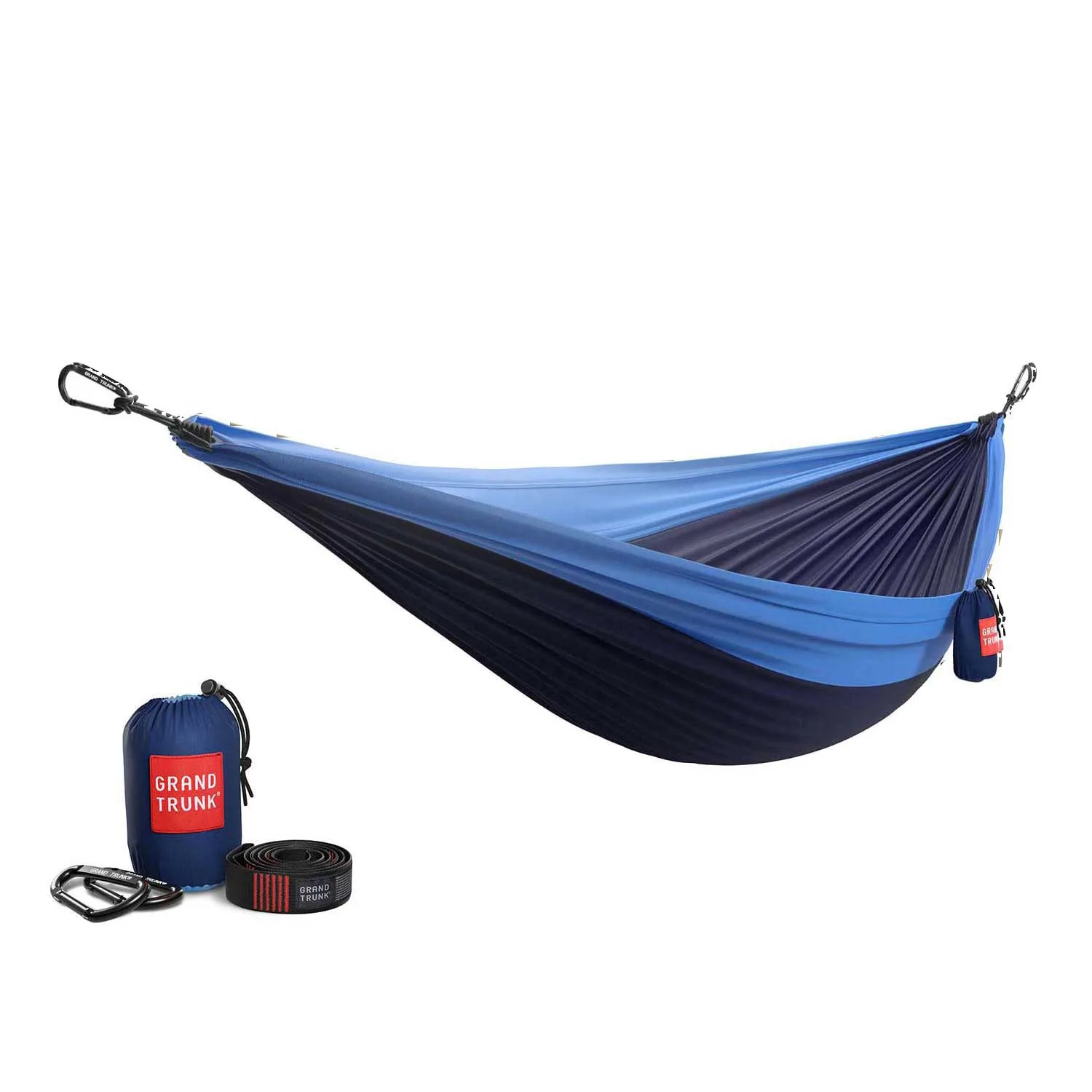
Double Deluxe Hammock w/Straps
- Check whether your hammock includes straps before buying a separate set.
- A stand may be the better value if you hang in the same spot daily.
Weather, storage, and long-term care
Stands live outside, so they need to handle rain, sun, and temperature changes. Metal frames can rust if the finish is damaged, and leaving a hammock on a stand exposes it to weather. Many people take the hammock inside when not in use to extend its life.
Tree straps are easier to store because they pack small. After a trip, check them for abrasion, sap, or dirt. Clean and dry them before storing to prevent mildew. Straps that show deep cuts or fraying should be replaced.
- Store straps dry and out of direct sun to slow UV damage.
- Inspect stands for loose bolts and rust spots at the start of each season.
Matching your hammock to the suspension
Most hammocks work with either a stand or straps as long as the connection points match. Some hammocks are designed as complete kits with straps included, while others assume you already own a suspension system. The Evolution 20 Synthetic Sleeping Bag Hammock, for instance, does not include a hanging kit or straps, so you need to add suspension separately.
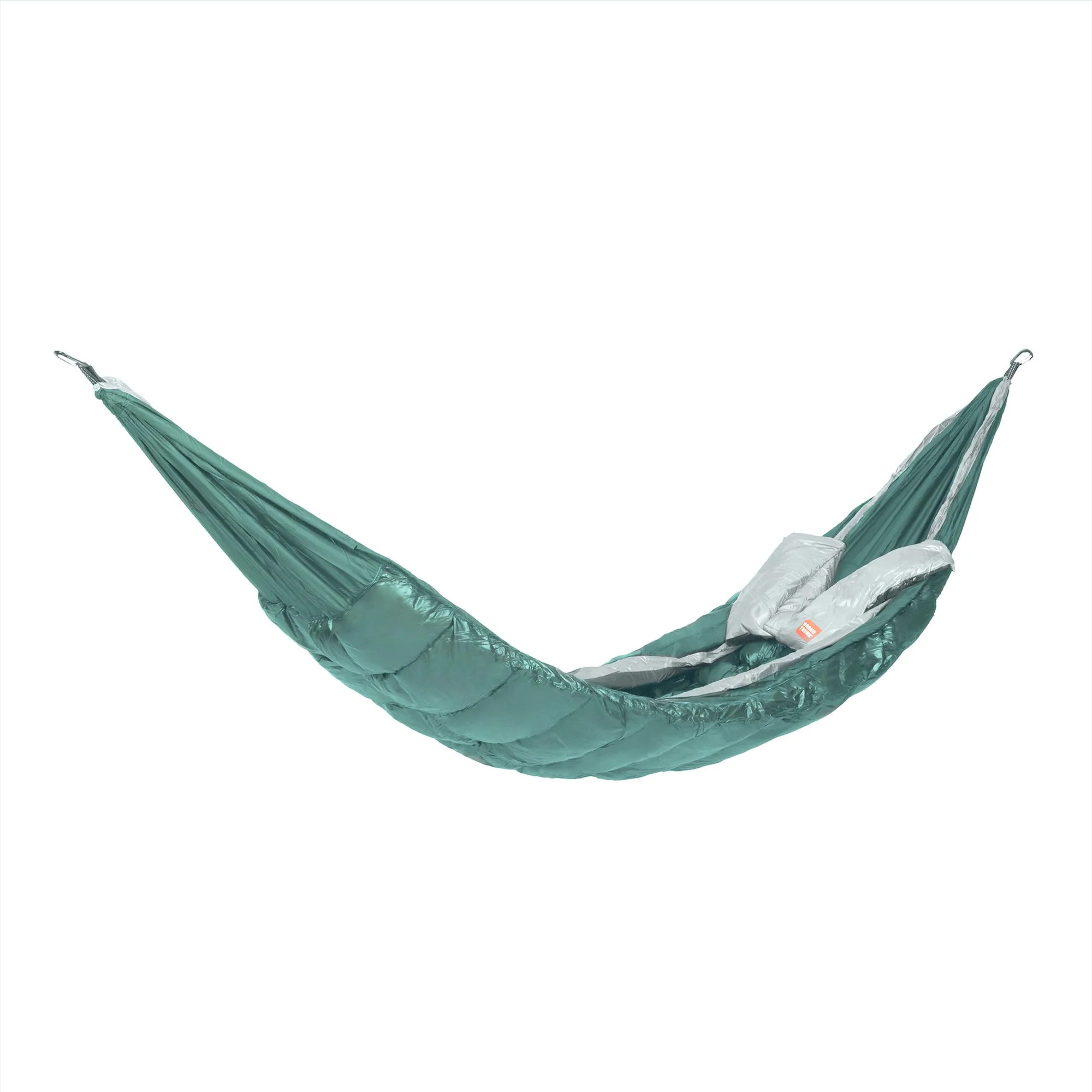
Evolution 20 Synthetic Sleeping Bag Hammock
If you plan to use a stand, check the stand's weight capacity and hammock length. If you plan to use straps, check the strap length and tree diameter at your usual spots. A mismatch in any of these areas can leave you unable to hang.
- Confirm your hammock's connection type before buying a stand or straps.
- For hammocks without included suspension, budget for straps and carabiners.
Trade-offs at a glance
- Setup time: Stands take longer to assemble initially but give a consistent hang. Straps set up in under a minute but require suitable anchors. Choose based on whether you value repeatability or speed in new locations.
- Site flexibility: Stands work anywhere with flat ground and no trees. Straps work anywhere with two solid anchor points but fail without them. If your yard has no trees, a stand is the only option. If you travel, straps are essential.
- Cost and completeness: Stands cost more upfront but often include everything. Straps are cheaper but may require separate carabiners or a kit. Check what is included before buying to avoid duplicate purchases.
- Weight and storage: Stands are heavy and stay in one place. Straps pack small and are easy to carry. For backpacking or camping, straps win. For a permanent backyard hang, a stand is simpler.
Product facts that affect your choice
- Double Deluxe Hammock w/Straps: Includes carabiners and five-foot hammock straps, making it an all-in-one hammock kit ready to hang without extra straps or rope. If you choose tree straps, this kit saves you from buying suspension separately and works out of the box.
- Evolution 20 Synthetic Sleeping Bag Hammock: Hanging kit and straps are not included; suspension options are sold separately. If you choose this hammock, you must add tree straps or a stand-compatible suspension before you can hang it.
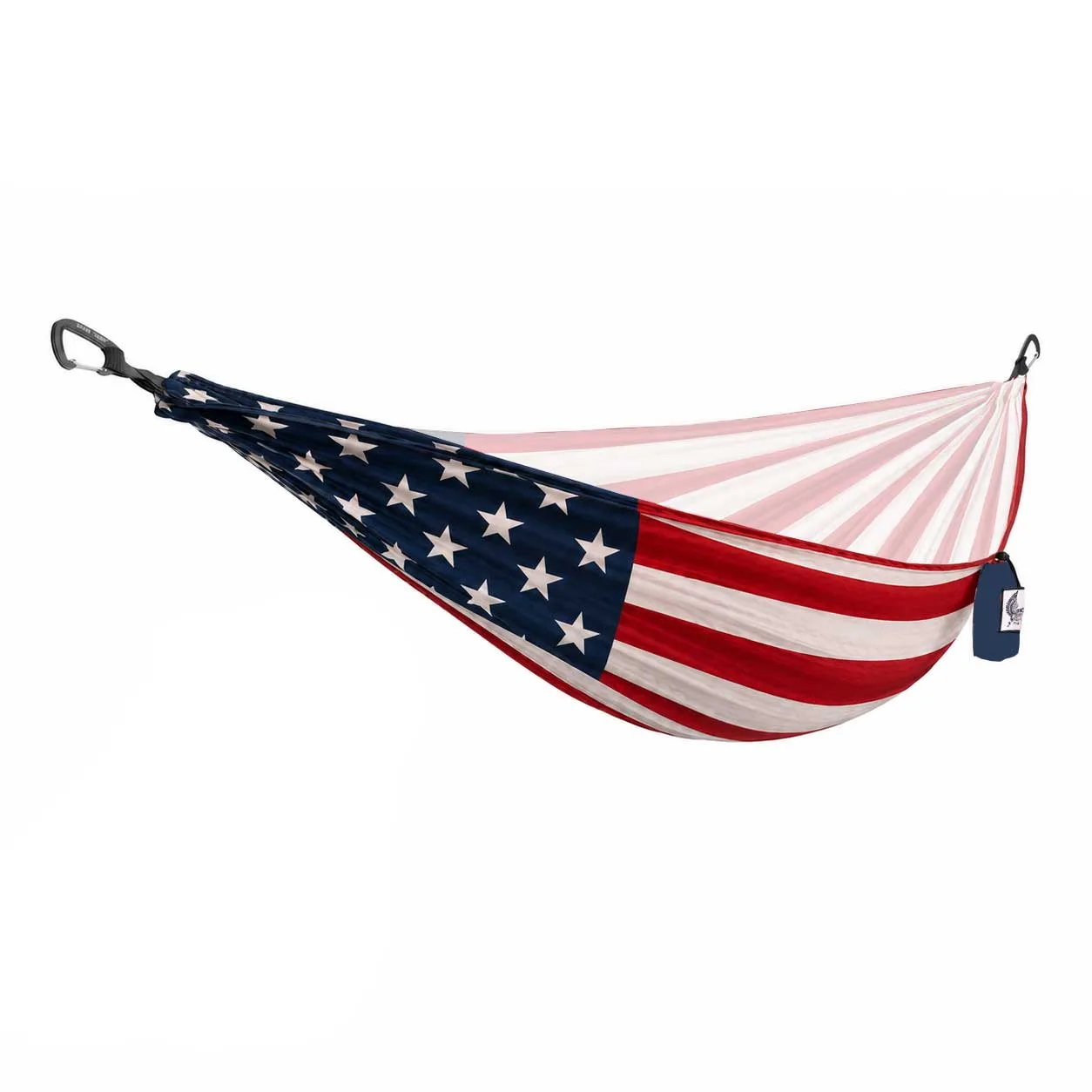
- USA Flag Double Hammock with Straps | 250th Anniversary Edition: Built from durable 240T polyester pongee fabric, lightweight, and supports up to 400 lbs. A lightweight hammock with included straps pairs well with tree straps for travel, while the 400 lb capacity gives confidence for two-person hangs.
Which should you choose?
Best for
- Backyard hangouts with no suitable trees
- Renters who cannot drill or tie to structures
- People who want a consistent, repeatable hang
- Campers and travelers who need a packable suspension
- Anyone hanging in multiple locations
Not for
- Backpackers who need to save every ounce (choose straps)
- People with limited storage space (choose straps)
- Campers in areas without trees or anchors (choose a stand)
- Anyone who wants a permanent setup without assembly (choose a stand)
There is no single best way to hang a hammock. A stand gives you freedom from trees and a consistent setup at home. Tree straps give you portability and the ability to hang almost anywhere you travel. Match the system to your most common hanging situation, and add the other later if your needs change.