Quick answer
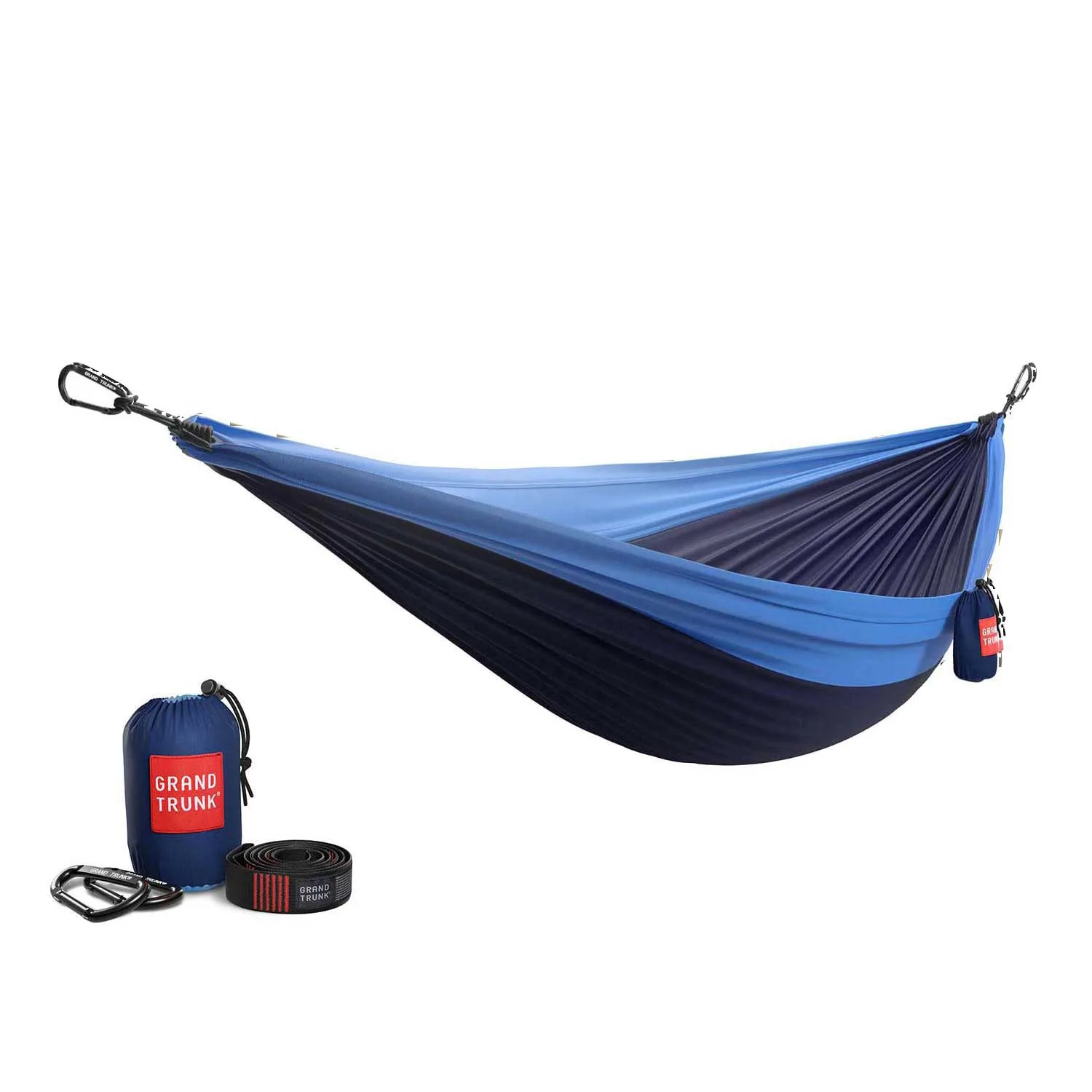
For most campers, hammock straps are the better choice because they protect trees, offer more adjustment points, and are easier to set up than rope. Ropes can work for a permanent backyard hang or as a lightweight backup, but they require more care to avoid tree damage and usually offer fewer fine-tuning options. If you want an all-in-one kit, the Double Deluxe Hammock w/Straps includes straps and carabiners; if you already own a hammock, the Trunk Straps - Hammock Suspension Straps give you 36 adjustment points for a precise hang.
Trunk Straps - Hammock Suspension Straps
You have a hammock, but the suspension is what makes or breaks your hang. Straps and ropes are the two main options, and the right pick depends on where you hang, how often you adjust, and whether you care about tree health. This comparison breaks down hammock straps vs ropes so you can choose the best hammock suspension for your setup.
We will look at tree protection, adjustability, packability, and cost, using real products from Grand Trunk as examples. You will also find fit guidance to match your camping style.
Tree protection: why straps win for most campsites
Ropes concentrate your weight on a thin line, which can cut into bark and damage the cambium layer. Straps spread that load over a wider surface, reducing the risk of tree injury. Many public parks and private campgrounds now require tree straps for this reason. If you plan to hang in established sites or anywhere with soft-barked trees, straps are the safer bet.
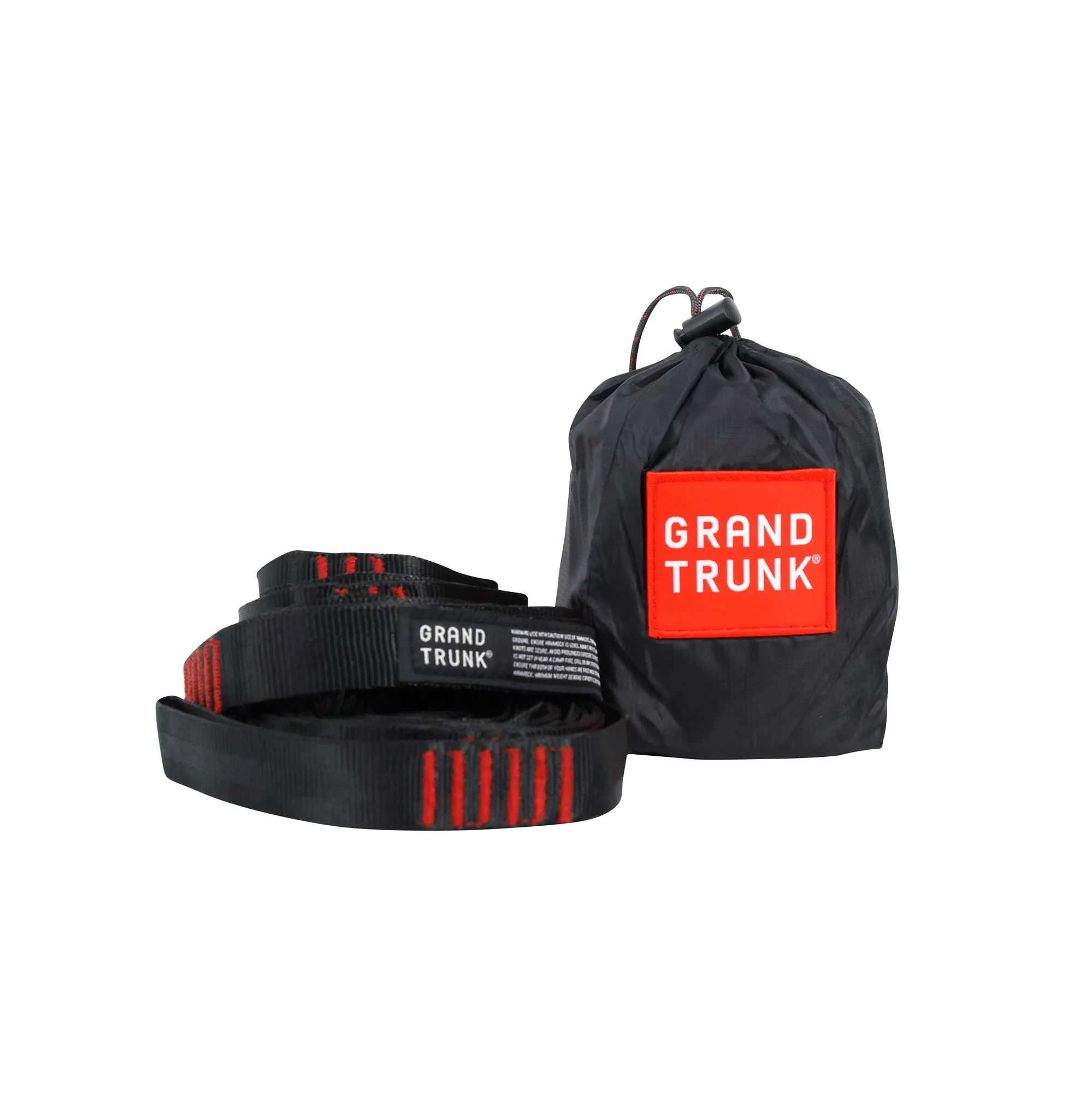
The Trunk Straps - Hammock Suspension Straps are designed for this purpose. They have a wide webbing surface that wraps around the tree without digging in. Ropes, by contrast, need extra padding or a tree-friendly wrap to achieve the same effect. For a simple, low-impact hang, straps are the clear winner.
- Always check local regulations before hanging; some areas ban ropes entirely.
- If you must use rope, place a folded towel or piece of cardboard between the rope and the bark.
Adjustability: straps offer more fine-tuning
Straps typically come with multiple loops or a daisy-chain design that lets you set the hammock height and angle quickly. The Trunk Straps - Hammock Suspension Straps have 36 adjustment points (18 on each side), so you can make micro adjustments to get the perfect hang. That matters when trees are unevenly spaced or you want to change your position without untying knots.
Ropes rely on knots or whoopie slings for adjustment. Whoopie slings are lightweight and offer continuous adjustment, but they require a learning curve and can slip if not set correctly. Traditional ropes with knots are simple but slower to tweak. For most people, straps are faster and more intuitive.
- Count the adjustment points per side; more points mean finer control.
- If you use whoopie slings, practice setting them at home before your trip.
Packability and weight: ropes have the edge
Ropes and whoopie slings are generally lighter and pack smaller than webbing straps. If you are counting ounces for a long backpacking trip, a rope-based system can save weight. However, the difference is often small, and many strap sets are still compact enough for backpacking.
The Trunk Straps - Hammock Suspension Straps are designed to be packable, but they are still webbing, so they take up more space than a thin rope. If ultralight packing is your top priority, you might prefer a whoopie sling setup. Otherwise, the convenience of straps usually outweighs the minor weight penalty.
- Weigh your suspension options if you are hiking more than a few miles.
- Straps can double as gear ties or emergency lashings, adding versatility.
Cost and completeness: kits vs. separate parts
If you are starting from scratch, an all-in-one hammock kit can be more economical than buying parts separately. The Double Deluxe Hammock w/Straps includes a two-person parachute nylon hammock, carabiners, and five-foot hammock straps, so it is ready to hang out of the box. That removes the guesswork of matching components.
If you already own a hammock, buying straps separately is straightforward. The Trunk Straps - Hammock Suspension Straps are a dedicated suspension option. For a budget-friendly backup, the Replacement 10' Starter Rope Kit (2 Ropes) offers two ropes with adjustable knots, and it works with any hammock. Ropes are often cheaper, but they may need additional tree protection.
- Check whether your hammock includes straps; many do not.
- A starter rope kit can be a good emergency backup or loaner.
When whoopie slings make sense
Whoopie slings are a specialized rope suspension made from Amsteel or similar low-stretch cord. They are ultralight, highly adjustable, and popular among dedicated backpackers. However, they still require tree straps or huggers to protect the tree, so they are not a complete replacement for straps.
If you are comparing hammock straps vs whoopie slings, the trade-off is weight and packability versus simplicity and tree protection. Whoopie slings win on weight, but straps win on ease of use and universal acceptance. For most casual and car campers, straps are the better starting point.
- Whoopie slings need a separate tree strap or hugger.
- They can be harder to adjust with gloves on.
Trade-offs at a glance
- Tree protection: Straps spread weight over a wider area, reducing bark damage. Ropes concentrate weight and can cut into trees. Choose straps for campgrounds and public lands; use ropes only with added padding.
- Adjustability: Straps with multiple loops (like the 36-point Trunk Straps) offer quick, precise height and angle changes. Ropes rely on knots or whoopie slings, which can be slower or require practice. If you adjust often, straps are more convenient.
- Weight and packability: Ropes and whoopie slings are lighter and pack smaller than webbing straps. Straps are bulkier but still packable. For ultralight backpacking, consider whoopie slings with tree huggers; otherwise, straps are fine.
- Cost and completeness: All-in-one kits like the Double Deluxe Hammock w/Straps include everything. Separate straps or ropes can be cheaper but may require additional parts. New hammock owners should consider a kit; existing owners can buy straps alone.
Product facts
- Trunk Straps - Hammock Suspension Straps: These hammock tree straps have 36 adjustment points (18 on each side), allowing micro hammock adjustments for the perfect hang. More adjustment points mean you can fine-tune your hammock height and angle without untying knots, which is especially useful when trees are unevenly spaced.
- Double Deluxe Hammock w/Straps: This packable two-person parachute nylon hammock kit includes carabiners and five-foot hammock straps, so it is ready to hang without extra purchases. An all-in-one kit saves you from buying separate straps and carabiners, making it a convenient choice for beginners or anyone who wants a complete setup.
- Replacement 10' Starter Rope Kit (2 Ropes): This replacement starter rope kit includes two ropes with two knots for adjustment and works with any hammock. A low-cost rope option that can serve as a backup or a simple suspension for a permanent backyard hang, though it may require extra tree protection.
Which suspension is right for you?
Best for
- Campers who hang in public parks or established sites where tree protection is required
- Anyone who wants quick, tool-free adjustments and a simple setup
- Beginners who prefer an all-in-one kit like the Double Deluxe Hammock w/Straps
Not for
- Ultralight backpackers counting every ounce who are willing to use whoopie slings and tree huggers
- Permanent backyard installations where a simple rope may be sufficient and tree damage is not a concern
For most people, hammock straps are the better suspension choice because they protect trees, offer more adjustability, and are easy to use. Ropes have their place for ultralight setups or permanent hangs, but they come with trade-offs. Match your suspension to your camping style, and you will sleep better outdoors.