Quick answer
Handmade porcelain and quality flatware are not rivals. They are made for each other. The real risks are practical, such as metal marks and mismatched scale, not the fact that one piece is handmade and the other is precision-made. Choose flatware with smooth, rounded edges and a finish you are willing to maintain, and your porcelain will look better, not worse.
Why this myth keeps returning
The belief that handmade porcelain needs delicate or disposable cutlery usually comes from two places: fear of scratching a glaze you love, and the assumption that artisan and industrial objects belong in separate worlds. Both concerns are understandable, but neither holds up when you look at how the pieces are actually made. Cutipol, for example, is produced by a family-owned business in the village of Sao Martinho de Sande in Portugal, pairing artisanal traditions with modern technology. That is the same combination Mud Australia uses: human hands and controlled production, not one or the other.
What actually causes scratches and metal marks
Most marks on porcelain come from how you use and wash the pieces, not from the flatware itself. Dragging a fork across a plate, stacking plates with cutlery between them, or leaving acidic food residue on a glaze overnight will do more damage than the alloy of the spoon. A brushed stainless steel surface like the one on Cutipol Goa is less likely to leave visible scuffs than a highly polished mirror finish, because the texture hides fine lines. If you want to protect a handmade glaze, choose flatware with smooth, rounded edges and store it separately rather than piling it on plates.
Scale and proportion matter more than material
A tablespoon that looks balanced on a wide charger can overwhelm a small dessert plate, and a delicate dessert spoon can disappear next to a generous pasta bowl. This is a proportion problem, not a porcelain-versus-steel problem. Cutipol Goa is described as elegant with minimalist and precise lines, which means it stays visually quiet next to busy glazes and irregular rims. If your porcelain has a strong handmade character, let the flatware be the calm element. If your plates are plain, the flatware can carry more shape and shine.
The finish you choose sets your maintenance routine
Brushed stainless steel with a resin handle is a practical everyday choice because it does not demand the polishing routine of silver. That said, no flatware is maintenance-free. Resin handles should be washed by hand and dried rather than left soaking, and stainless steel benefits from being dried promptly after washing to avoid water spots. If you are not willing to hand-wash, choose a simpler all-steel pattern. The honest tradeoff is that a refined handle material asks for a little more care in exchange for how it feels in the hand.
How to build a set that actually works together
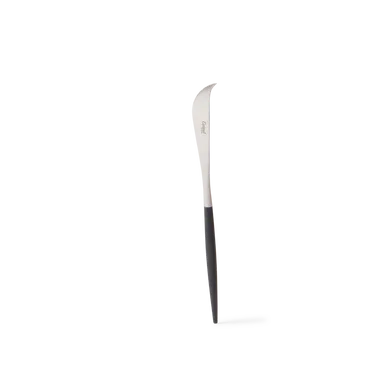
Start with the pieces you use daily, then add the serving tools. A tablespoon and a dessert spoon cover most meals, while a cheese knife earns its place if you serve cheese regularly. Cutipol Goa is available as individual pieces, so you can add the cheese knife later without buying a full set. Team the cheese knife with a cheese platter or charger plate when you are serving guests, and keep the rest of the setting simple. Buying in stages also lets you test how a pattern feels with your existing porcelain before committing to more.
Myths, verdicts, and what to do
- Myth: Handmade porcelain is too delicate for quality flatware.: Porcelain is fired to be durable, and the real risk is how you handle it, not the flatware itself. Dragging and stacking cause more marks than normal eating. Verdict: false. Use your porcelain, but lift rather than drag and store flatware separately.
- Myth: You need polished silver to make a handmade table look considered.: Cutipol Goa is described as elegant with minimalist and precise lines, made with brushed stainless steel and a refined resin handle. That restraint lets a handmade glaze stay the focus. Verdict: false. A quiet brushed finish often flatters handmade porcelain better than a high-shine one.
- Myth: You must buy a full flatware set to pair it with porcelain.: Cutipol Goa is sold as individual pieces, so you can start with a tablespoon or dessert spoon and add a cheese knife when you actually need one. Verdict: false. Build in stages and test the feel before expanding.
Catalog facts worth knowing
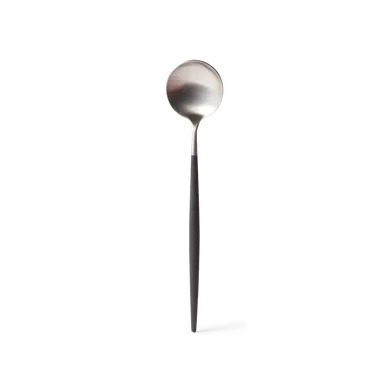
- Cutipol Goa / Tablespoon: Cutipol Goa / Tablespoon is made with brushed stainless steel and has a refined resin handle. The brushed finish hides fine scuffs better than a mirror polish, making it a practical everyday choice for porcelain you use often.
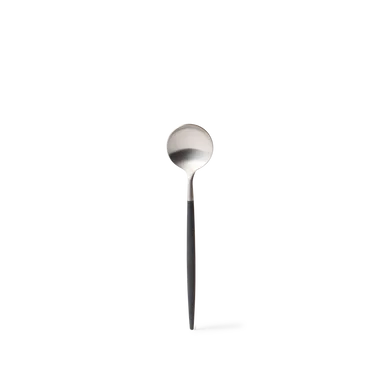
- Cutipol Goa / Dessert Spoon: Cutipol Goa / Dessert Spoon is made with brushed stainless steel and a refined resin handle, and the catalog suggests teaming it with the Goa Dessert Knife and Fork. Buying the dessert spoon first lets you build a matching dessert setting gradually instead of committing to a full set at once.
- Cutipol Goa / Cheese Knife: Cutipol Goa / Cheese Knife is made with brushed stainless steel and a refined resin handle, and the catalog suggests teaming it with a cheese platter or charger plate. A dedicated cheese knife keeps the rest of your flatware out of the cheese course, so your everyday spoons stay cleaner and last longer.