Quick answer
A sagging hard top pulley frame is almost always a mounting or alignment problem, not a failed frame. Check the ceiling anchors first, then the pulley alignment, then the rope or strap. If the frame still sags after those three checks, the frame or your ceiling structure is the limit and you should stop and consider a motorized lifter instead.
Start with the symptom, not the frame
Sag has a shape, and the shape tells you where to look. A frame that drops evenly on both sides usually points to the ceiling anchors or the rope path. A frame that tilts to one corner usually points to a single anchor, a single pulley, or an uneven strap. A frame that sags only when loaded points to capacity or to the ceiling structure itself. Note which of these you have before you touch a tool, because each one leads to a different fix.
Check the ceiling anchors and hardware first
Most sag complaints trace back to the anchors. Lag bolts can work loose over time, especially in older garage ceilings, and a single loose anchor lets the whole frame drop on that side. Re-tighten each anchor and look for enlarged holes, cracked wood, or bolts that spin without gripping. If the hole is wallowed out, move the anchor to fresh material rather than over-tightening the same spot. This is the cheapest fix and the one most likely to solve the problem.
Align the pulleys and clear the rope path
A pulley that is not square to the rope adds friction, and friction makes one side of the frame lag behind the other. Stand back and sight along the rope path from the winch or anchor to the frame. The rope should run straight through the pulley groove without rubbing a cheek or a bracket. If a pulley is twisted, loosen its mount, square it to the rope, and re-tighten. Then check that the rope is seated in every groove and not crossed between pulleys.
Inspect the rope, strap, and frame joints
Rope and strap stretch over time, and a stretched line lets the frame hang lower than it did when new. Run your hand along the full length and look for fraying, flat spots, or a strap that has slipped in its fitting. On the frame itself, check every bolted joint and weld for movement. If a joint flexes under load, stop lifting and address that joint before you use the frame again.
Know when to stop fixing and change approach
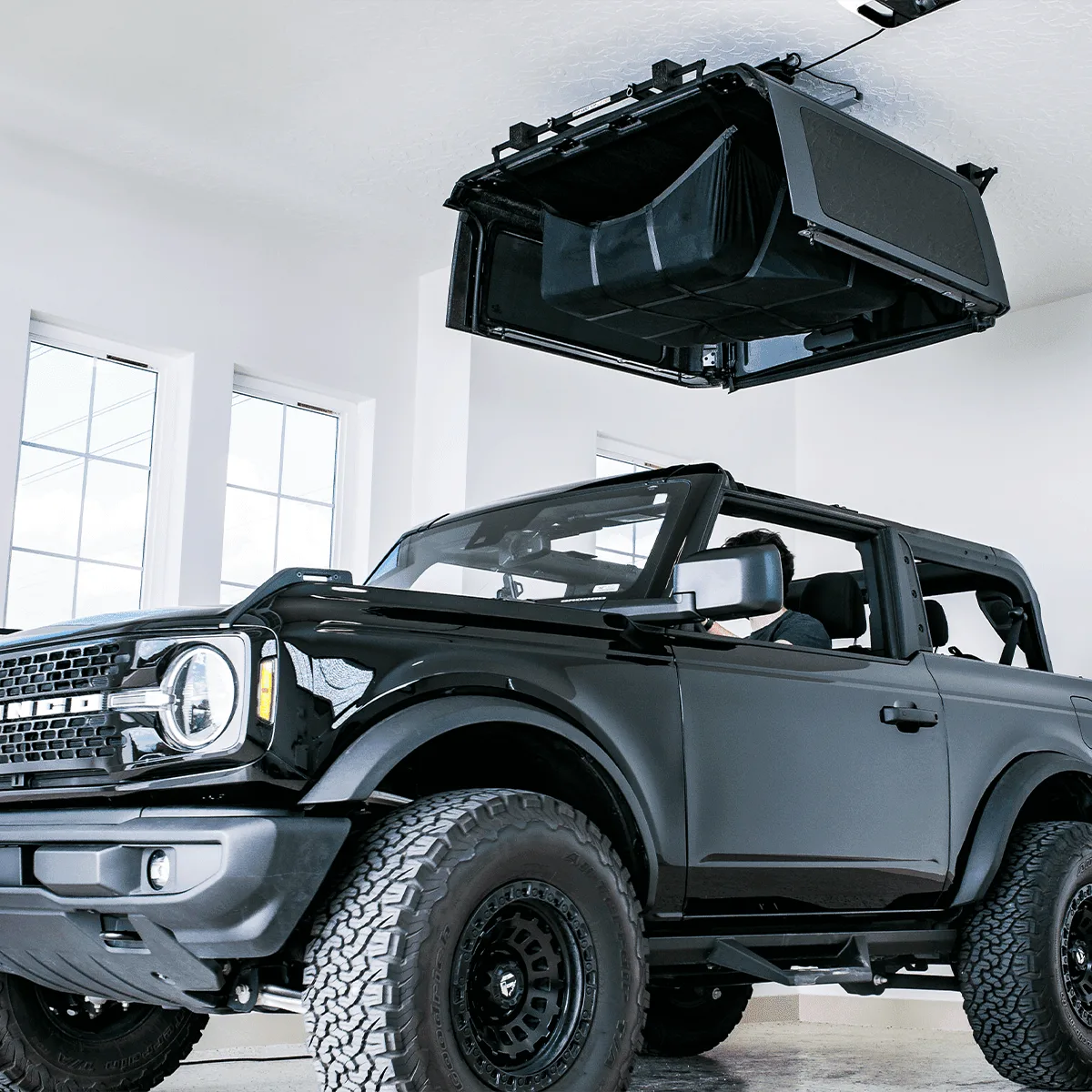
If the anchors are tight, the pulleys are square, the rope is sound, and the frame still sags, the problem is capacity or ceiling structure. Do not add more anchors to a ceiling that is already flexing, and do not overload a frame beyond what it was built to hold. At that point, a purpose-built lifter is the safer path. The Garage Smart Hard Top Lifter - Bronco is rated for the hard top and removable panels on that vehicle and is designed to remove and reinstall the top in under 15 minutes by one person, which removes the manual rope-and-pulley variables that cause most sag.
Diagnosis: match the sag to the cause
- Even drop on both sides: Check both ceiling anchors and the main rope path. Re-tighten anchors and confirm the rope runs straight through every pulley groove. If anchors are tight and the rope is straight, move to the next check.
- Tilt to one corner: Inspect the anchor, pulley, and strap at that corner only. A single twisted pulley or loose anchor is the usual cause of a one-corner tilt. Square the pulley and re-tighten the anchor before lifting again.
- Sag only under load: This points to capacity or ceiling structure. Do not add anchors to a flexing ceiling and do not exceed the frame's intended load. Stop here and switch to a rated lifter rather than reinforcing a frame beyond its design.
Product facts
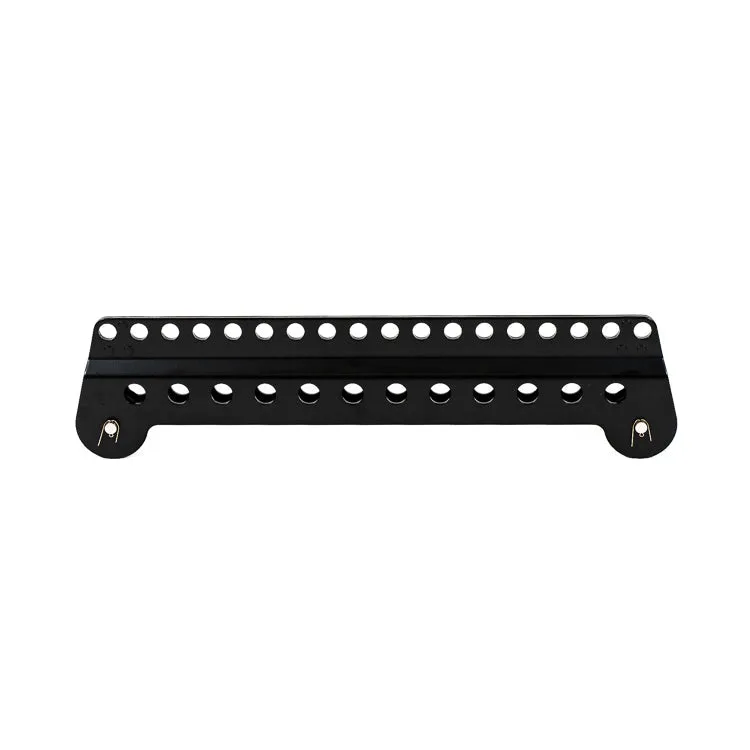
- Hard Top Pulley Frame: Pulley-based frame system intended to assist with hard top removal and installation. If your sag comes from a worn or misaligned pulley frame, replacing it with a like-for-like pulley system keeps your existing ceiling anchors and rope path.
- Hard Top Lifter - Bronco: Once installed it takes less than 15 minutes to remove and reinstall your hard top, and you can do both of those tasks by yourself. A motorized lifter removes the manual rope-and-pulley variables that cause most sag, so it is the better choice when the ceiling and frame are already at their limit.
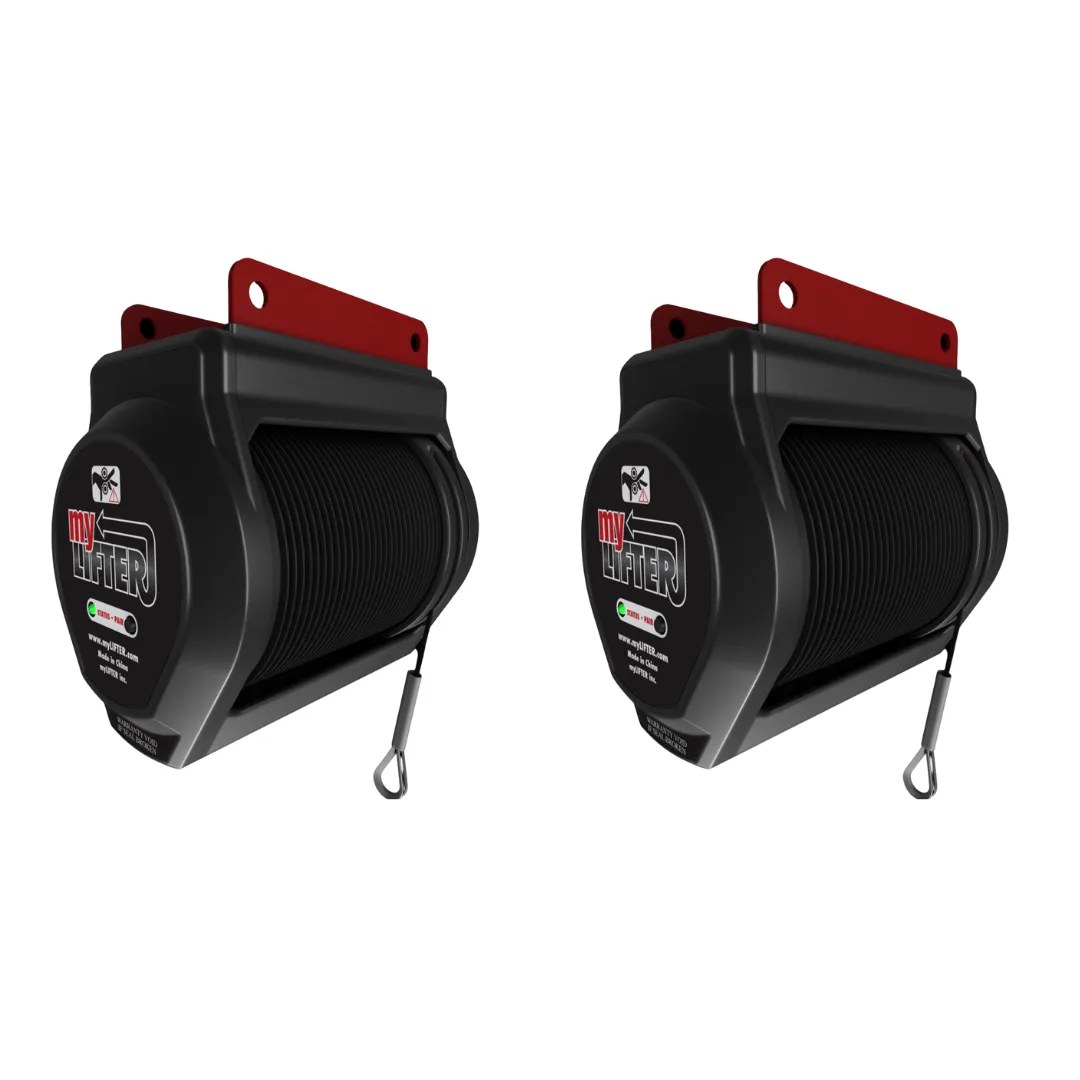
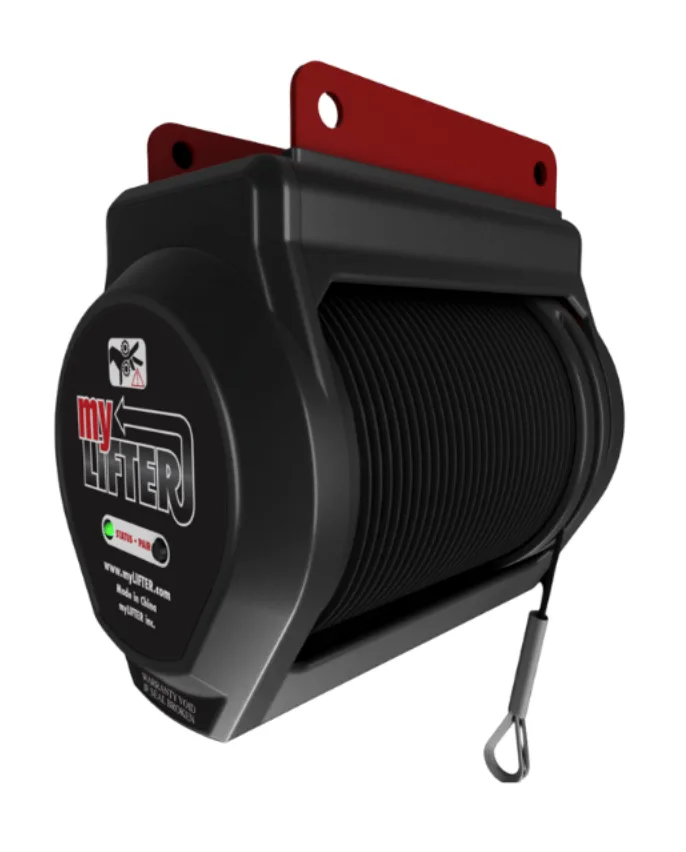
- Build Your Own Kit: MyLifter features: Bluetooth enabled device for easy use. If you already own a platform system, this kit converts it to a motorized lift instead of adding another pulley frame to a ceiling that may not support one.