Quick answer
Choose Hardback if you want a word-building deck-builder with a clear 19th-century author theme and a slightly more guided arc toward prestige. Choose Paperback if you want the original novel-writing deck-builder and value the option of a deluxe edition with upgraded components. Both come from the same design lineage, so the right pick is about theme, component expectations, and how much table presence you want.
Theme and table feel: author ambition vs novel writing
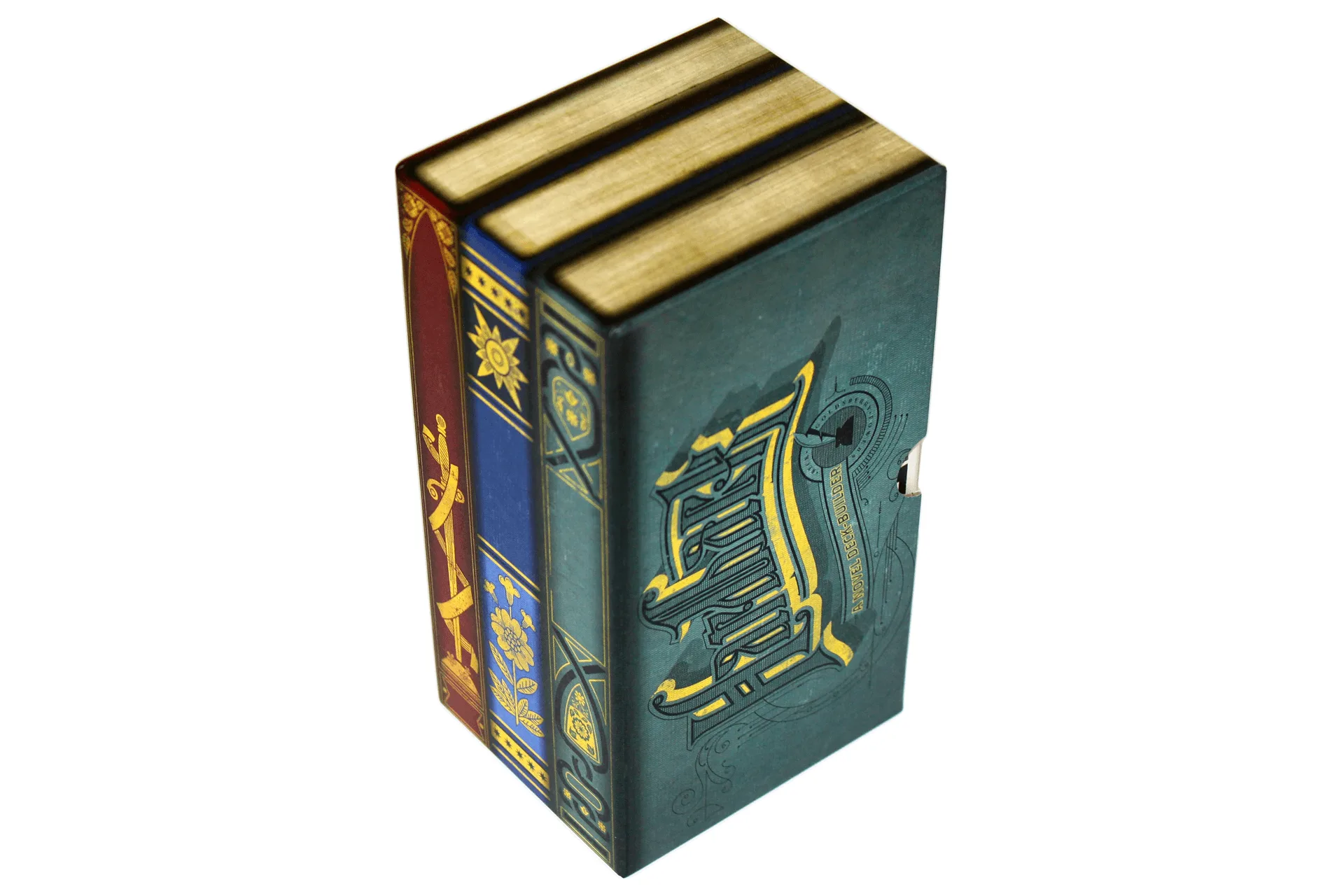
Hardback casts you as Penelope Quill, a 19th-century author writing your next novel while earning money and prestige. That framing gives the game a specific narrative hook and a clear progression: spend coin on stronger cards, improve your deck, and write better novels. Paperback shares the novel deck-building premise but without the named protagonist framing, so it reads as the more neutral starting point in the series.
If your group likes a light story wrapper around a word game, Hardback's author theme gives players something to talk about between turns. If you prefer the cleaner original premise, Paperback keeps the focus on word-building and deck improvement without the character layer.
Deck-building depth and how turns differ
Both games are deck-builders where you form words from letter cards and buy more powerful cards based on how well your word scored. Hardback adds a prestige race: the first player to acquire enough prestige wins, which pushes you to balance money and prestige rather than only chasing high-scoring words. Paperback stays closer to the classic word-building loop, where your purchasing power comes directly from your word score.
The practical difference is pacing. Hardback's prestige target gives the table a visible finish line and can reward players who pivot early from raw scoring to prestige. Paperback's loop is more open-ended, which suits groups who enjoy optimizing their deck without a separate prestige track to manage.
Components and editions: what you actually get
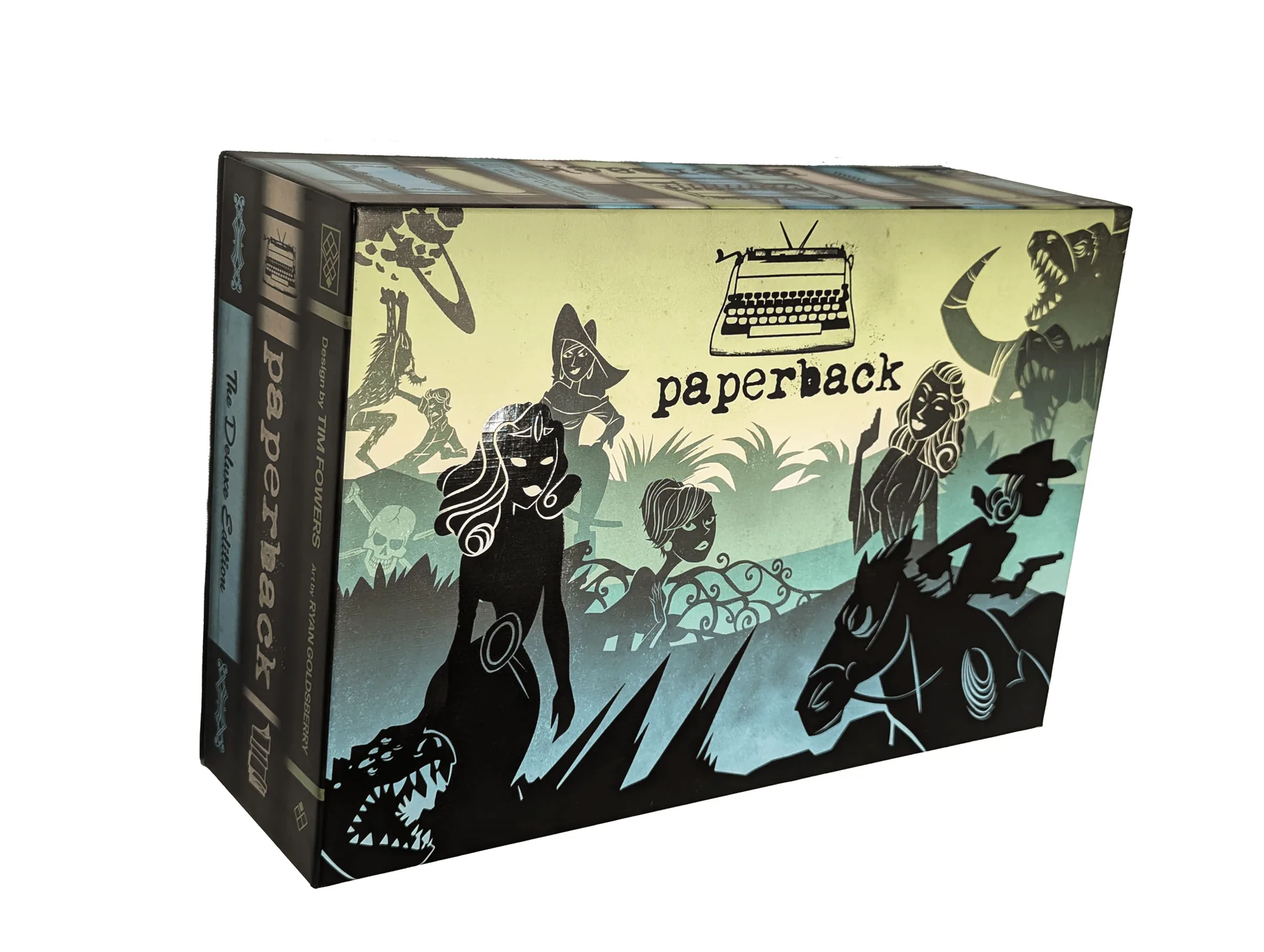
Paperback Deluxe includes two double-sided stitched playmats, chipboard genre tiles, metal book-shaped trackers, eight foil novel covers, and sleeves. That package is aimed at players who want a more tactile, table-present version of the original game. Hardback's standard edition is the more compact entry point, and the German-language wholesale version exists for EU-focused retail or group orders.
If component upgrades matter to your group, the deluxe route is the clearest reason to pick Paperback. If you want the newer design in the series with the author theme, Hardback is the more direct choice. Note that Typewriter is a separate game in the Paperback series, not a replacement for either, so don't treat it as an either/or with these two.
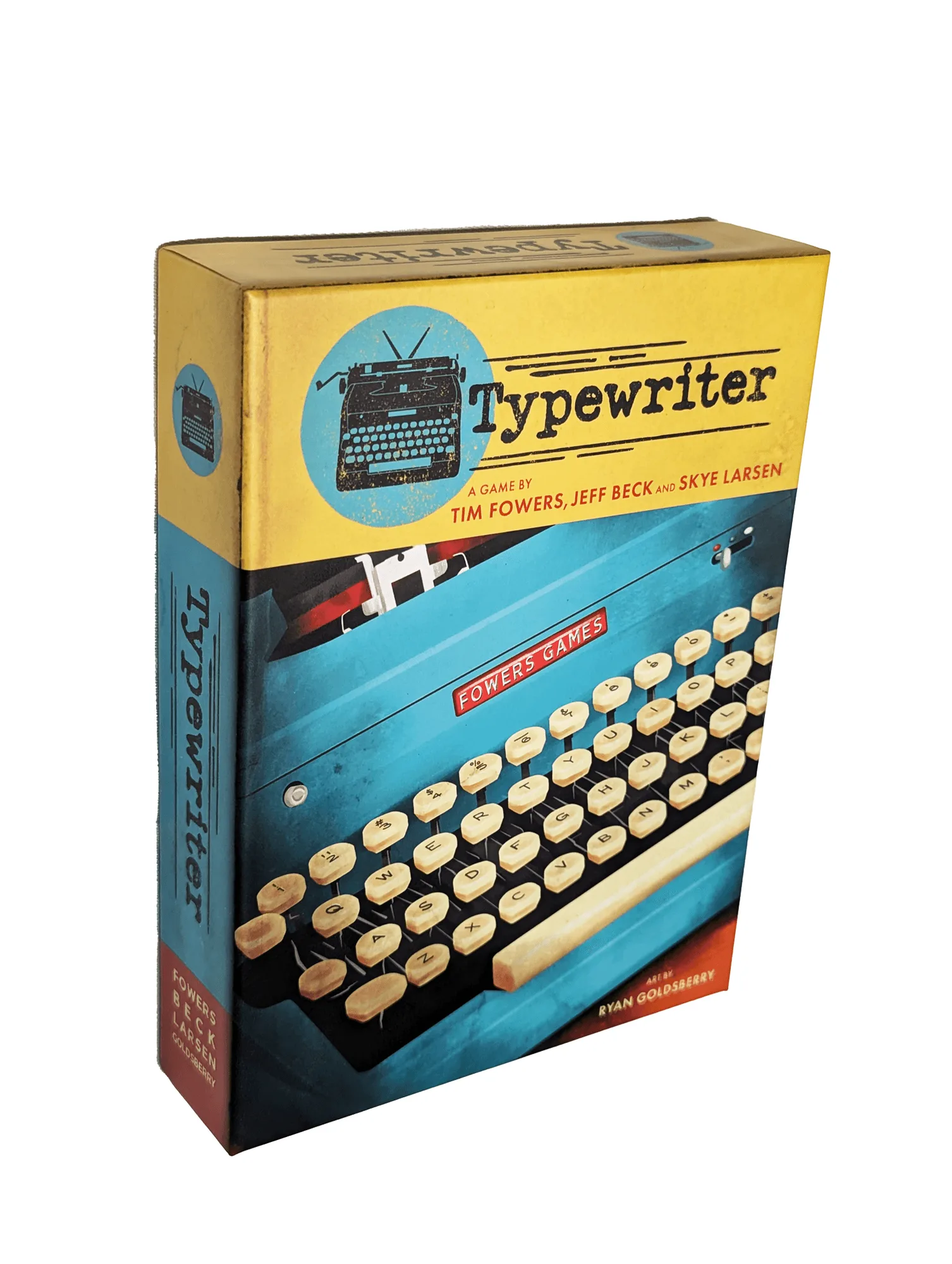
Typewriter
Language and availability considerations
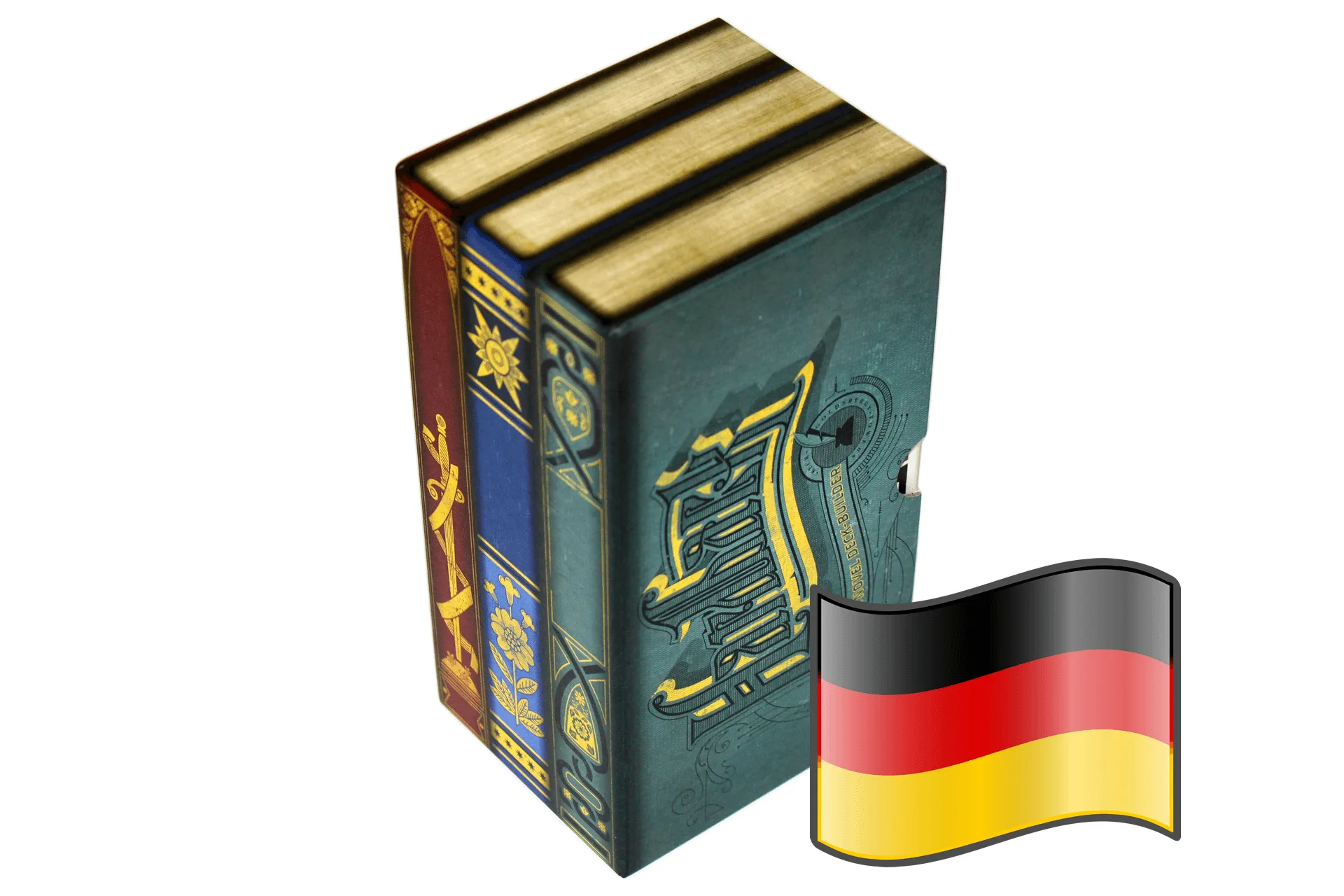
Hardback is available in an English edition and a German-language wholesale version. The German edition ships only to EU countries, with free shipping to Germany and the UK noted on the product. That makes it a practical option for EU-based groups or retailers, but not for buyers outside the EU.
Paperback Deluxe is listed as in stock in the standard English edition. If your group plays in German or you are ordering for EU distribution, the Hardback German wholesale option is the relevant pick. If you need a single English copy for a home table, either Hardback or Paperback Deluxe works, and the decision comes back to theme and components.
Trade-offs to weigh before you buy
- Theme vs neutrality: Hardback adds a named 19th-century author and a prestige race; Paperback keeps the original novel deck-building premise without the character layer. Pick Hardback for story flavor, Paperback for the cleaner original.
- Prestige race vs open scoring: Hardback ends when a player acquires enough prestige, while Paperback stays focused on word score and deck improvement. Choose Hardback if your group likes a visible finish line.
- Deluxe components vs compact entry: Paperback Deluxe bundles playmats, metal trackers, foil covers, and sleeves; Hardback's standard edition is the more compact option. Upgrade to Paperback Deluxe only if table presence matters.
- Language and region: Hardback has an English edition and a German wholesale version limited to EU shipping; Paperback Deluxe is the English deluxe edition. Match the edition to your group's language and shipping region.
Product facts at a glance
- Hardback: From the creators of Paperback, Hardback casts players as Penelope Quill, a 19th-century author earning money and prestige while improving their deck. Gives your group a named protagonist and a prestige race, which can make the endgame feel more directed than a pure score chase.
- Paperback Deluxe: Paperback Deluxe includes two double-sided stitched playmats, chipboard genre tiles, metal book-shaped trackers, eight foil novel covers, and sleeves. The deluxe edition is the main reason to choose Paperback over Hardback if upgraded components and table presence matter to your group.
- Hardback (German) - Wholesale: Hardback German wholesale ships only to EU countries, with free shipping to Germany and the UK noted. EU-based groups and retailers can order the German edition directly, but buyers outside the EU should choose the English edition instead.
Which one fits your group?
Best for
- Groups who want a word-building deck-builder with a clear author theme and a prestige race
- Players who enjoy a visible endgame target rather than an open-ended score chase
- EU-based groups or retailers who need the German-language edition
Not for
- Players who want the original Paperback experience without a character layer
- Groups who need upgraded components like playmats and metal trackers out of the box
- Buyers outside the EU who need an English-language edition