Quick answer
Place the Harlequin Changing Table in White on a level floor against a wall, away from windows and heat sources, and wipe it with a soft damp cloth after each use. Check the fittings monthly and convert it to a cupboard only when your child has outgrown changing needs.
Why placement matters more than you think
A changing table is a working surface you will use several times a day, often one-handed. Put it where you can stand square to the front with both feet planted, and keep the changing mat, wipes and a spare nappy within arm’s reach so you never turn away from your baby. Avoid placing it directly under a window, next to a radiator or in a draughty spot: white finishes can yellow or warp with prolonged heat and sunlight, and draughts make the changing area uncomfortable.
The Harlequin’s long-term value depends on it staying stable and undamaged, so leave a small gap behind it for air circulation and to check that it sits flush against the wall without wobbling.
The one conversion rule to remember
The Harlequin is designed to change function: you pull out or push in parts to switch between a changing table and a regular cupboard. That flexibility is useful, but it also means the table is only as stable as its last conversion. Always complete the change fully until the parts lock into place, and never leave it half-converted. If you are unsure whether it is set correctly, test it by pressing gently on the top surface before use.
Setup and daily care steps
- Choose a level, draught-free spot: Place the table on a hard, level floor against an interior wall, away from radiators, direct sunlight and trailing curtains. Check that all four feet sit flat and the table does not rock. A wobble now will only get worse with daily use, so fix it before you put anything on top.
- Set the working height and clearance: Stand in front of the table and check that the top surface is at roughly hip height for the main caregiver. Leave enough space around the table to open any doors or drawers fully, and keep a small gap behind it for air. If two caregivers of very different heights will use it, agree on a compromise height rather than moving it repeatedly.
- Convert only when fully ready: If you are switching between changing table and cupboard, pull out or push in the parts until they stop and sit flush. Do not force them. Before use, press down gently on the top to confirm it is secure. Make conversion a two-person job if you need to lift or tilt the table.
- Wipe daily with a soft damp cloth: After each changing session, wipe the white surface with a clean, soft cloth wrung out in lukewarm water. Dry immediately with a second cloth. Avoid abrasive sponges, bleach or ammonia-based cleaners, which can dull or discolour the finish. Keep a dedicated cloth for the table so you are not tempted to use a kitchen scourer.
- Check fittings and stability monthly: Once a month, push gently on the table from the side and front to check for movement. Look over the joints and conversion parts for looseness or wear. Tighten any accessible fittings according to the assembly instructions, and stop using the table if it feels unstable. Mark the check on your phone calendar so it does not get forgotten.
- Plan the cupboard conversion early: Before your child outgrows the changing table, decide where the cupboard version will live and measure the space. Convert it only when you no longer need a changing surface, and follow the same full-conversion check. Converting before you have a new changing routine in place can leave you without a safe surface, so time it carefully.
Product facts
-
Harlequin Changing Table - White: The changing table can be transformed into a regular cupboard by pulling out or pushing in parts. This means you can keep using the piece in your home long after the nappy stage, provided you convert it correctly each time.
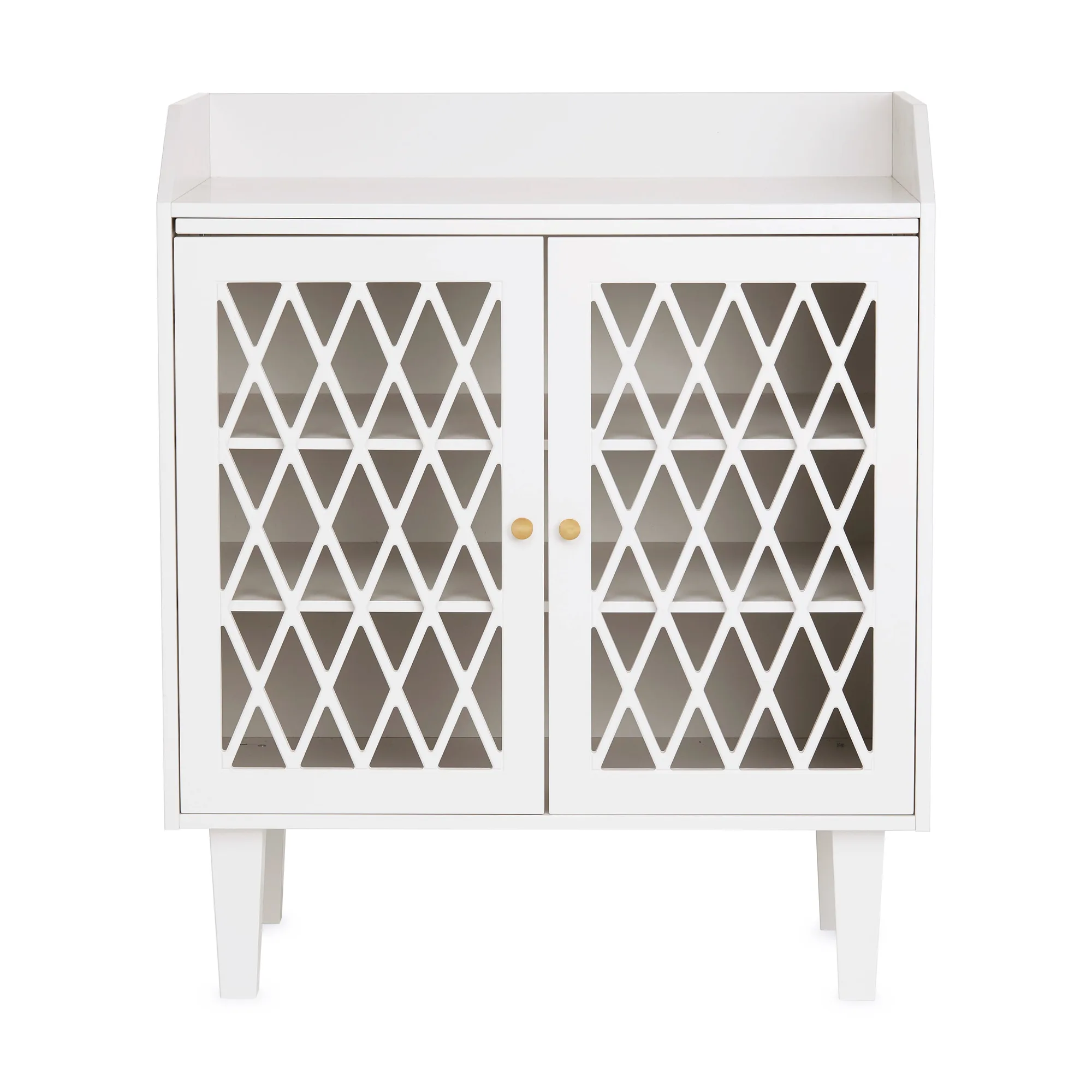
Harlequin Changing Table - White