The sleeve is the wear part, not the harness
Velcro sleeves sit between your dog's harness and the patches you display on their back. That makes them the part that takes the repeated open-and-close cycles, the abrasion from fur and gear, and the pull of a patch that wants to peel. When grip fades, you are usually diagnosing a sleeve problem, not a harness problem.
The practical question is whether the sleeve still holds a patch flat and secure enough for the job you are asking it to do. A service-dog or in-training patch that curls up is doing less than it should, even if the harness underneath is perfectly sound.
Wear signs worth acting on
Check the sleeve itself, not just the patch. These are the signals that most often justify replacement rather than another round of pressing the patch back down.
- Hook-and-loop losing grip: The patch lifts at a corner when you stroke it flat, or peels away with only light pressure. If the hook side looks flattened and the loop side looks fuzzy, the closure is no longer doing its job.
- Edges curling or lifting: A sleeve whose border no longer lies flat against the harness will catch on fur, leads and undergrowth. Curled edges also give a patch less surface to grip.
- Patch shifts during walks: If you have to reposition the patch after every walk, the sleeve is no longer holding it in place. That is a worn velcro patch harness setup, not a training problem.
- Surface fuzz, pilling or thinning: Visible fuzz on the loop face and a thinned, shiny hook face both reduce grip. Once the texture has changed across most of the surface, replacement is usually simpler than trying to revive it.
- Stiffness or crusting: A sleeve that has gone stiff or crusty will not conform to the harness or the patch. The supplied record does not include cleaning or conditioning instructions, so do not assume a particular treatment will restore it.
What the Canyon sleeve record confirms
-
Harness Velcro Sleeves: Harness Velcro Sleeves are designed for Canyon Extended and are compatible with the Muse and Bomber harnesses. Before you replace a sleeve, confirm the harness you are using is one the sleeve is intended for. A poor fit can look like wear.
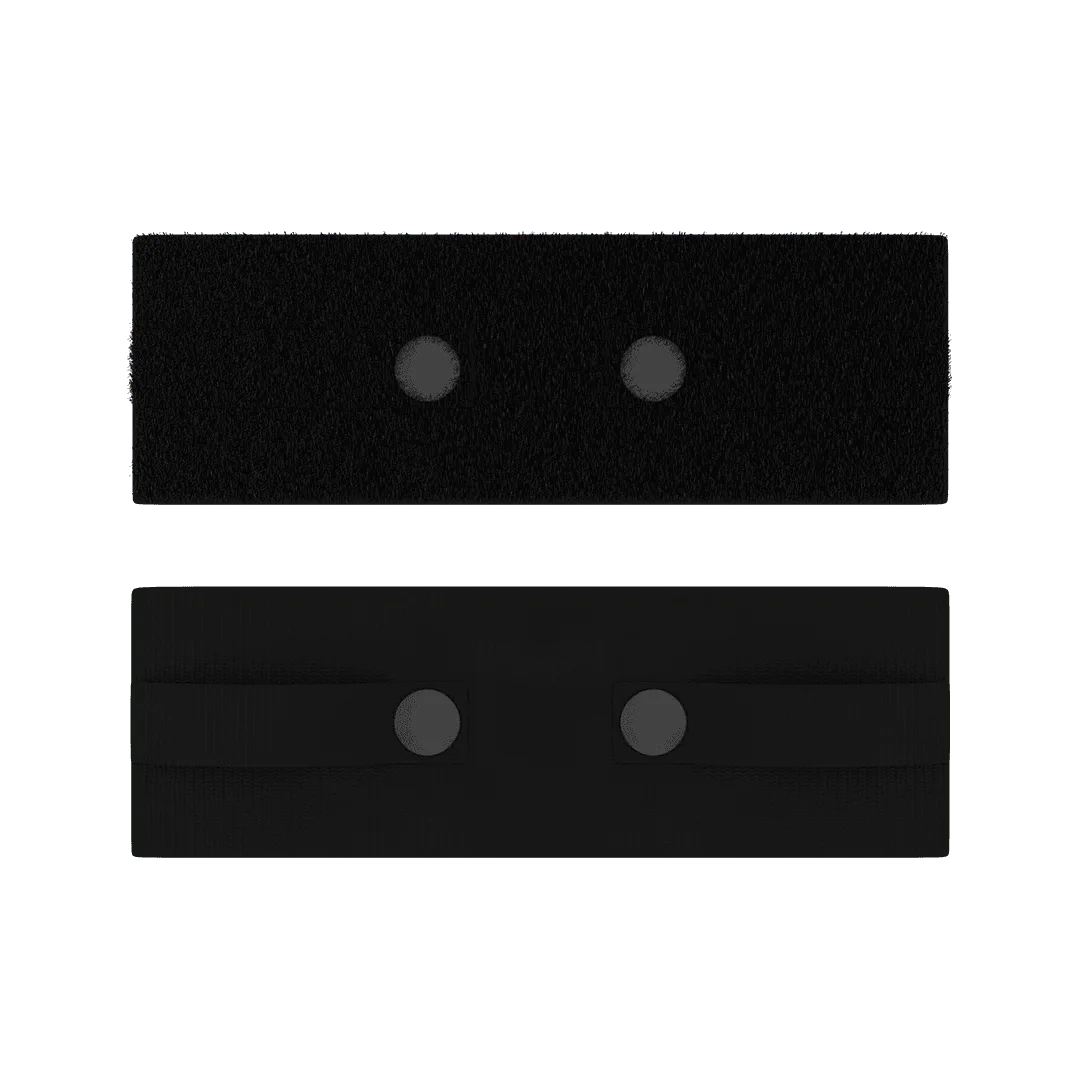
Harness Velcro Sleeves
-
Harness Velcro Sleeves: The record notes the sleeves are not the best fit for the Muse and Bomber harnesses because they require the loops designed for the Pouches 001. If your patch keeps shifting on a Muse or Bomber, check the mounting method before blaming the hook-and-loop. The fit limitation may be the cause.
-
Harness Velcro Sleeves: The sleeves are installed onto a Canyon harness so velcro patches can be displayed on the dog's back. This confirms the sleeve's job is patch display. Judge wear by whether it still holds a patch flat and in place, not by cosmetic appearance alone.
Rule out fit and mounting before you buy a replacement
A sleeve that keeps slipping may be the wrong sleeve for the harness rather than a worn one. The supplied record is explicit that the Muse and Bomber harnesses are not the best fit because the sleeves need the loops designed for the Pouches 001. If you are running that combination, a new sleeve of the same type will likely behave the same way.
Check that the sleeve is seated on the harness as intended and that the patch is pressed evenly across its surface. If the patch still lifts at one corner while the rest stays flat, look closely at that area of the sleeve for a flattened hook face or a curled edge.
A five-minute sleeve check you can repeat
Run this check before a walk when the harness is dry and the patch is off. It gives you a consistent basis for deciding whether to keep using the sleeve.
- Look at the sleeve surface: Check for fuzz, pilling, thinning or a shiny flattened hook face. Note whether the change covers most of the surface or just one spot.
- Check the edges: Run a finger around the border. Any section that no longer lies flat will catch on fur and gear.
- Reattach the patch and press it flat: Press from the centre outward, then lift one corner gently. Repeat at each corner to see whether grip is even or concentrated in one area.
- Give it a short walk test: After a normal walk, see whether the patch has shifted or lifted. Repeated movement is the clearest sign the sleeve is no longer holding.
- Decide: keep, adjust or replace: If grip is even and the patch stays flat, keep using it. If the sleeve is on a Muse or Bomber, review the mounting method first. If grip is failing across the surface, replace the sleeve.
When replacement is the simpler answer
Replace the sleeve when the hook-and-loop has lost grip across most of its surface, when the edges no longer lie flat, or when the patch will not stay in place through a normal walk. These are signs the sleeve has reached the end of its useful life as a patch holder.
A single small lifted corner may only need the patch to be reseated. But if the same corner lifts again after a walk, the sleeve is telling you something. Because the supplied record does not include cleaning or restoration instructions, do not assume a particular wash or treatment will bring the grip back.
What the supplied information does not cover
The record does not give a replacement interval, a lifespan estimate, or cleaning and care instructions for the sleeves. It also does not confirm performance for harnesses other than the Canyon Extended, Muse and Bomber. Use the wear signs above as your guide, and treat any specific cleaning method as unconfirmed unless you have it from the manufacturer.