Start with the job, not the spec sheet
The HD5 Professional Monitoring Headphones are a closed-back, over-ear pair built for recording and private listening. Whether they suit you depends less on the driver size and more on how you plan to use them: tracking a vocalist who needs isolation, mixing late at night without disturbing anyone, or checking a rough balance on a laptop. Each job pulls on different strengths.
This guide walks through the practical fit for mixing and tracking, what the supplied impedance figure tells you about device compatibility, and where an open-back design would serve you better. It sticks to what PreSonus documents about the HD5 and avoids guessing at performance the specs do not promise.
HD5 specs that affect your decision
-
HD5 Professional Monitoring Headphones: Closed-back, over-ear design for extended comfort during recording or private listening. The closed back is the key feature for tracking: it reduces bleed into a microphone and keeps your mix from leaking out to neighbors or bandmates.
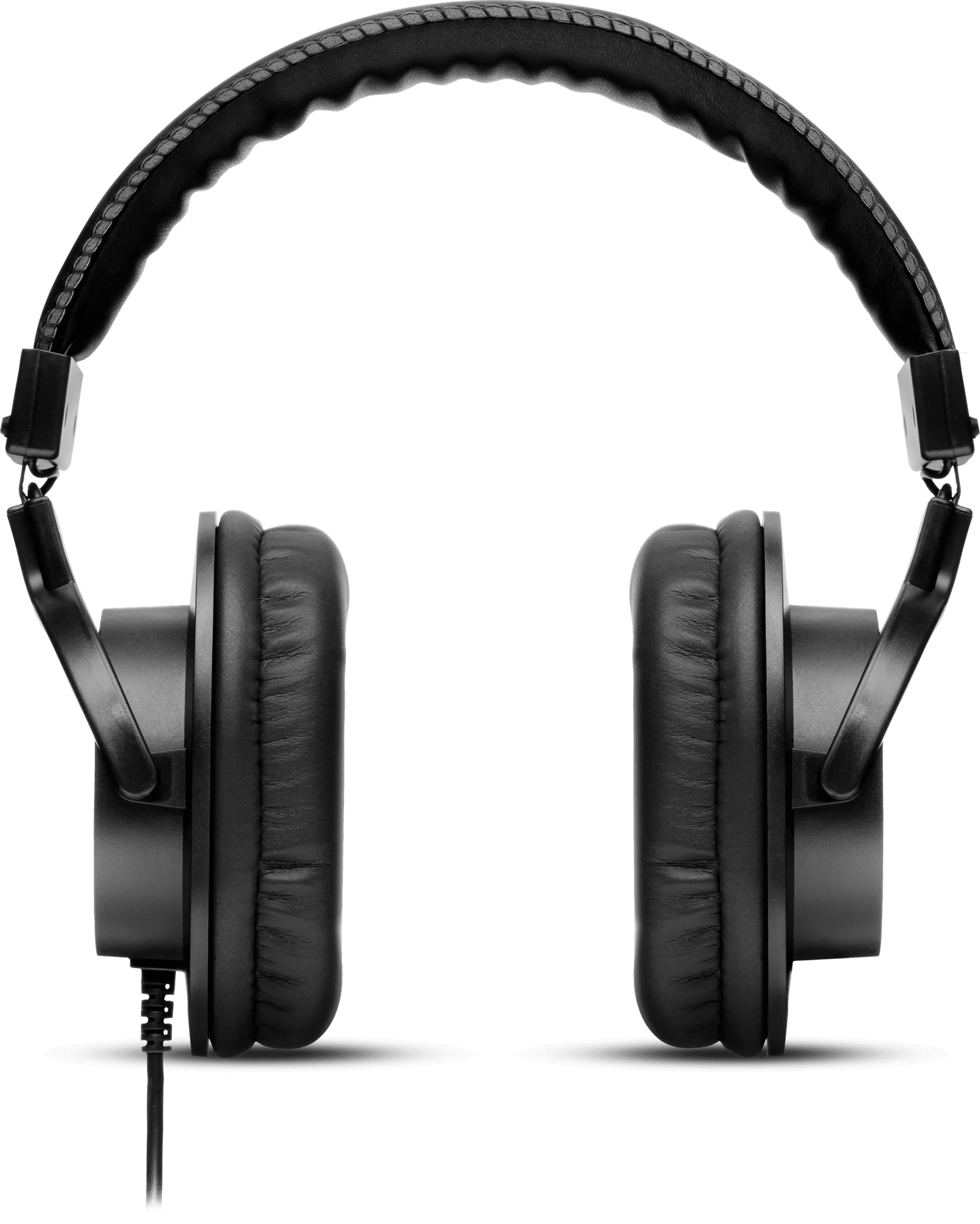
HD5 Professional Monitoring Headphones
-
HD5 Professional Monitoring Headphones: 50mm neodymium drivers with a 15Hz–25kHz frequency range. The wide range covers the full audible spectrum, so you can hear low-end content and high-frequency detail without reaching for a second pair just to check the extremes.
-
HD5 Professional Monitoring Headphones: 32-ohm impedance rated for audio interfaces, phones, laptops, video game controllers, and more. Low impedance means the HD5 is easy to drive from everyday devices. You do not need a dedicated headphone amp to get usable volume from a laptop or phone output.
-
HD5 Professional Monitoring Headphones: Wired 10-foot cable. The longer cable gives you room to move around a studio space without pulling the headphones off your head or unplugging mid-take.
Tracking: where closed-back headphones earn their keep
When you record a vocalist or an acoustic instrument, the microphone picks up everything in the room, including the headphone bleed. Closed-back studio headphones like the HD5 sit around the ear and form a physical barrier that reduces how much of the cue mix escapes toward the mic. That makes them a sensible default for tracking sessions, especially in a small room where a separate iso booth is not an option.
The 10-foot cable also matters here. A performer who likes to move with the music can step back from the interface without yanking the plug. And because the HD5 is rated at 32-ohm impedance for use with audio interfaces, phones, and laptops, you can plug it straight into most interface headphone outputs without adding a headphone amplifier to the chain.
Mixing: what the HD5 can and cannot tell you
The HD5 is marketed as a monitoring headphone, and its closed-back design and full-range frequency response make it usable for checking a mix. The 50mm drivers and 15Hz–25kHz range mean you can hear low bass and high treble content, which helps when you are balancing a full arrangement. For late-night work or a shared living space, the closed back keeps your mix private.
Be honest about the limits, though. PreSonus describes the HD5 as delivering clear audio with powerful bass, which suggests a voicing that may flatter low end rather than present it neutrally. That is fine for tracking and casual reference, but if your main goal is critical mix decisions, an open-back pair designed for flat response is the more common choice. The HD5 is a practical tool, not a substitute for a dedicated mixing headphone if absolute tonal accuracy is the priority.
HD5 vs. open-back monitoring: a practical split
- Isolation: The HD5's closed-back design reduces bleed into microphones and keeps sound in. Open-back headphones leak sound in both directions, so they are poor for tracking but can feel more open for mixing.
- Bass presentation: PreSonus describes the HD5 as having powerful bass. Open-back designs often trade some low-end emphasis for a more spacious, less pressurized sound. Neither is automatically better; it depends on whether you want to feel the low end or hear it neutrally.
- Device compatibility: The HD5's 32-ohm impedance is rated for audio interfaces, phones, laptops, and game controllers, so it works from common outputs. Many open-back studio headphones have higher impedance and may need a dedicated amplifier to reach comfortable volume.
- Best fit: Choose the HD5 if you record often, share a space, or want one pair that works across interface, laptop, and phone. Choose open-back if your primary job is mixing and you have a quiet room and a suitable amp.
The impedance question, answered plainly
The HD5 is rated at 32-ohm impedance. In practice, that low figure means the headphones do not demand much power to reach a usable listening level. You can plug them into an audio interface's headphone jack, a phone, a laptop, or a game controller and expect them to work without a separate headphone amplifier. That flexibility is the main reason the HD5 suits a home setup where one pair moves between devices.
What the supplied information does not include is a sensitivity rating or a maximum input power figure. Those numbers would tell you how loud the HD5 gets from a given source and how much level it can safely handle, but PreSonus does not provide them in the material available here. If you routinely monitor at very high levels or plan to drive the headphones from a high-power amplifier, treat that as an unknown rather than assuming the HD5 will handle any input.
Who the HD5 actually fits
The HD5 makes the most sense for a home recordist or podcaster who needs one closed-back pair for tracking, private listening, and casual reference checks. Its 32-ohm impedance and 10-foot cable suit a desktop interface setup, and the closed-back design keeps bleed out of your recordings. At the catalog price of USD 27.37, it is an affordable entry point rather than a specialist tool.
It is a weaker fit if your main work is critical mixing in a treated room and you already own an amplifier for higher-impedance open-back headphones. In that case, the HD5 is a useful second pair for tracking, not a replacement for your mixing set. Decide based on which job you do more often, and let the isolation and device compatibility of the closed-back design carry the decision for recording work.