The real difference is control, not the vinyl
Iron-on vinyl and heat transfer vinyl (HTV) are both applied with heat and pressure, so the material is not the main decision. The bigger question is how precisely you can hold temperature, time, and pressure across a whole design.
A household iron gives you a moving heat source and uneven pressure. A heat press gives you a set temperature, a timer, and a platen that covers the shirt in one pass. For one-off crafts, an iron can work. For repeatable t-shirt transfers, a press removes the guesswork.
Iron-on vinyl vs heat transfer vinyl vs a heat press
These options overlap, so compare them by what each one controls.
- Household iron + iron-on vinyl: Lowest upfront cost and no dedicated storage. Heat is applied through a moving soleplate, so temperature and pressure vary across the design. Best for occasional craft projects where perfect consistency is not required.
- Household iron + heat transfer vinyl: HTV is designed for heat application, but an iron still cannot guarantee even pressure. Small designs and simple shapes are more forgiving than large full-front graphics.
- Heat press + heat transfer vinyl: A press applies consistent temperature and pressure across its platen. This is the setup that makes t-shirt heat press transfers repeatable, especially when you produce several shirts.
- Heat press + iron-on vinyl: Possible in principle, but iron-on vinyl is usually formulated for household iron temperatures. Follow the vinyl manufacturer's instructions rather than assuming press settings transfer directly.
What the 15" x 15" T-Shirt Heat Press Machine specifies
-
15" x 15" T-Shirt Heat Press Machine: Printing area: 15" x 15" A 15x15 heat press for shirts covers a standard front or back print area in one press, which is the main practical advantage over moving an iron across the design.
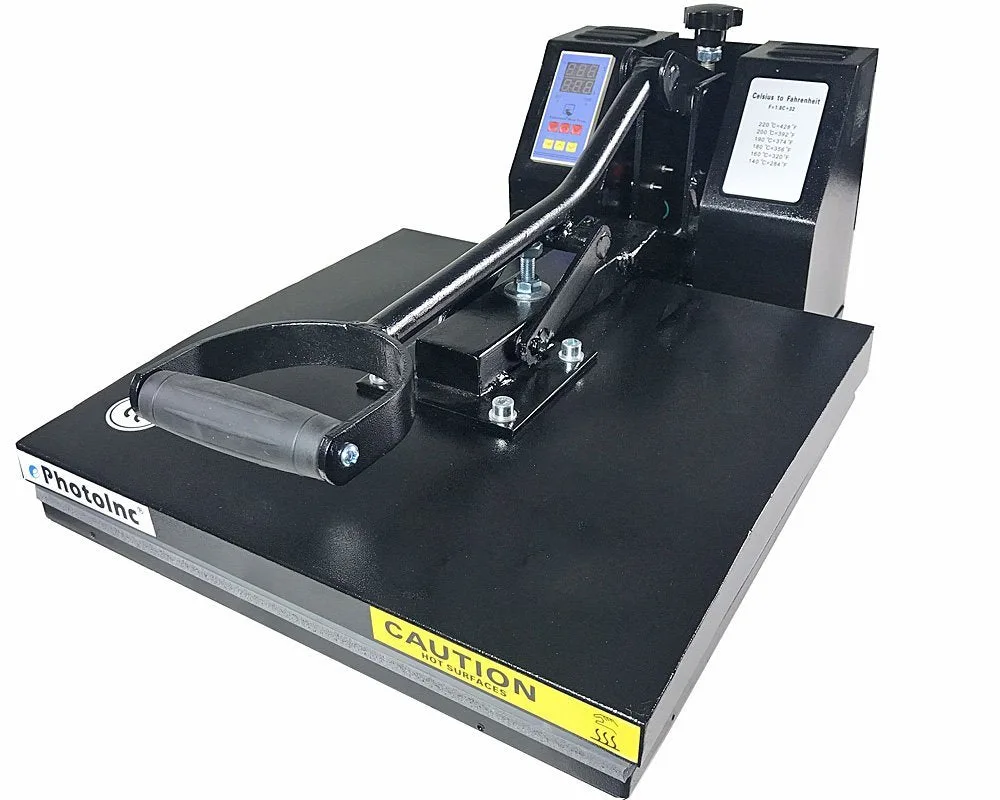
15" x 15" T-Shirt Heat Press Machine
-
15" x 15" T-Shirt Heat Press Machine: Temperature range: 0
500°F and time range: 0999 second The adjustable range lets you match the setting your vinyl supplier specifies instead of estimating with an iron. The correct heat press temperature for vinyl still comes from the vinyl maker, not from the press. -
15" x 15" T-Shirt Heat Press Machine: Time signal alarm will sound when transfer done A timer alarm supports consistent dwell time, which is one of the variables an iron cannot control reliably.
-
15" x 15" T-Shirt Heat Press Machine: The pressure can be adjusted easily from the top Pressure adjustment lets you tune the press to the vinyl and fabric rather than relying on hand pressure.
-
15" x 15" T-Shirt Heat Press Machine: 110V only, 1500W; fully assembled; weight 50lbs; packing size 28" x 19" x 19" Check your outlet and bench space before ordering. A 50lb machine is not a stow-and-forget tool, so plan a permanent spot.
Where an iron still makes sense
If you make one shirt for a birthday or a school project, an iron and a small piece of iron-on vinyl may be all you need. The cost is low, and you avoid dedicating bench space to a machine.
The tradeoff is consistency. Large designs, thick seams, and multiple shirts expose the iron's weak points: uneven heat, uneven pressure, and no timer. Those are exactly the variables a heat press controls.
Where a heat press earns its place
A heat press makes sense when you plan to produce shirts regularly, when designs are large, or when you need the same result each time. The 15" x 15" T-Shirt Heat Press Machine covers a full front print in one press, and its timer and top-mounted pressure adjustment address the two variables an iron leaves to feel.
It is not a small purchase: the catalog price is USD 197.99 against a comparison price of USD 299.99, and the machine weighs 50lbs. Treat it as a workstation, not a gadget.
Checks before you choose a method
Work through these in order, because each one can change the answer.
- Read the vinyl supplier's instructions: Heat press temperature for vinyl varies by product. The press can reach 0~500°F, but the setting you use must come from the vinyl manufacturer.
- Match the platen to your design: The 15" x 15" printing area suits standard front and back prints. Designs larger than the platen need repositioning or a different approach.
- Confirm your power and space: The machine is 110V only, 1500W, and weighs 50lbs with a packing size of 28" x 19" x 19". Check the outlet and the bench before ordering.
- Decide how many shirts you will make: One or two shirts favor an iron. A batch, or a design you will repeat, favors a press.
- Check what the catalog does not confirm: The supplied information does not list specific vinyl settings, fabric compatibility, or press care instructions. Use the vinyl maker's guidance and the included instruction menu rather than guessing.