Quick answer
Choose the Heathered 12x12 Belgian Bluestone when you want fewer grout lines and a calmer, more expansive floor; choose the Heathered 6x6 Belgian Bluestone when you want a finer, more traditional pattern that handles smaller or irregular rooms with more visual texture.
How tile size changes the look of a bluestone floor
Tile size controls two things at once: the scale of the stone surface and the amount of grout visible between pieces. A 12x12 format gives each stone more uninterrupted area, so the heathered color shifts read as broad, soft fields. A 6x6 format breaks the same stone into smaller units, so those shifts repeat more often and the floor looks busier and more finely grained.
That difference matters most in open-plan spaces. Large rooms can absorb the grid of a 12x12 layout without feeling chopped up, while small rooms can feel cramped by too few, too large tiles or, conversely, more intimate with a 6x6 pattern. Neither is better in the abstract; the right choice depends on the room's proportions and how much pattern you want underfoot.
Grout lines, layout patterns, and installation trade-offs
Because 12x12 tiles cover four times the area of a 6x6 tile, a 12x12 floor has roughly one-quarter the number of grout joints for the same square footage. Fewer joints mean less grout to clean and a more seamless look, but each joint is more visually prominent because it interrupts a larger stone face. A 6x6 floor spreads grout lines evenly across the room, which can disguise minor subfloor irregularities and make the pattern feel deliberate.
Layout options also differ. A 12x12 tile is forgiving in a simple grid or a stacked bond and reads well in large, rectangular rooms. A 6x6 tile opens up patterns such as a running bond or basketweave, where the smaller unit makes the repeat legible. Keep in mind that more joints also mean more installation time and more grout to maintain, so the smaller format carries a higher labor and upkeep cost even when the stone itself is comparable.
Where the two sizes tend to work best
Use the 12x12 where the floor should recede: open living areas, large kitchens, and rooms with clean, rectangular geometry. Use the 6x6 where the floor should add texture: bathrooms, mudrooms, entryways, and smaller rooms where a finer grid gives the eye more to hold onto. If a room is oddly shaped or has many transitions, the smaller tile can also make those awkward edges easier to resolve because each piece is more maneuverable.
Trade-offs at a glance
- Visual scale: 12x12 reads as broad, quiet fields of stone; 6x6 reads as a finer, more active grid. Pick based on whether you want the floor to recede or add texture. Stand in the room and decide whether the floor should be background or feature before choosing a size.
- Grout lines and upkeep: 12x12 produces roughly one-quarter the grout joints of 6x6 for the same area, so it is easier to clean but each joint is more noticeable; 6x6 spreads joints evenly and can hide minor subfloor variation. Factor grout maintenance into the decision, not just the tile price.
- Layout and installation: 12x12 is simplest in a grid or stacked bond and suits large rectangular rooms; 6x6 makes running bond and basketweave patterns legible but takes longer to install and costs more in labor. Confirm your installer's labor rate for small-format tile before committing to 6x6.
Product facts
-
Heathered 12x12 Belgian Bluestone: Standard 12x12-inch square format in genuine Belgian Bluestone, a dense limestone known for durability and soft heather color variation. The larger square covers more floor with fewer joints, so it suits open rooms where a calm, continuous surface is the goal.
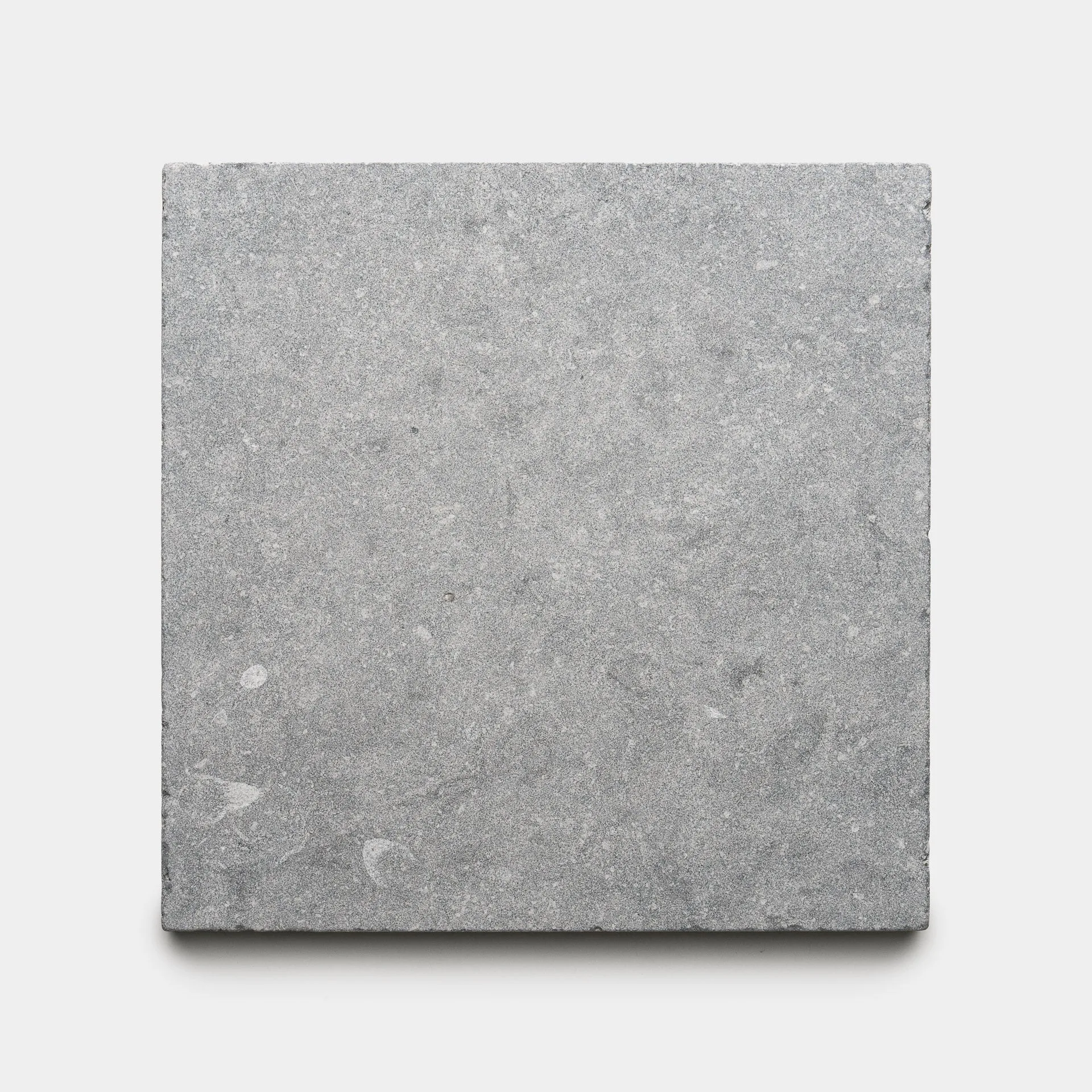
Heathered 12x12 Belgian Bluestone
-
Heathered 6x6 Belgian Bluestone: Six-inch by six-inch tiles with a heathered finish and hand-crafted artisanal quality, suitable for both flooring and walls. The smaller format gives you more pattern control and can be carried from floor to wall, but it multiplies grout lines and installation time.
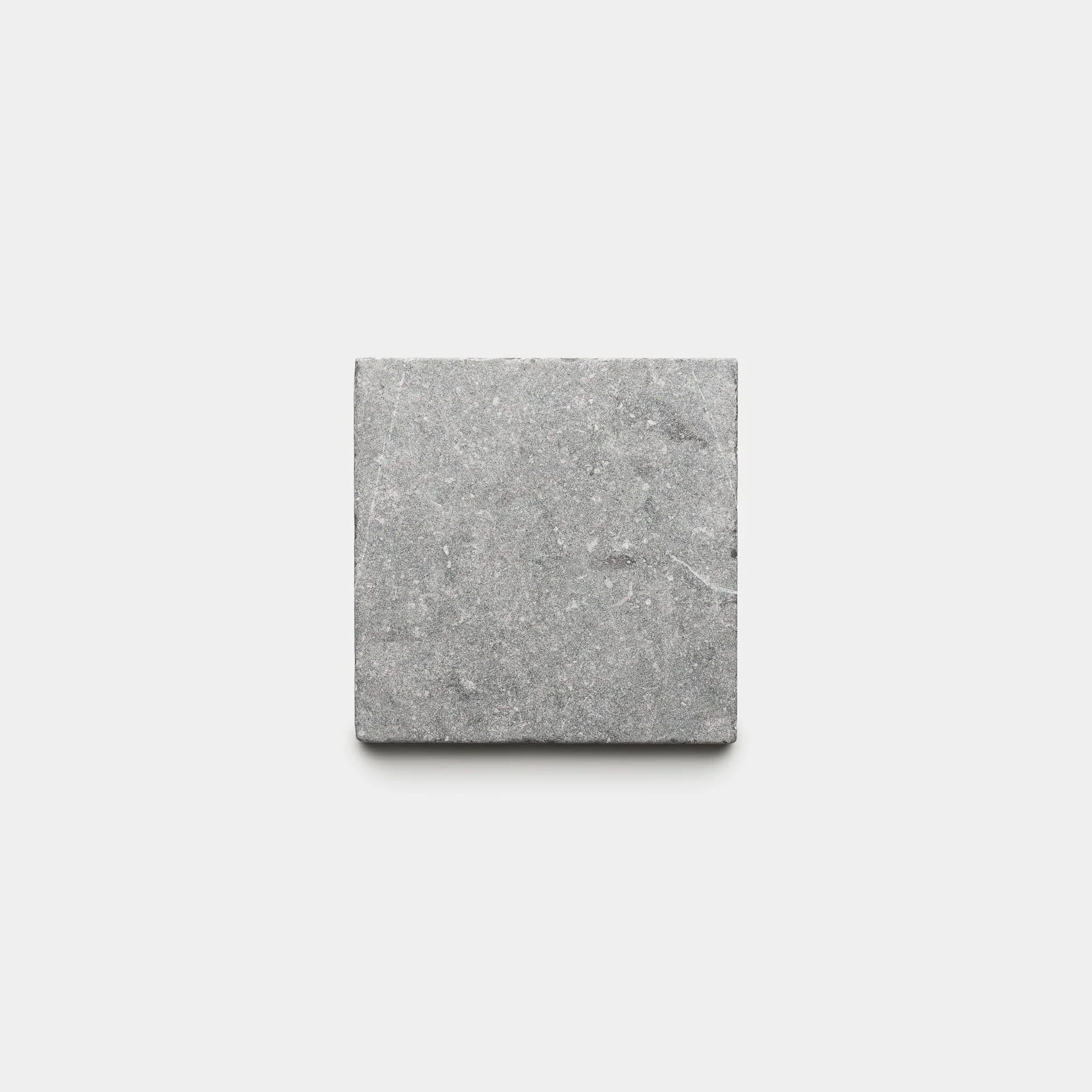
Heathered 6x6 Belgian Bluestone
Which size fits your project
Best for
- Large, open living areas and kitchens where a calm, seamless floor is wanted
- Rooms with simple rectangular geometry and a straightforward grid layout
- Homeowners who want fewer grout lines to clean and maintain
Not for
- Small or irregular rooms where a 12x12 grid may feel out of scale
- Projects that specifically want a running bond or basketweave pattern
- Tight budgets where the extra labor of small-format installation is a concern